

Termite damage is not a small inconvenience. Across the US, termites cause $5 billion in damage every single year, and Illinois homeowners are squarely in the crosshairs. The state’s humid summers, cold winters, and older housing stock create near-perfect conditions for subterranean termites to thrive. The good news is that most of that damage is preventable. This guide walks you through every step of the prevention process, from understanding your local risk to choosing the right professional treatment, so your home stays protected year after year.
Table of Contents
- Understanding the termite threat in Illinois
- Preparation: What you need to prevent termites
- Step-by-step termite prevention process
- Comparing professional termite treatments in Illinois
- Integrated methods: Building lasting termite defense
- Why most homeowners overlook critical steps (and how to get them right)
- Professional termite prevention and treatment in Illinois
- Frequently asked questions
Key Takeaways
| Point | Details |
|---|---|
| Annual inspections | Yearly professional checks cost less than repairs and catch termites early. |
| Reduce moisture | Maintaining dry areas around your home is a top defense against termites. |
| Combine methods | Using mechanical, cultural, and chemical controls together offers the most reliable long-term protection. |
| Know when to call pros | Treatments require expert tools and know-how—don’t attempt these alone. |
Understanding the termite threat in Illinois
Illinois sits in a termite-heavy zone. The state’s climate swings from hot, wet summers to freezing winters, and that moisture cycle is exactly what subterranean termites need to build large, destructive colonies underground. They enter homes through cracks in the foundation, gaps around pipes, and any wood that touches soil directly. By the time most homeowners notice damage, the colony has been feeding for months, sometimes years.
Knowing what to look for is your first line of defense. Watch for these warning signs specific to Illinois properties:
- Mud tubes running along foundation walls or crawl spaces
- Hollow-sounding wood when you tap baseboards or door frames
- Discarded wings near windowsills after spring swarm season
- Bubbling or uneven paint that mimics water damage
- Tight-fitting doors or windows caused by wood swelling from termite activity
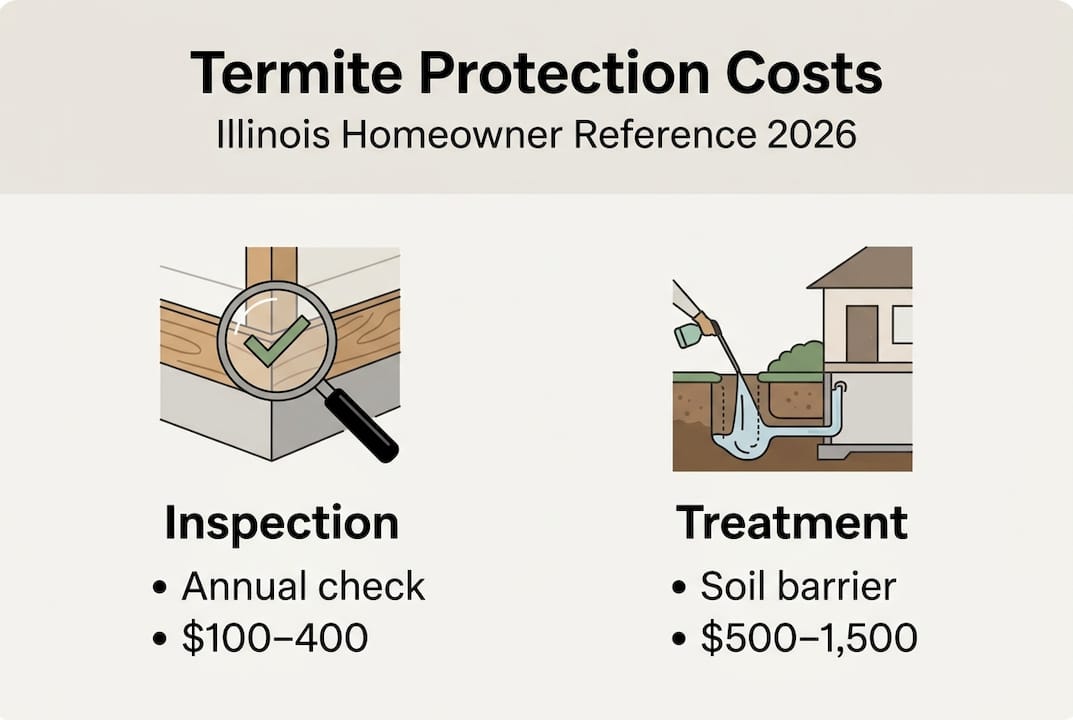
The financial case for early action is clear. A professional termite inspection typically costs between $100 and $400 in Illinois. Compare that to the national average repair bill, which can reach tens of thousands of dollars once structural damage sets in. Annual inspections are far less expensive than the repairs that follow a missed infestation.
| Cost category | Typical range |
|---|---|
| Annual termite inspection | $100 to $400 |
| Basic termite treatment | $500 to $2,500 |
| Structural repair after infestation | $3,000 to $30,000+ |
The EPA’s guidance on termite identification and control confirms that early detection is the single most cost-effective strategy available to homeowners. Scheduling an annual inspection is not optional if you want to stay ahead of the problem.
Preparation: What you need to prevent termites
With the risk clear, here is how you prepare to defend your home. Before you take any prevention steps, you need to assess your property honestly. Walk the perimeter of your home and look for conditions that invite termites. A little preparation now saves a lot of money later.
Start with a basic inspection toolkit:
- Flashlight for crawl spaces, attics, and dark corners
- Flathead screwdriver to probe wood for softness or hollow spots
- Moisture meter to identify damp areas in walls or floors
- Gloves and knee pads for safe, comfortable crawl space access
The EPA confirms that reducing moisture and eliminating wood-to-soil contact are the two most critical prevention steps any homeowner can take. These are things you can address yourself before calling a professional.

Here is a quick comparison of DIY prevention versus professional services so you know where your effort is best spent:
| Task | DIY possible? | Pro required? |
|---|---|---|
| Moisture control and ventilation | Yes | No |
| Removing wood-to-soil contact | Yes | No |
| Applying chemical soil barriers | No | Yes |
| Installing bait station systems | No | Yes |
| Annual structural inspection | Partial | Recommended |
For broader home protection, pairing termite prevention with a general pest control plan keeps multiple threats in check at once. You can also review a treatment options overview to understand what a professional will likely recommend before your first appointment.
Pro Tip: Keep firewood at least 20 feet from your home’s foundation and store it elevated off the ground. Mulch should be no deeper than 2 inches and kept 6 inches away from siding. Both are common termite entry points that Illinois homeowners regularly overlook.
Step-by-step termite prevention process
Once you gather your tools and materials, follow these steps for real protection.
- Control moisture first. Fix leaking pipes, improve drainage around your foundation, and make sure gutters direct water away from the house. Termites need moisture to survive, so a dry perimeter is a hostile one.
- Eliminate wood-to-soil contact. Replace any wood that touches the ground directly, including fence posts, deck supports, and wood siding that sits too close to the soil line. Use concrete or metal supports where possible.
- Clear cellulose debris. Remove old wood piles, cardboard boxes, and paper stored in crawl spaces or against the foundation. These materials are termite food and attract scouts looking for a new colony site.
- Seal entry points. Use caulk or foam sealant to close cracks in your foundation, gaps around utility pipes, and openings near windows and doors. Physical barriers slow termite entry significantly.
- Install and maintain barriers. Physical barriers like stainless steel mesh work well during construction. For existing homes, chemical soil treatments applied by a licensed professional create a protective zone around the foundation.
- Schedule annual professional inspections. A trained inspector sees things a homeowner misses. They check inside wall voids, under slabs, and in crawl spaces where colonies hide.
The EPA is direct on this point: DIY is limited to prevention, and professionals are essential for actual treatments because colony depth and chemical regulations require licensed applicators. Do not try to treat an active infestation with store-bought products.
“The most expensive termite mistake is waiting until you see visible damage. By then, the colony has already done its worst work inside your walls.”
For more on safe homeowner practices during pest season, reviewing seasonal guides helps you stay consistent. The detailed EPA guidance also covers when chemical intervention becomes necessary.
Pro Tip: Never place mulch directly against your home’s siding or wood trim. It holds moisture and gives termites a hidden bridge straight to your structure.
Comparing professional termite treatments in Illinois
If you need more than prevention, here are the options professional services provide. Two main treatment types dominate the Illinois market, and each has a specific role depending on your situation.
Liquid soil barrier treatments involve applying a termiticide around and under the foundation. The chemical creates a treated zone that kills termites on contact or is carried back to the colony. Liquid barriers last between 5 and 10 years when properly applied, making them a long-term investment. They work best for active infestations or as a strong preventive measure in high-risk zones.
Bait station systems are installed in the ground around the perimeter of the home. Termites find the bait, feed on it, and carry it back to the colony, eliminating it over weeks to months. Bait systems are less disruptive to install and are a good fit for homes where drilling into concrete is not practical.
| Treatment type | Duration | Best for | Pro required? |
|---|---|---|---|
| Liquid soil barrier | 5 to 10 years | Active infestations, high-risk homes | Yes |
| Bait station system | Ongoing monitoring | Low to moderate risk, new construction | Yes |
| Pre-construction treatment | Permanent barrier | New Illinois builds | Yes |
For new construction in Illinois, pre-construction soil treatments are the gold standard. They protect the slab before it is poured, creating a barrier that is nearly impossible to replicate after the fact. Both liquid and bait options require licensed applicators under Illinois law, so this is not a DIY territory. Review the full termite treatment methods breakdown to understand costs before requesting quotes. Your termite treatment options with a local provider will be tailored to your specific home and risk level.
Integrated methods: Building lasting termite defense
Beyond picking a single method, here is why a combined approach is most effective in Illinois. No single prevention step or treatment works perfectly on its own. The most protected homes use what experts call Integrated Pest Management, or IPM. This means combining cultural controls (like moisture management), mechanical controls (like physical barriers), and chemical controls (like professional treatments) into one coordinated strategy.
IPM combining all approaches consistently delivers the best long-term outcomes for homeowners. Here is what a complete IPM plan looks like in practice:
- Annual professional inspection scheduled every spring before swarm season
- Moisture control maintained year-round, including crawl space ventilation
- Physical barriers checked and repaired after each Illinois winter
- Bait stations or liquid barriers refreshed on the manufacturer’s recommended schedule
- Documentation of every inspection, treatment, and repair for future reference
Illinois weather adds a layer of complexity. Freeze-thaw cycles crack foundations and create new entry points each spring. Knowing your local pest insights helps you time prevention steps correctly. You can also browse more pest prevention guides to build a full seasonal protection plan for your home.
Pro Tip: Create a simple home pest log. Write down inspection dates, findings, and any treatments applied. This record helps your pest control provider spot patterns and catch problems faster each year.
Why most homeowners overlook critical steps (and how to get them right)
Here is the uncomfortable truth we see repeatedly: most homeowners know they should schedule annual inspections, but very few actually do it consistently. Life gets busy, the house looks fine from the outside, and the inspection gets pushed to next month, then next year. That gap is exactly where termite colonies grow unchecked.
The second most common mistake is overconfidence in store-bought sprays. Those products address surface insects. Termite colonies live several feet underground, and the workers you see represent a fraction of the population. Spraying the surface does nothing to the queen or the colony structure.
Moisture control is the step people skip most often because it feels unrelated to bugs. But a damp crawl space is a termite invitation. Fix it before anything else.
Our practical advice: set a recurring calendar reminder every March to schedule your inspection before swarm season. Keep a printed checklist on your utility room wall covering moisture checks, wood-to-soil contact, and debris clearing. Pair that with professional termite advice from a licensed local provider, and you will be ahead of 90% of homeowners in your neighborhood.
Professional termite prevention and treatment in Illinois
If you are ready for guaranteed results, professional help makes all the difference. At BugEvicta Pest Control, we follow a structured process built around Illinois-specific pest patterns. We start with a thorough inspection of your foundation, crawl spaces, and high-risk areas, then recommend a targeted prevention or treatment plan based on what we actually find.

We handle everything from moisture assessments to licensed chemical treatments, so you are not guessing at what your home needs. Whether you are dealing with an active problem or want to get ahead of one, our Illinois termite services are designed to protect your investment for the long term. Visit BugEvicta to request an inspection or learn more about our full range of local pest control experts serving Illinois homeowners.
Frequently asked questions
How often should Illinois homeowners schedule termite inspections?
Illinois homeowners should schedule a professional termite inspection at least once per year. Annual inspections catch early activity before it becomes structural damage.
Are DIY prevention methods effective for termites?
DIY steps like moisture control and removing wood-to-soil contact genuinely reduce risk. However, DIY is limited to prevention and professionals are required for regulated chemical treatments and full-scope inspections.
What termite treatment lasts the longest in Illinois?
Professional liquid soil barrier treatments are the longest-lasting option, with liquid barriers lasting 5 to 10 years when correctly applied around the foundation.
Can termite damage be prevented entirely?
No method offers a 100% guarantee, but combining annual inspections, moisture control, and physical or chemical barriers keeps risk very low. An integrated approach is the closest thing to complete protection available to Illinois homeowners.