

Routine pest inspections protect Illinois homes: save thousands
TL;DR:
- Routine pest inspections help detect infestations early and prevent costly damage.
- Most damages from pests like termites and rodents cost thousands more to repair than prevention.
- Regular inspections, ideally once a year or twice in high-risk areas, are vital for homeowner safety and financial protection.
Termites alone cause over $5 billion in property damage across the United States every year, and most of that destruction happens quietly, inside walls, under floors, and along foundations long before anyone notices. For Illinois homeowners, the gap between a $150 inspection and a $7,000 repair bill is not just a number. It is the difference between catching a problem early and dealing with a full-blown emergency. Routine pest inspections are scheduled, professional checks of your home’s interior and exterior to identify pest activity, entry points, and conditions that attract infestations. This article breaks down why these inspections matter, what they involve, how much they cost, and how often you should schedule them.
Table of Contents
- The hidden risks Illinois homeowners face without routine inspections
- What happens during a professional pest inspection in Illinois
- Routine inspection costs versus emergency repairs: A clear comparison
- How often to schedule pest inspections in Illinois homes
- What most Illinois homeowners misunderstand about routine inspections
- Protect your home with professional pest inspection and prevention
- Frequently asked questions
Key Takeaways
| Point | Details |
|---|---|
| Prevention saves money | Routine inspections cost far less than major pest damage repairs. |
| IPM protects your home | Integrated Pest Management prioritizes inspection, exclusion, and monitoring over chemicals. |
| Frequency depends on risk | Homes in higher-risk Illinois areas need more frequent inspections than average properties. |
| Choose licensed pros | Work with licensed Illinois providers for the safest, most thorough pest prevention. |
The hidden risks Illinois homeowners face without routine inspections
Skipping routine pest inspections might seem like a reasonable way to save money. In reality, it is one of the most expensive decisions a homeowner can make. Pests do not announce themselves. By the time you spot visible damage or live insects, the infestation has usually been active for months.
Structural damage is the most serious risk. Termites, carpenter ants, and rodents all target the wood and insulation that hold your home together. Termites eat through load-bearing beams. Carpenter ants hollow out moist wood near windows and rooflines. Rodents chew through electrical wiring, which creates a fire hazard that most homeowners never connect to a pest problem. Early pest detection prevents extensive structural damage, health risks, and costly repairs before they spiral out of control.
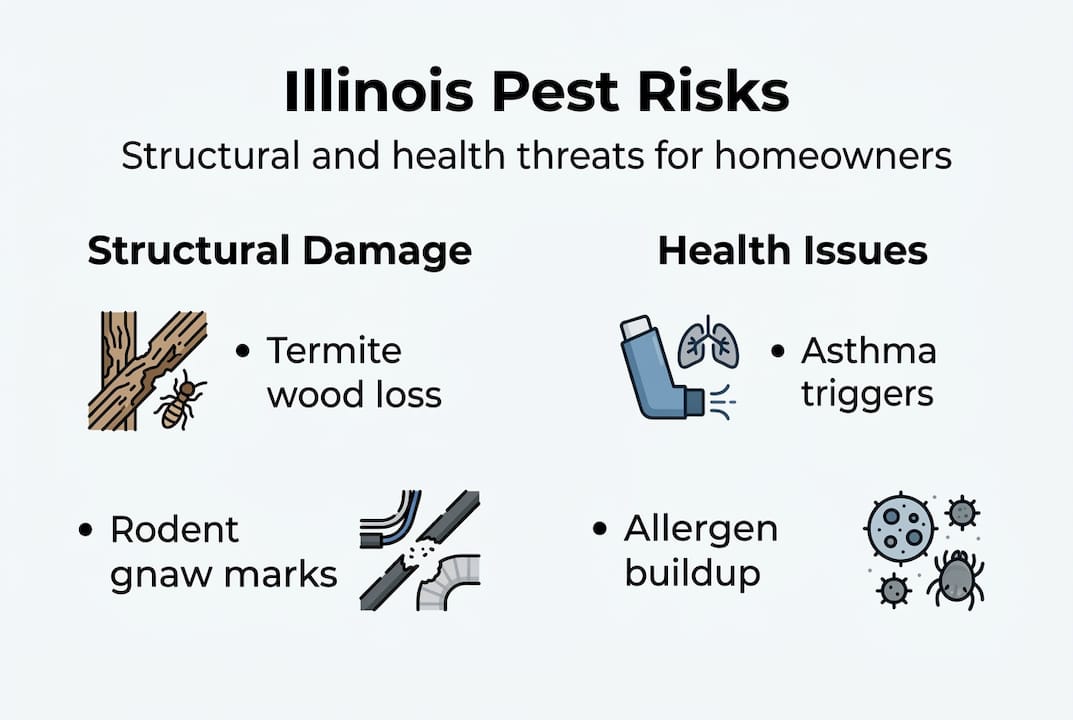
Health risks are just as serious. Cockroach droppings and shed skin trigger asthma attacks, especially in children. Rodent urine contaminates surfaces and can carry disease. Mosquitoes and ticks carry illnesses that affect your family and pets. These are not distant possibilities for Illinois homeowners. They are documented, local threats that show up in homes across the state every season.
There are also legal and financial angles that most people overlook. Some Illinois municipalities require pest inspections before a property sale closes. If an infestation is discovered during a real estate transaction and you had no inspection history, it can delay closing, reduce your sale price, or expose you to liability claims. Homeowner insurance policies almost never cover pest damage, which means repair bills come entirely out of your pocket.
Here is a quick look at the risks you are taking without regular inspections:
- Termite colonies can go undetected for two to four years while silently destroying structural wood
- Rodent infestations often start in crawl spaces and attics before spreading to living areas
- Moisture damage caused by pests compounds repair costs beyond the infestation itself
- Allergen buildup from cockroaches and dust mites worsens indoor air quality over time
- Code violations can result if pest damage compromises structural or electrical systems
The numbers make the case clearly. US termite damage exceeds $5 billion annually, and preventive inspection costs are a fraction of what repairs run. A single termite treatment and repair job can easily cost more than a decade of annual inspections. Check out our termite prevention guide for a deeper look at how Illinois homeowners can stay ahead of this specific threat, and browse our Illinois pest risk resources to understand which pests are most active in your area.
“The most expensive pest problem is the one you find too late. By the time structural damage is visible, the repair bill has already grown far beyond what prevention would have cost.”
What happens during a professional pest inspection in Illinois
A professional pest inspection is not a quick walk-through. It is a structured, methodical process that follows Integrated Pest Management (IPM) principles. IPM means inspecting first, identifying pests and entry points, then targeting exclusion and sanitation before reaching for any chemical treatment.
Here is what a certified Illinois pest inspector actually does during a visit:
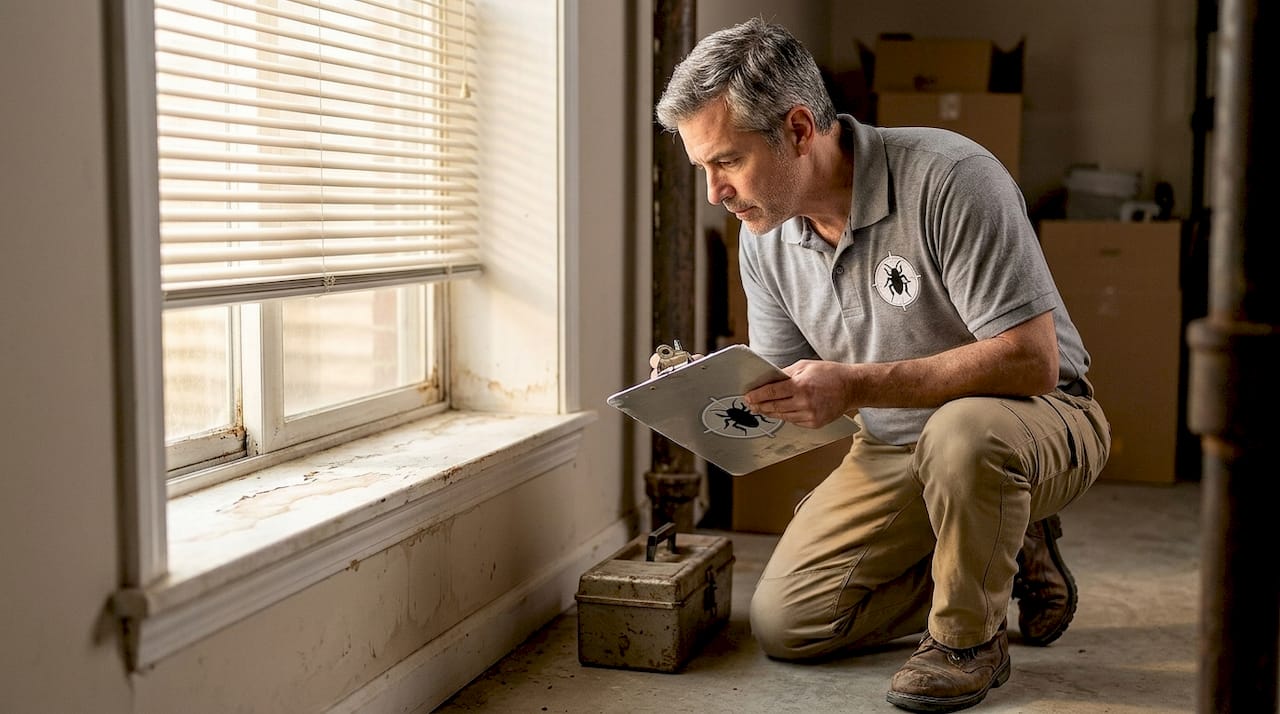
- Exterior check: The inspector walks the full perimeter of your home, looking for cracks in the foundation, gaps around utility lines, damaged soffits, and wood-to-soil contact that invites termites.
- Interior sweep: Every room gets checked, with special attention to basements, crawl spaces, attics, and utility rooms where moisture and clutter create ideal pest conditions.
- Moisture assessment: Many pest problems start with water. Inspectors check for leaks, condensation, and drainage issues that attract termites, ants, and roaches.
- Entry point mapping: Gaps under doors, torn window screens, and poorly sealed pipe penetrations are documented as potential access points.
- Evidence collection: Droppings, shed skins, mud tubes, gnaw marks, and live insects are all recorded as part of the findings.
- Written report: A good inspector provides a detailed summary of what was found, what conditions are conducive to infestation, and what corrective steps are recommended.
In Illinois, inspections follow IPM principles: inspect first, identify pests and entry points, then target exclusion, sanitation, and minimal pesticide use only when necessary. This approach protects your family from unnecessary chemical exposure while still addressing real threats.
Pro Tip: Always ask your inspector for a written report after every visit. A documented history of inspections is valuable if you ever sell your home or need to file a claim.
Here is a general breakdown of what to expect:
| Inspection type | Average duration | Typical cost range |
|---|---|---|
| General pest inspection | 45 to 90 minutes | $75 to $150 |
| Termite-specific inspection | 60 to 120 minutes | $100 to $325 |
| Full home pest audit | 90 to 150 minutes | $150 to $325 |
For more on what inspectors look for with specific pests, our termite barrier guide explains how physical barriers work as part of a prevention plan. If ants are a concern, our guide on spotting ants early walks you through the early warning signs Illinois homeowners often miss.
Routine inspection costs versus emergency repairs: A clear comparison
Numbers tell the most persuasive story here. Most Illinois homeowners have no idea how wide the gap is between what prevention costs and what emergency repairs run.
Termite damage repairs average $3,000 to $8,000, while annual prevention plans run $300 to $900 and often include repair warranties. A single inspection costs $75 to $325 but can catch a problem before it becomes a five-figure emergency.
Here is a side-by-side comparison to make the decision concrete:
| Scenario | Typical cost | Includes warranty? | Peace of mind |
|---|---|---|---|
| One-time pest inspection | $75 to $325 | No | Snapshot of current risk |
| Annual prevention plan | $300 to $900/year | Often yes | Ongoing monitoring and treatment |
| Termite structural repair | $3,000 to $8,000+ | No | None, problem already happened |
| Rodent damage and remediation | $1,500 to $5,000 | No | None |
| Cockroach extermination (severe) | $500 to $1,500 | Rarely | Short-term |
The math is not close. One year of prevention costs less than one hour of emergency repair labor in many cases.
Beyond the direct repair costs, there are hidden expenses that homeowners rarely account for:
- Temporary housing if repairs require you to vacate your home
- Mold remediation when moisture from pest damage goes untreated
- Replacement of personal belongings stored in infested areas
- Lost home value if pest history is disclosed during a sale
- Repeat treatments when an infestation is addressed too late and returns
Annual prevention plans from licensed pest control providers often come with repair warranties, meaning if pests cause damage while you are under a service agreement, the company contributes to repair costs. That warranty alone can justify the annual plan cost many times over. Our preventive inspection tips walk through exactly what to look for when evaluating a plan.
How often to schedule pest inspections in Illinois homes
Frequency matters as much as the inspection itself. Scheduling too rarely leaves gaps where infestations can establish and grow. The right schedule depends on your home’s location, age, and history.
Here is a practical framework for Illinois homeowners:
- Once a year: The standard recommendation for most homes in Illinois. An annual inspection catches seasonal pest activity and keeps your prevention plan current.
- Twice a year: Recommended for homes near wooded areas, bodies of water, or older neighborhoods with aging infrastructure. High-risk Illinois areas near woods or water need inspections twice a year for reliable protection.
- After a flood or water event: Moisture drives pest activity. Any significant flooding or plumbing failure should trigger an unscheduled inspection within 30 days.
- After a known infestation: If your home has had termites, rodents, or roaches in the past, more frequent monitoring is essential until the risk is confirmed to be under control.
- Before buying or selling: A pre-transaction inspection protects both buyers and sellers from surprises that derail closings or lead to legal disputes.
Pro Tip: Ask your pest control provider to assess your specific risk profile and recommend a personalized inspection schedule. A home with a crawl space near a creek in central Illinois has very different needs than a newer build on a dry suburban lot.
Factors that push your home into the higher-frequency category include:
- Proximity to wooded or wetland areas where termites and mosquitoes thrive
- Homes built before 1980 with older wood framing and more entry points
- Previous pest history in your home or neighboring properties
- Attached garages or wood decks that create direct pest pathways
Stay current on local pest activity and seasonal patterns through our Illinois pest insights resource.
What most Illinois homeowners misunderstand about routine inspections
Here is something that surprises most people: routine pest inspections are not primarily about spraying chemicals. Many homeowners assume that a pest control visit means a technician shows up, applies a treatment, and leaves. That model is outdated and, frankly, less effective than what modern IPM-based inspections actually deliver.
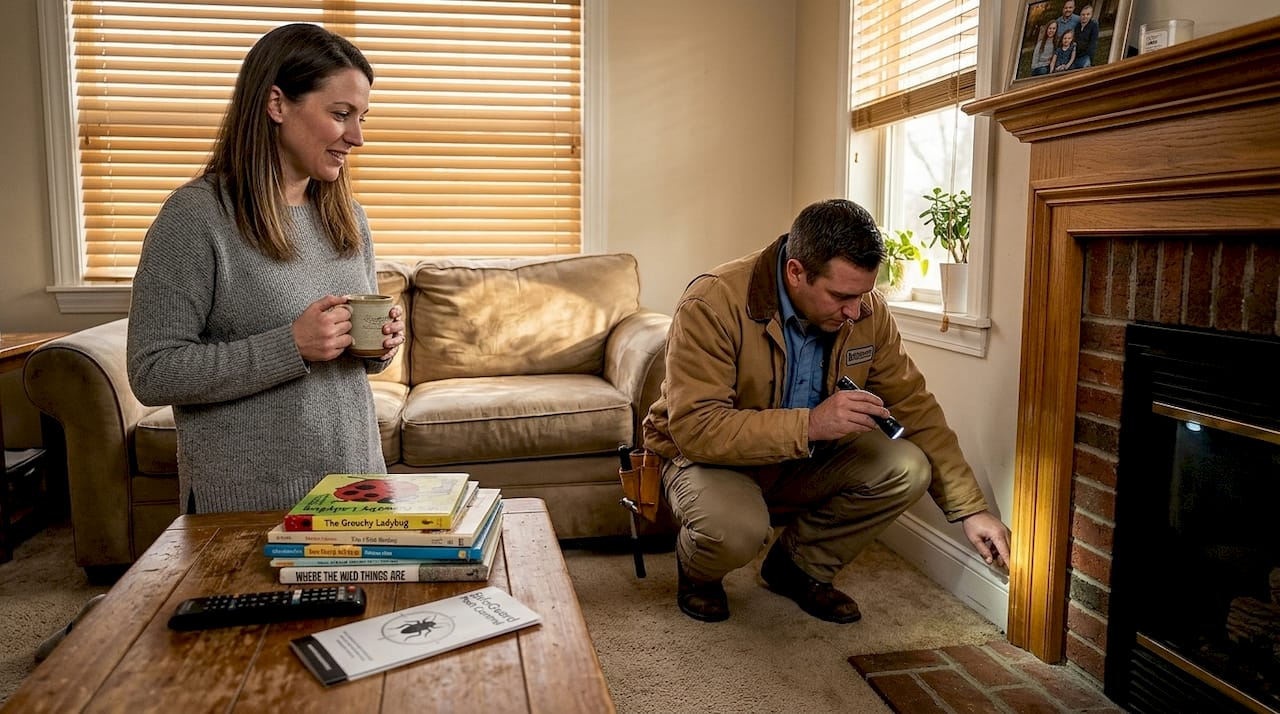
Routine sprays are unnecessary without an active infestation, and monitoring is more effective than blanket chemical treatments. The real value of a routine inspection is in what gets found and fixed before a pesticide is ever needed. Sealing a gap under a garage door costs almost nothing. Removing a moisture source near your foundation eliminates a termite magnet. These are the interventions that actually prevent infestations.
Chemical treatments have their place, but they are a response tool, not a prevention strategy. Homeowners who rely on quarterly spray schedules without proper inspection and exclusion work often find themselves in a cycle of recurring infestations because the root causes were never addressed. Working with a licensed Illinois provider who prioritizes professional inspection methods over automatic chemical applications is the smarter, safer, and more cost-effective approach for your family and your home.
Protect your home with professional pest inspection and prevention
Knowing the risks and costs is only useful if you act on that knowledge. BugEvicta Pest Control works with Illinois homeowners to build inspection and prevention plans that match your home’s actual risk profile, not a generic service template.
Whether you are dealing with a current concern or simply want to stay ahead of problems before they start, our team covers everything from Illinois termite control to general pest control with a structured approach built around inspection, targeted treatment, and ongoing monitoring. Visit BugEvicta to schedule your inspection and get a written report that gives you a clear picture of where your home stands today.
Frequently asked questions
What is the typical cost of a pest inspection in Illinois?
Routine pest inspections in Illinois usually cost between $75 and $325, depending on your home’s size, age, and location.
How often should I schedule a pest inspection if I live near a wooded area?
Homes near woods or water in Illinois should have inspections twice a year to stay ahead of the higher pest pressure those environments create.
Does insurance cover termite damage repairs in Illinois?
Most homeowner insurance policies do not cover termite damage, which is why prevention matters so much given that US termite damage exceeds $5 billion annually.
Are routine pesticide treatments recommended during regular inspections?
No. Experts recommend using pesticides only when pests are actually found, focusing first on inspection, exclusion, and sanitation per EPA pest service guidance.
Recommended
- Termite prevention guide for Illinois homeowners 2026
- Local Pest Insights – BugEvicta Pest Control | Fast, Reliable Extermination Near You
- Pest Control Services Near You | Fast, Reliable Exterminator – BugEvicta