
Mosquito fogging explained: Illinois homeowners’ guide
TL;DR:
- Mosquito fogging offers quick adult mosquito knockdown but does not prevent future hatches.
- Barrier spraying provides longer-lasting protection and is more suitable for routine control.
- A comprehensive mosquito management plan includes source reduction, larviciding, barrier treatments, and targeted fogging.
Many Illinois homeowners treat mosquito fogging like a silver bullet. One pass of the truck, and the problem is solved for the season. The reality is that fogging delivers fast knockdown of adult mosquitoes, but it does nothing to stop the next wave already hatching in your backyard. Understanding what fogging actually does, when it makes sense, and how it fits into a broader mosquito control plan is the difference between a yard you can enjoy all summer and one you abandon by July.
Table of Contents
- What is mosquito fogging and how does it work?
- Fogging vs. barrier spraying: What’s safer and more effective?
- Illinois fogging rules and homeowner responsibilities
- Safety first: What to expect (and avoid) during fogging
- Integrated pest management: The best long-term mosquito control approach
- Our take: Why mosquito fogging should be a last resort for Illinois yards
- Need help? Professional mosquito control for Illinois homes
- Frequently asked questions
Key Takeaways
| Point | Details |
|---|---|
| Fogging is fast, not lasting | Mosquito fogging provides immediate relief but fades quickly, unlike barrier sprays. |
| Barrier sprays protect longer | Barrier treatments can safeguard your yard for up to a month with less risk to pets and pollinators. |
| Follow Illinois laws | Compliance with local regulations ensures mosquito control is safe and legal for your family and neighbors. |
| Integrate for best results | Combining source reduction, larviciding, and barrier spraying creates a safer, sustainable mosquito prevention plan. |
What is mosquito fogging and how does it work?
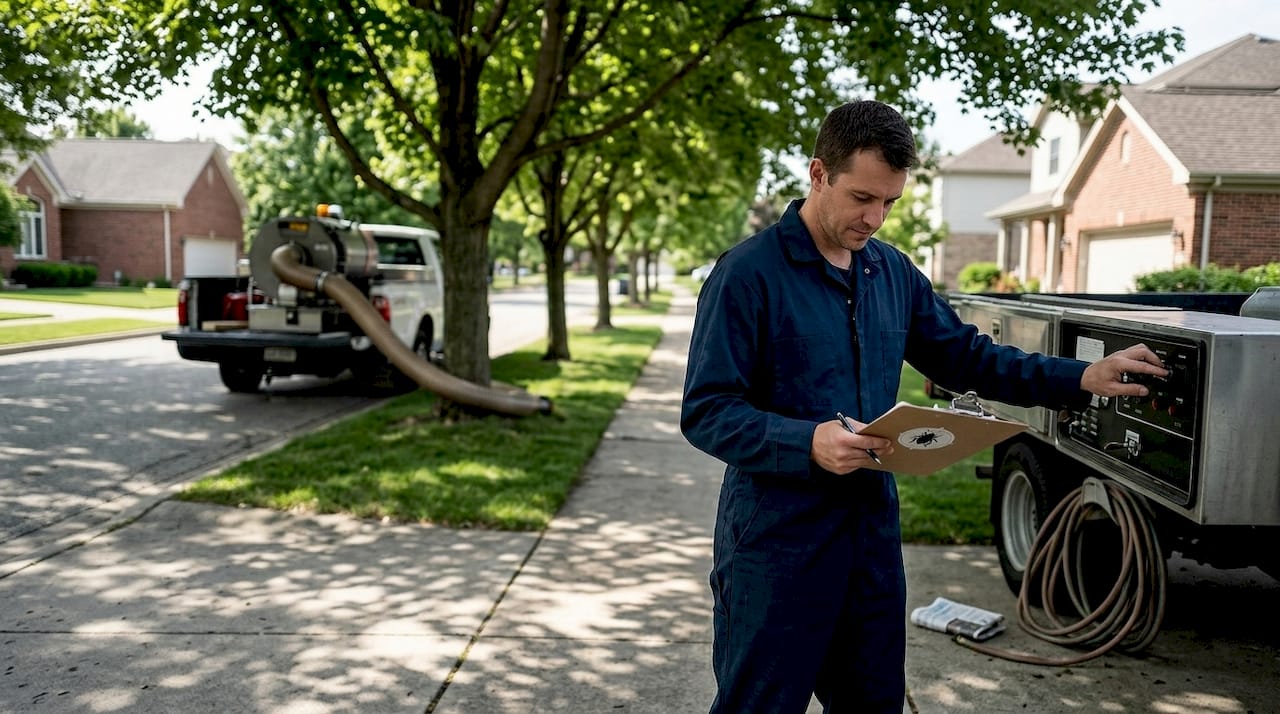
Mosquito fogging refers to Ultra-Low Volume (ULV) applications of insecticide, typically dispersed by truck-mounted equipment or handheld devices, designed to knock down adult mosquitoes quickly. The “ultra-low volume” part matters: these machines release very fine droplets that stay suspended in the air long enough to contact flying mosquitoes without saturating surfaces.
In Illinois, this method is a common tool for municipalities managing West Nile virus risk. Municipal ULV fogging in Illinois uses EPA-registered products like Anvil 2+2, applied at dusk at low rates of 3 to 5 oz per acre, triggered when mosquito trap counts exceed established risk thresholds. Residents are notified in advance and advised to stay indoors while applications dry.
Here is a quick breakdown of how the process works:
- Timing: Applications happen at dusk when mosquitoes are most active and wind speeds are low
- Product rates: Applied at 3 to 5 oz per acre, well within EPA and Illinois Department of Agriculture (IDA) safety limits
- Notification: Communities receive advance notice through local alerts or posted signage
- Re-entry: Residents should remain indoors for 10 to 30 minutes and wait until surfaces dry before going back outside
| Feature | Municipal fogging | Homeowner fogging |
|---|---|---|
| Equipment | Truck-mounted ULV | Handheld fogger |
| Coverage | Neighborhood-wide | Single yard |
| Regulation | EPA/IDA registered | Label compliance required |
| Timing control | Professionally managed | Homeowner responsibility |
Pro Tip: Fogging is most effective as part of an integrated approach. Using it alone, without addressing breeding sites or applying barrier treatments, means mosquitoes will return within days.
For homeowners who want professional mosquito control rather than managing applications themselves, working with a licensed service ensures proper timing, product selection, and safety compliance.
Fogging vs. barrier spraying: What’s safer and more effective?
Fogging and barrier spraying are often lumped together, but they work very differently. Fogging targets adult mosquitoes in the air at the moment of application. Once the droplets settle, the effect fades quickly, often within hours to a single day. Barrier spraying, by contrast, applies residual insecticide directly to vegetation, fences, and shaded areas where mosquitoes rest during the day.
The comparison of foggers and sprayers shows that barrier spraying provides protection lasting 21 to 30 days, with lower drift risk and a better fit for Integrated Pest Management (IPM) strategies. Fogging, while fast, carries a higher risk of affecting non-target insects and may contribute to pesticide resistance over time.
Here is how the two methods stack up:
| Feature | Fogging | Barrier spraying |
|---|---|---|
| Duration of protection | Hours to 1 day | 21 to 30 days |
| Application method | Airborne droplets | Residual on vegetation |
| Environmental drift | Higher | Lower |
| Non-target insect risk | Higher (pollinators) | Lower with targeted application |
| IPM compatibility | Limited | Strong |
| Best use case | Outbreak or event | Routine yard protection |
Key concerns with fogging that homeowners often overlook:
- Pollinator impact: Fogging at the wrong time can harm bees and beneficial insects in your yard
- Resistance risk: Repeated fogging without rotation of active ingredients can reduce effectiveness over time
- Short window: Relief is temporary, which can create a false sense of security
- Drift: Fine droplets can travel beyond your property line, affecting neighbors’ gardens
For homeowners looking at integrated pest management tips as a framework, barrier spraying fits naturally into a layered strategy. It protects your yard consistently without requiring repeated applications every few days.
Illinois fogging rules and homeowner responsibilities
Choosing the right mosquito control method is just the start. Understanding Illinois fogging laws is crucial for safe, responsible use on your property and in your neighborhood.
Fogging regulations in Illinois require commercial barrier mosquitocide applicators to post signage, notify neighbors upon request, and avoid applications when wind speeds exceed 10 mph. Seasonal restrictions also apply, with fogging prohibited between October 14 and April 16. Residential automatic misting systems are banned outright under state guidelines.
Here is what Illinois homeowners need to know before scheduling any treatment:
- Verify licensing: Any contractor applying pesticides to your property must hold a valid Illinois Department of Agriculture license
- Check product registration: Only EPA and IDA registered products are legal for residential mosquito control
- Notify your neighbors: Even if not legally required in your specific municipality, courtesy notification protects relationships and pollinator safety
- Respect wind conditions: Never allow applications during high winds, which increase drift and reduce effectiveness
- Understand seasonal limits: Fogging outside the approved season is not just ineffective, it is non-compliant
“When pesticide label instructions are followed and exposure is minimized, health risks to residents, pets, and non-target organisms are significantly reduced.” — EPA guidance on residential pesticide applications
Pro Tip: Always ask your contractor to show proof of EPA and IDA registration before any application begins. A reputable service will have documentation ready without hesitation.
For more on local pest regulations specific to Illinois communities, checking with your municipality before scheduling treatments is always a smart first step.
Safety first: What to expect (and avoid) during fogging
Once you know the legal essentials, focus turns to practical safety. Protecting your family, pets, and pollinators through the fogging process requires preparation before the truck arrives.
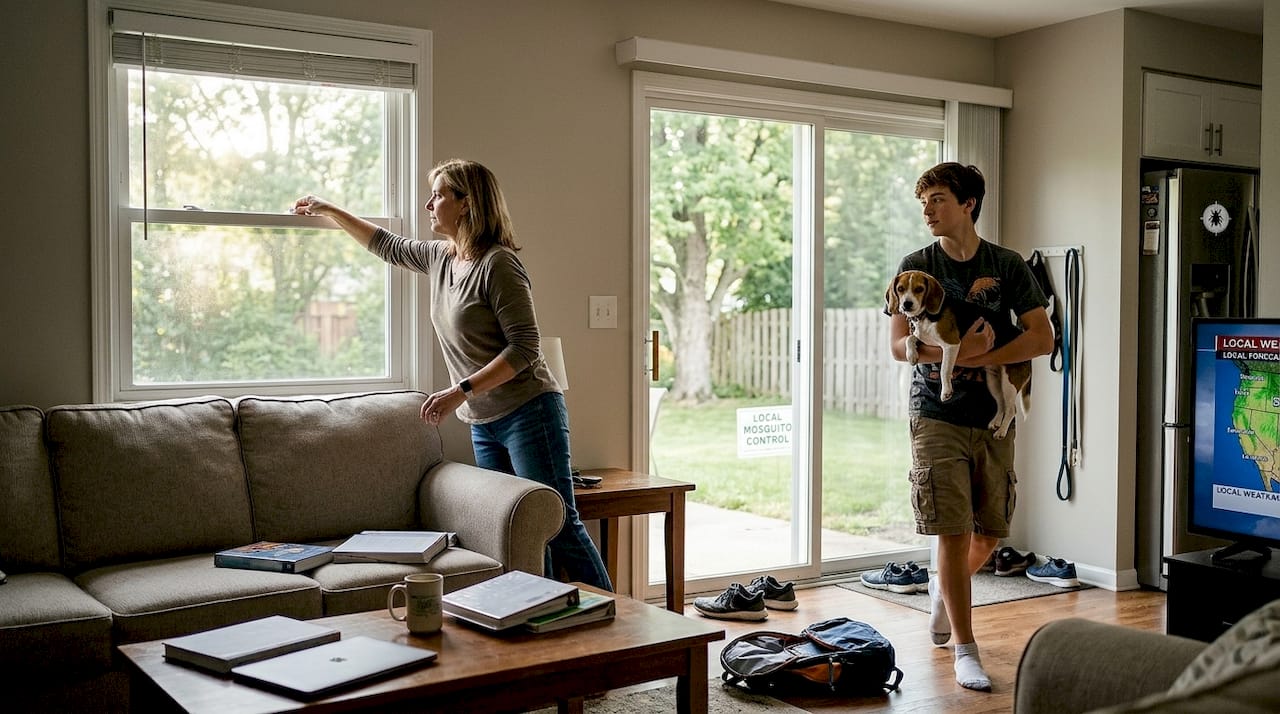
EPA-approved fogging products are formulated for low toxicity at the application rates used in residential areas. That said, “low risk” only holds when you follow the guidelines. Fogging safety tips confirm that staying indoors for 10 to 30 minutes during application and waiting until surfaces dry before re-entering treated areas keeps exposure minimal for both people and pets.
Here is your pre-fogging checklist:
- Close all windows and doors before the application begins
- Bring pets indoors and keep them inside until the spray has dried completely
- Cover outdoor furniture, toys, and garden equipment to reduce surface contact
- Harvest any garden vegetables before treatment if possible
- Avoid scheduling fogging when pollinators are most active, typically mid-morning to early afternoon
- Wait for confirmation from the applicator that re-entry is safe before going back outside
Most adverse incidents tied to mosquito fogging occur when residents ignore official guidelines, such as walking through treated areas immediately after application or leaving pets outside during treatment. Following the schedule your service provider gives you is the single most effective safety measure.
Pro Tip: Choose fogging services that communicate treatment schedules clearly in advance and provide written documentation of the products used. Transparency is a sign of a compliant, professional operation.
Reviewing mosquito safety guidelines before any treatment helps you ask the right questions and set proper expectations for your household.
Integrated pest management: The best long-term mosquito control approach
To finish, let’s look at how to build a strategy that actually lasts through an Illinois summer. Fogging alone will not get you there. The most effective approach layers multiple tactics, each targeting a different stage of the mosquito life cycle.
IPM (Integrated Pest Management) combines source reduction, larviciding, barrier spraying, and targeted fogging into one coordinated plan. Creating safe mosquito barriers alongside source reduction and larvicides gives Illinois homeowners the most effective and safe yard control, especially given West Nile virus risks in the region. Fogging alone leads to reinfestation from nearby breeding sources like wooded areas or rivers, which is why barrier methods’ sustained efficacy consistently outperforms fogging as a standalone tactic.
Here is how each layer works:
- Source reduction: Empty standing water from gutters, planters, bird baths, and tarps every week. No water, no larvae.
- Larviciding: Apply Bti (Bacillus thuringiensis israelensis) dunks to water sources you cannot drain, like decorative ponds. This kills larvae before they become adults.
- Barrier spraying: Treat vegetation, fences, and shaded resting areas with residual insecticide every 21 to 30 days during mosquito season.
- Fogging: Reserve this for fast knockdown during outdoor events or active outbreak situations, not routine weekly use.
| Step | Method | Benefit |
|---|---|---|
| Remove breeding sites | Source reduction | Stops mosquitoes before they hatch |
| Treat standing water | Larviciding | Interrupts the life cycle |
| Protect resting zones | Barrier spraying | 21 to 30 days of yard coverage |
| Fast outbreak response | ULV fogging | Immediate adult knockdown |
For mosquito IPM strategies tailored to Illinois conditions, combining all four layers gives you the best shot at a yard you can actually use.
Our take: Why mosquito fogging should be a last resort for Illinois yards
After helping Illinois homeowners through many mosquito seasons, we have seen the same pattern repeat itself. A homeowner invests in fogging, gets a few days of relief, and then wonders why the mosquitoes are back within a week. The answer is almost always nearby breeding sources, whether that is a neighbor’s untreated yard, a wooded lot, or a retention pond down the street.
Fogging is a band-aid. It handles the adults you can see right now, but it does nothing about the thousands of larvae already developing in standing water nearby. Homeowners who focus solely on fogging often end up frustrated and spending more money than those who invest in a layered approach from the start.
The real win comes from preventing pest reinfestation through consistent source reduction, regular barrier treatments, and larviciding. Fogging earns its place in that plan, but only as an emergency tool for events or outbreaks. Be skeptical of any service that sells fogging as your complete solution. The most honest thing we can tell you is that the yards with the fewest mosquito problems are the ones where owners never rely on a single tactic.
Need help? Professional mosquito control for Illinois homes
If you are ready to stop guessing and start protecting your yard with a plan that actually works, professional help makes a real difference.
At BugEvicta Pest Control, we build mosquito control programs around your specific yard, not a generic treatment schedule. From barrier spraying to larviciding and source reduction guidance, we handle every layer of the process. Our licensed team follows all Illinois regulations and communicates clearly before every application. Schedule mosquito control service today and get a plan built for your property. You can also explore our full pest control solutions for year-round protection beyond mosquito season.
Frequently asked questions
Is mosquito fogging in Illinois safe for my pets and children?
When applied correctly with EPA-approved products, fogging poses minimal risk to people and pets as long as you stay indoors during application and wait until the spray dries completely before going back outside.
How long does mosquito fogging last compared to barrier spraying?
Fogging typically provides relief for just a few hours to one day, while barrier sprays last 21 to 30 days by leaving a residual treatment on vegetation and resting surfaces.
Are there any restrictions on using mosquito fogging in Illinois neighborhoods?
Yes. Illinois fogging rules require licensed applicators to post signage, avoid applications during high winds or outside the approved seasonal window, and residential automatic misting systems are prohibited statewide.
What should I do to prepare my property before fogging?
Bring pets indoors, close all windows, and cover or remove outdoor furniture and children’s toys before treatment begins. Wait until the spray has dried before letting anyone back into the treated area.