
Why pest control matters: future-proof your Illinois home
TL;DR:
- Changing climate patterns in Illinois are causing pests to appear earlier, in larger numbers, and for longer periods.
- An integrated approach focusing on prevention and proactive timing is essential for effective pest control.
- Consistent maintenance and early actions are crucial to protect homes from the shifting seasonal pest threats.
Illinois homeowners are seeing something different in 2026. Rainy springs, warmer falls, and brutal winters are pushing pests into homes earlier, in larger numbers, and for longer stretches than most people expect. What worked two years ago may leave you wide open this season. Rainy springs boost ants, ticks, and termites, while warmer falls extend stink bug and spider activity indoors, and harsh winters drive rodents inside. This guide breaks down what is actually changing, why your old pest control routine may be falling short, and what Illinois homeowners can do right now to stay ahead of the problem.
Table of Contents
- How Illinois’ changing climate is reshaping pest threats
- Integrated Pest Management: Prevention over reaction
- Timing your pest control for year-round protection
- Long-term solutions: What most homeowners miss
- Our take: What really protects your Illinois home in 2026
- Protect your home with proven Illinois pest control
- Frequently asked questions
Key Takeaways
| Point | Details |
|---|---|
| Weather shapes pest risks | Rainy springs and warmer falls in 2026 are bringing new pests into Illinois homes. |
| Prevention beats reaction | Integrated Pest Management with proactive steps outperforms spray-only methods. |
| Regular timing pays off | Seasonal or monthly treatments give more reliable, lasting pest protection. |
| Long-term habits matter | Consistent inspection and home upkeep are key to keeping pests away year-round. |
How Illinois’ changing climate is reshaping pest threats
The pest landscape in Illinois has shifted in ways that catch a lot of homeowners off guard. It is not just about seeing more bugs. It is about seeing different bugs, at different times, behaving in ways that older prevention plans did not account for.
This year’s weather pattern has been unusually active. A wet spring created standing water across yards and crawl spaces, which is exactly the kind of environment that ants, ticks, and termites thrive in. A warmer fall pushed the typical end of pest season back by several weeks, meaning stink bugs and spiders stayed active indoors well past when most people stopped paying attention. Then came a harsh winter that sent rodents searching hard for warm entry points in your walls and foundation.
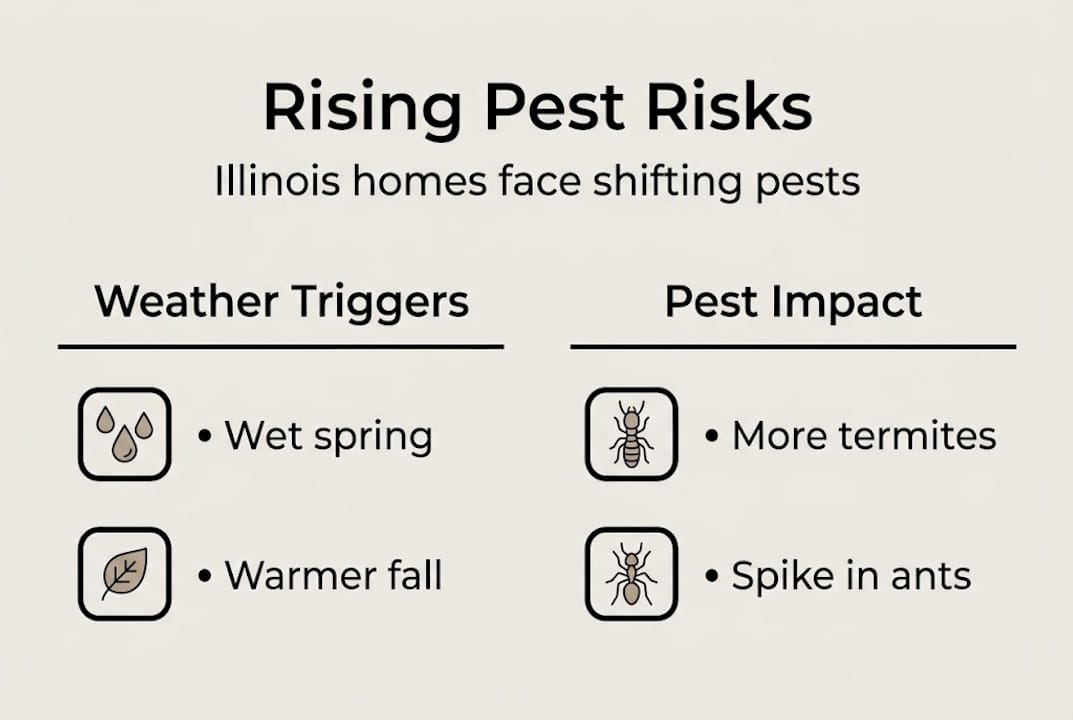
These are not random events. They reflect a pattern that local pest insights have tracked over several seasons, and the trend is pointing toward more volatility, not less. Understanding which pests peak during which conditions helps you stop reacting and start planning.
Seasonal pest activity breakdown for Illinois in 2026:
| Season | Weather condition | Primary pest threats |
|---|---|---|
| Spring | Heavy rainfall | Ants, ticks, termites |
| Summer | Heat and humidity | Mosquitoes, wasps, roaches |
| Fall | Warm temperatures | Stink bugs, spiders |
| Winter | Harsh cold | Rodents, overwintering insects |
Here is a quick summary of what to watch for across the year:
- Spring: Pavement ants in spring are among the first signs of trouble, often appearing along foundations after rain
- Summer: Mosquito populations spike with standing water from spring runoff
- Fall: Stink bugs and spiders move indoors as temperatures drop more slowly than usual
- Winter: Mice and rats exploit any gap larger than a dime to get inside
What makes 2026 different is the overlap. Warm falls mean fall pests are still active when winter pests start moving in. That creates a window where multiple pest types are competing for space inside your home at the same time. Most homeowners are not prepared for that kind of pressure.
Stat to know: Rainy springs boost ants, ticks, termites, while warmer falls extend stink bug and spider activity indoors, and harsh winters drive rodents inside, compressing what used to be separate pest seasons into one continuous cycle.
Integrated Pest Management: Prevention over reaction
Understanding these new threats makes one thing clear: you need a method that works ahead of the problem, not behind it. That is exactly what Integrated Pest Management, or IPM, is built to do.
IPM is not a single product or a one-time spray. It is a structured approach that combines prevention, monitoring, and targeted treatment. The goal is to make your home a place pests cannot easily access, survive in, or reproduce inside. IPM prioritizes prevention through source reduction like removing standing water, exclusion through sealing entry points, and monitoring before reaching for any chemical treatment.
IPM vs. traditional pest control:
| Factor | IPM approach | Traditional spray-only |
|---|---|---|
| Focus | Prevention first | Reaction after sighting |
| Methods | Sealing, baiting, monitoring | Broad chemical application |
| Duration | Seasonal, ongoing | Short-term relief |
| Safety | Targeted, lower exposure | Higher chemical use |
| Cost over time | Lower with consistency | Higher due to repeat emergencies |
Here are the top IPM actions you can take right now as an Illinois homeowner:
- Remove standing water from gutters, planters, and low spots in your yard
- Seal cracks and gaps around windows, doors, utility lines, and the foundation
- Store firewood away from the house to reduce harborage for termites and rodents
- Declutter basements and attics where pests nest undetected for months
- Schedule seasonal inspections before each major pest season begins
- Use targeted baits for ants and roaches rather than blanket sprays that miss the source
For homeowners dealing with wood-destroying insects, reviewing a termite prevention guide before spring hits is one of the most valuable things you can do. Understanding termite barrier options early gives you time to act before the ground warms and colonies become active.
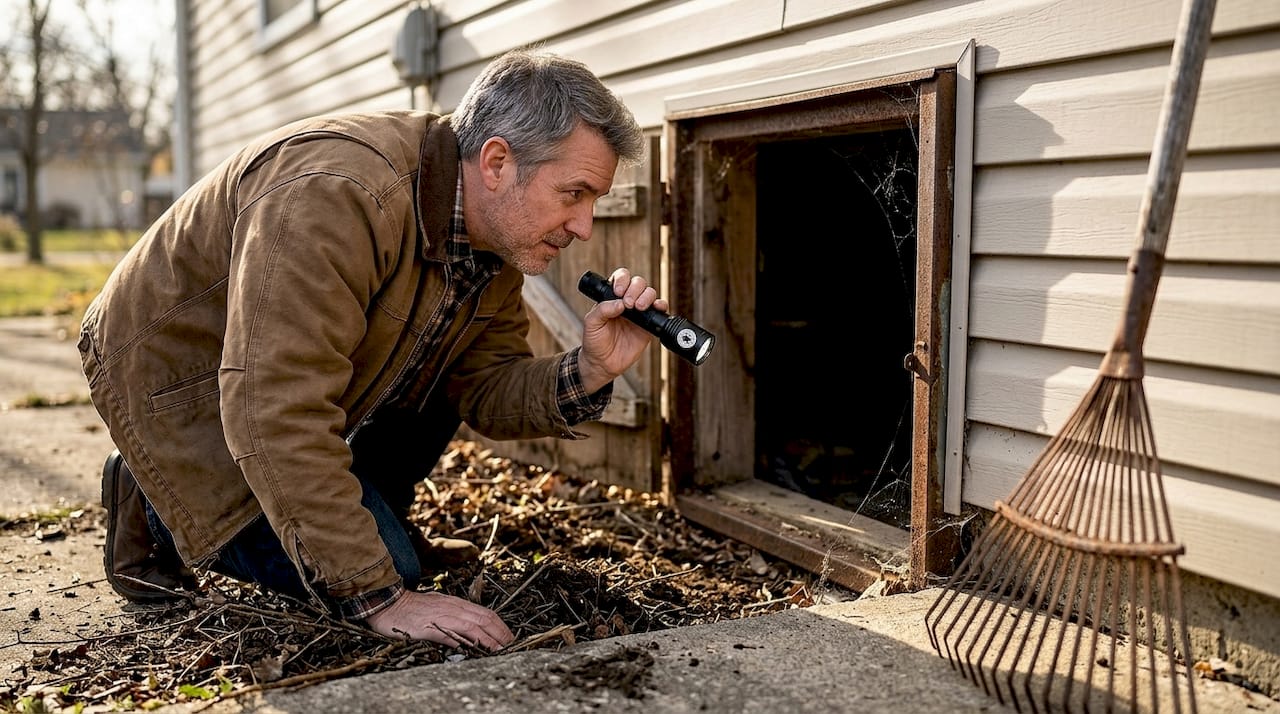
Pro Tip: Walk the perimeter of your home at the start of each season. Look for new cracks, moisture damage, or signs of digging near the foundation. Catching these early costs far less than treating an active infestation.
Timing your pest control for year-round protection
Having the right method matters, but timing is what makes it stick. A lot of homeowners treat pest control like a fire alarm: they only think about it when something is already wrong. In 2026, that approach will cost you.
Most barrier treatments and baits are effective for 3 to 4 weeks, which means a single treatment is not a season-long solution. Repeat applications, timed to match peak pest activity, are what actually keep populations from building up inside your home.
Here is how to align your pest control schedule with Illinois conditions this year:
- Late winter (February to March): Inspect for rodent entry points before spring thaw opens new gaps
- Early spring (March to April): Treat for ants and termites before the ground warms fully
- Late spring (May): Address mosquito breeding sites and tick habitat in tall grass
- Midsummer (July): Reapply barrier treatments as summer heat accelerates pest activity
- Early fall (September): Seal entry points before stink bugs and spiders start moving indoors
- Late fall (October to November): Check for rodent activity and reinforce exclusion measures
For homeowners who want a clear schedule, general pest control scheduling can help you map out when each type of treatment makes the most sense for your property. Termite-specific timing is its own category, and termite prevention timing follows the soil temperature and moisture cycles that trigger colony activity.
Pro Tip: Set a phone reminder at the start of each season to do a quick walk-through of your home’s exterior. You will catch small problems before they turn into large ones, and you will stay ahead of the pest calendar instead of chasing it.
Consistency is the real strategy here. A homeowner who does moderate, regular prevention will almost always have fewer pest problems than one who does one major treatment per year and then waits.
Long-term solutions: What most homeowners miss
Effective timing sets the stage, but there is a layer of protection that most guides skip over entirely: the structural and behavioral habits that make your home genuinely resistant to pests over time.
Most pest problems are not random. They follow predictable patterns tied to how a home is built, maintained, and used. Gaps in the foundation invite rodents. Moisture in the crawl space invites termites. Clutter in the garage gives spiders and roaches a place to hide and breed undisturbed for months.
“Rainy springs boost ants, ticks, termites; warmer falls extend stink bug and spider activity indoors; harsh winters drive rodents inside.” These are not isolated events. They are seasonal triggers that hit homes with vulnerabilities the hardest.
Here are the structural and maintenance steps that make the biggest long-term difference:
- Fix moisture problems first: Leaky pipes, poor drainage, and damp crawl spaces are more attractive to pests than almost anything else
- Seal every gap you find: Use caulk, steel wool, or foam depending on the location and size of the opening
- Trim vegetation away from the house: Shrubs and tree branches touching your home create a direct path inside
- Keep gutters clean: Clogged gutters hold water and create wood rot, both of which attract pests
- Inspect after major weather events: Heavy rain and temperature swings shift soil and create new entry points
Tracking seasonal pest trends helps you anticipate what is coming before it arrives. Pairing that awareness with ongoing inspection advice from a professional gives you a complete picture of your home’s risk at any given time.
The homeowners who avoid major infestations are not lucky. They are consistent. They treat pest control as ongoing maintenance, the same way they think about HVAC filters or roof inspections, not as an emergency response.
Our take: What really protects your Illinois home in 2026
After years of working with Illinois homeowners, the pattern we see most often is this: people wait until they spot a pest before they act. That instinct makes sense, but it almost always means the problem is already bigger than what you can see.
Pests do not announce themselves. A termite colony can cause significant structural damage before a single termite is visible to the homeowner. Rodents can nest in walls for weeks before you hear them. Waiting for visible proof is the single biggest mistake we see.
What actually works is anticipation. Knowing that a wet spring in Illinois means elevated termite and ant pressure, and acting on that knowledge in February, not May, is what separates homes that stay protected from homes that need emergency treatment. Our termite prevention insights reflect exactly this kind of forward-looking approach.
The homes that hold up best year after year are the ones where the homeowner treats pest control like a calendar event, not a crisis response. Small, regular actions compound into real protection over time.
Protect your home with proven Illinois pest control
You now have a clear picture of what 2026 pest threats look like in Illinois and how to stay ahead of them. The next step is putting that knowledge to work with a plan built specifically for your home.
At BugEvicta, we assess your property based on its specific layout, local pest patterns, and seasonal risk factors. We do not apply a one-size-fits-all solution. Our general pest control services are designed to match the actual threats your home faces right now, and our termite defense options give you the barrier protection that Illinois homes need before the ground warms each spring. Reach out today and let us help you build a prevention plan that works all year long.
Frequently asked questions
What are the main pests Illinois homeowners should worry about in 2026?
Ants, termites, ticks, stink bugs, spiders, and rodents are all elevated threats this year due to shifting weather patterns across Illinois. Each season brings a different wave, so year-round awareness is essential.
How often should you schedule pest control treatments in Illinois?
Most treatments are effective for 3 to 4 weeks, so seasonal repeat applications are the most reliable way to maintain protection throughout the year.
What is Integrated Pest Management (IPM), and is it better than regular sprays?
IPM focuses on prevention through sealing entry points, removing moisture sources, and monitoring, making it more effective and longer-lasting than spray-only approaches that only address surface activity.
Will climate change make pest issues worse in Illinois?
Yes. Rainy springs and warmer falls in 2026 are already causing more pests to invade homes earlier and stay active longer than in previous years.