

Spring near Quincy brings a familiar pull toward the woods. Morel season starts lighting up river bottoms and slopes at the same time that deer ticks begin showing up more often in west central Illinois.
If you hunt mushrooms in leaf litter, creek edges, and damp timber, you're also walking through prime tick cover. That doesn't mean you should skip the season. It means you should treat ticks like any other spring condition, along with mud, rain, and uneven ground.
When morels pop up, ticks do too in west central Illinois
In west central Illinois, morels usually start showing from late March through mid-May. Peak hunting often lands in April, especially after rain and a few mild nights. As of mid-April 2026, local conditions line up with that pattern, and blacklegged tick activity is also rising as the woods warm up.
The overlap makes sense. Morels like damp soil, leaf cover, and warming ground. Deer ticks also do well in moist woods with steady spring humidity. Ticks can stay active from early spring into fall, but April through June is a higher-risk stretch for people spending time in timber.
Good morel weather often means good tick weather too.
The best morel window near Quincy and nearby river country
Early black and gray morels often show first on warmer south-facing slopes. After spring showers, yellow morels usually become the main target. Later, half-free morels can appear near creek bottoms and around sycamores.
Near Quincy, hunters often focus on oak, elm, ash, maple, and sycamore. Dead or dying elms still get plenty of attention. Flood-prone woods, low areas, forest edges, and river-country timber can all produce well when soil temps and moisture line up.
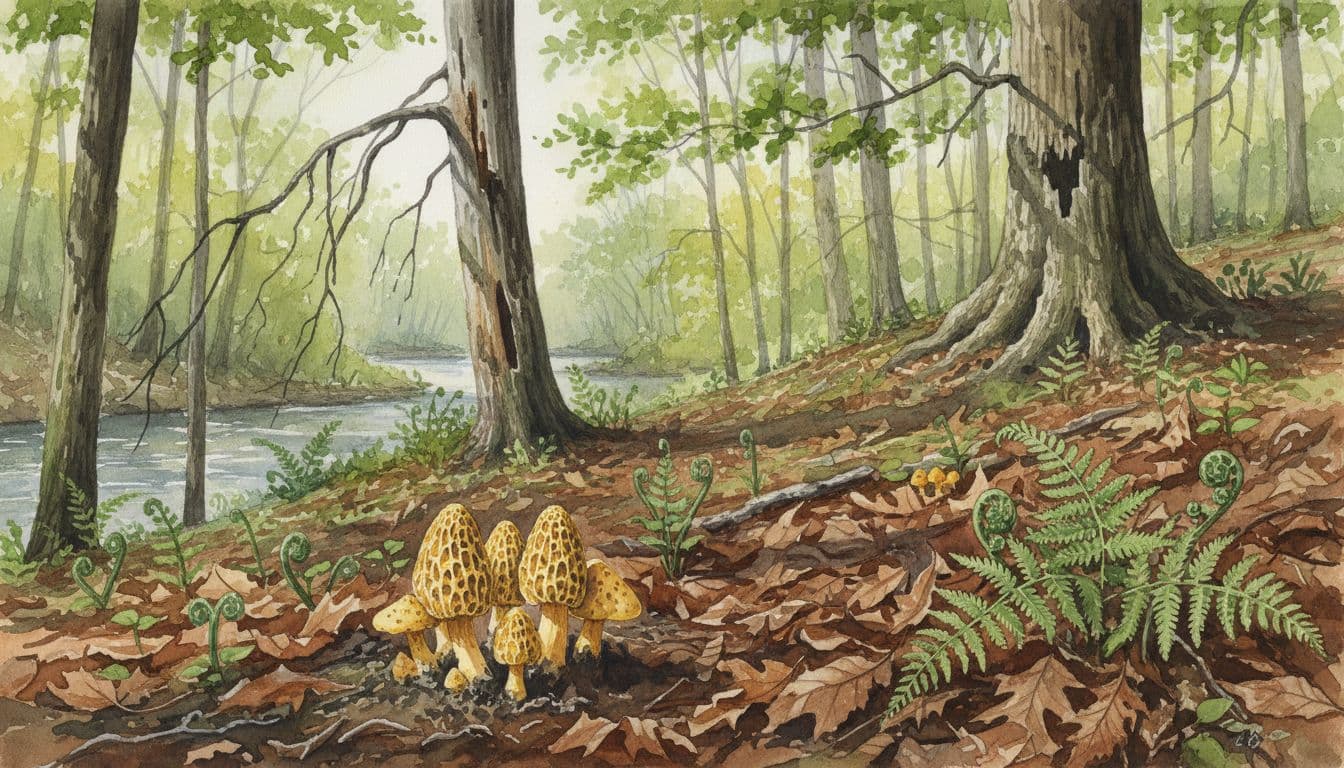
Those same spots also keep you close to the ground layer where ticks wait.
Why deer ticks are a real concern for spring foragers
Deer ticks, also called blacklegged ticks, are established in Illinois. Nymphs are a big spring concern because they are tiny, often about the size of a poppy seed. They do not jump or fly. Instead, they wait on low plants, grass, brush, and leaf litter, then attach when someone brushes past. The Illinois Department of Public Health's common tick guide gives a clear look at the species found in the state and why bites are easy to miss.
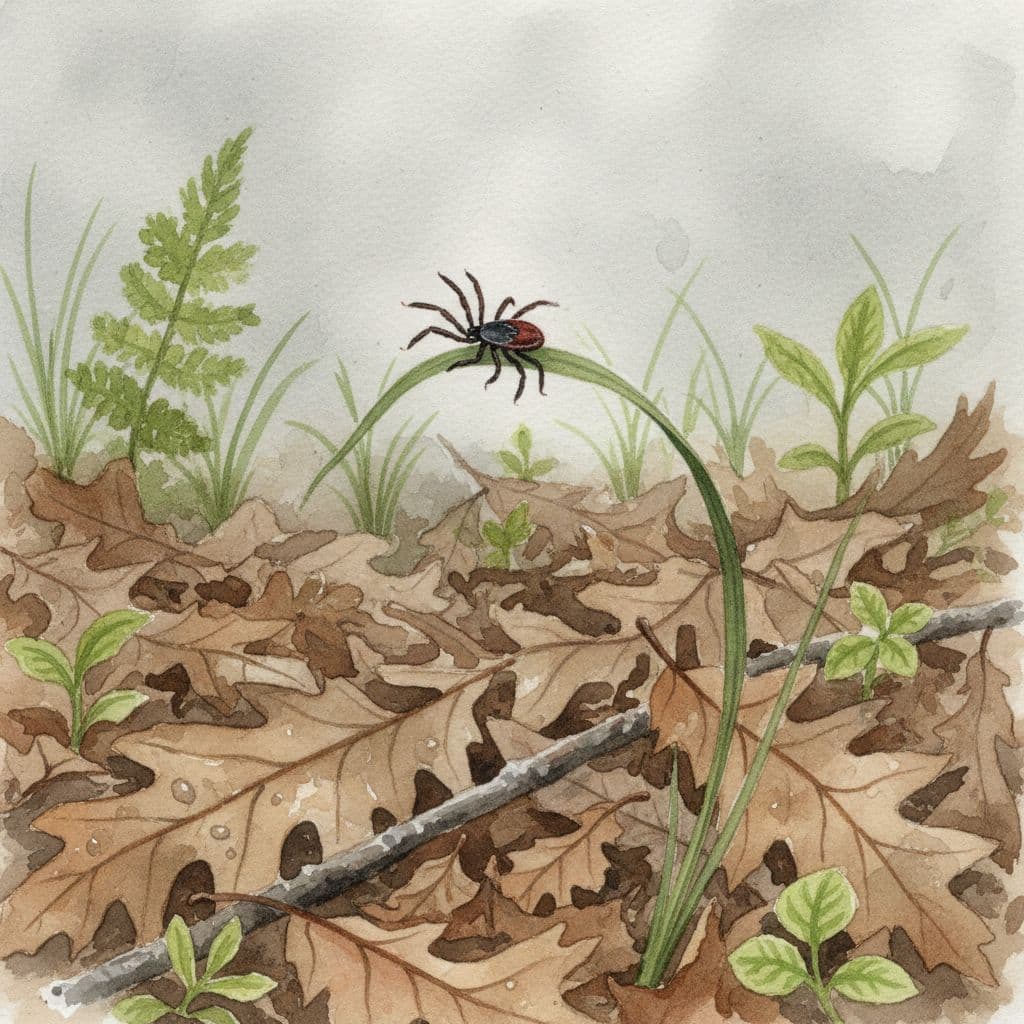
That matters because blacklegged ticks can spread Lyme disease, anaplasmosis, babesiosis, ehrlichiosis, and, in rare cases, Powassan virus. Most people won't get sick from every tick bite, but spring foragers should take the risk seriously because these ticks are so hard to spot.
Where mushroom hunters near Quincy are most likely to run into ticks
You do not need a long list of parks or backroads to understand the pattern. The places that often hold morels also tend to hold ticks. That is true on public land, family timber, and private creek ground across west central Illinois.
High-risk spots, leaf litter, tall grass, and brushy edges
Ticks collect in shaded, moist places and along transitions between woods and open ground. Brushy trail margins, creek banks, damp bottoms, and thick leaf litter all raise exposure. Mushroom hunters move slowly through those same areas because moisture, tree species, and terrain change there.
Risk goes up when you pause near logs, dead elms, blowdowns, and creek crossings. Kneeling to scan around a trunk or stepping through ankle-high grass puts your socks, cuffs, and sleeves right where ticks are waiting. The Illinois Learn to Hunt tick season article does a good job explaining why leafy woodland edges deserve extra care.
Public land and private land rules still matter
Before collecting on public ground, check Illinois DNR rules for that site. Rules can vary by property. On private land, always get permission first. Safe outdoor habits matter everywhere, and so do landowner rights.
How to dress and pack for a safer mushroom hunt
No single step blocks every tick. Layered protection works better. Clothing, repellent, and a few simple habits can lower risk without turning a spring hunt into a chore.
Clothing that makes ticks easier to spot and block
Wear long pants, long sleeves, and closed-toe boots. Light-colored clothing helps you spot crawling ticks faster. Tuck your shirt into your pants, then tuck your pants into socks or boots when you expect brush, weeds, or deep leaf litter.
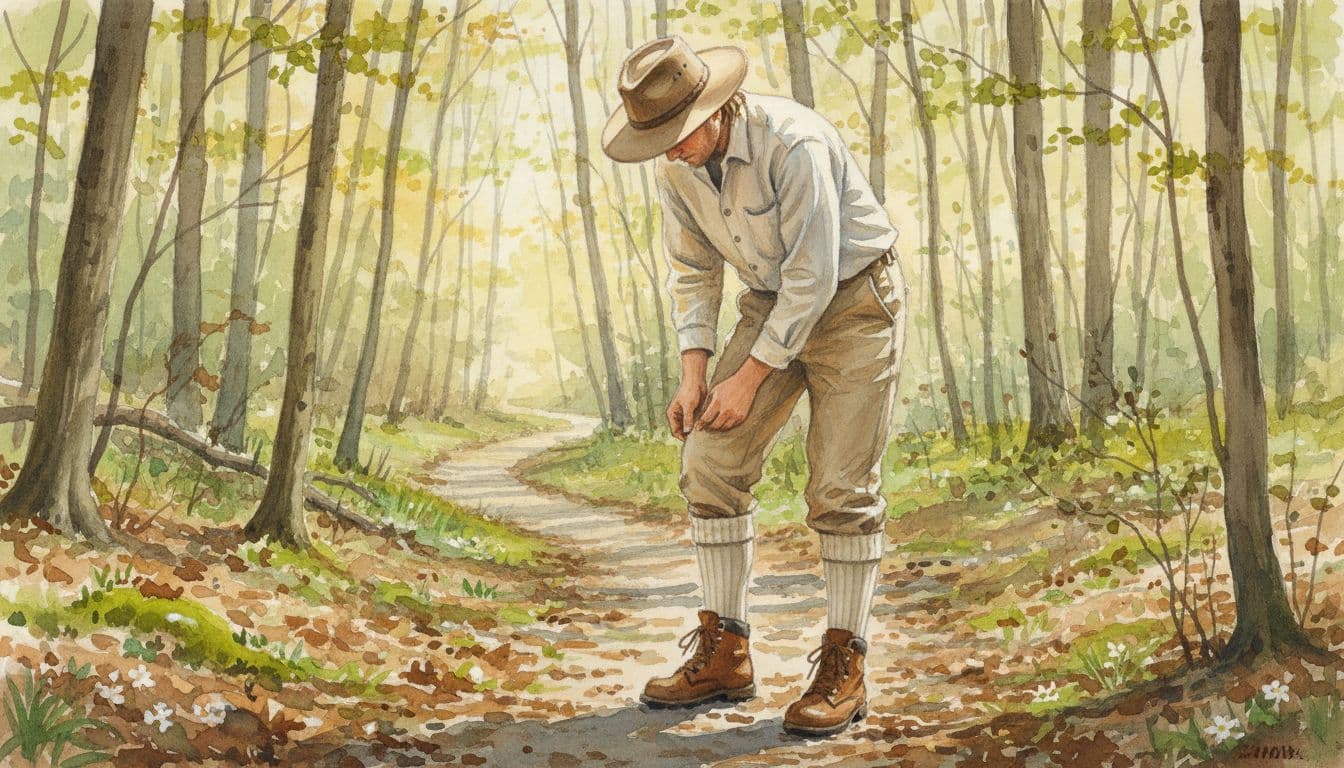
That setup helps close off easy entry points at your ankles, waist, and wrists. It also makes sense for muddy spring ground, where open shoes and wet socks can ruin the day before ticks even enter the picture.
Repellents that work, and how to use them the right way
For skin or clothing, use an EPA-registered product labeled for tick protection. Common options include DEET, picaridin, IR3535, and oil of lemon eucalyptus when the label allows it. Permethrin is different because it is for clothing and gear only, not skin.
Treat boots, socks, and outerwear before the trip if you use permethrin. Let them dry as directed. For sprays or lotions used on skin, follow the label and reapply only as directed. Illinois Extension's spring tick protection advice is a helpful refresher before the season gets busy.
Smart habits in the woods can lower your tick exposure
You do not need to hunt nervously. A few small choices can cut your exposure while keeping the day enjoyable. Awareness helps more than worry.
How to search for morels without brushing through every hot spot
Early in the season, start on warmer south slopes. Later, shift toward cooler bottoms and shaded creek areas. While moving between search zones, stay on more open ground when possible instead of forcing through dense grass or brush every time.
It also helps to scan likely trees before stepping deep into cover. A slow walk through open timber often finds as many mushrooms as a straight push through the thickest edge growth. You still cover ground, but you brush against fewer stems and leaves.
Do quick tick checks before, during, and right after the hunt
Check clothing and exposed skin every few hours, especially around socks, boot tops, cuffs, sleeves, and your waistline. A quick look during a break can catch ticks before they attach. After the trip, shower soon and inspect your scalp, ears, armpits, belly button, groin, and behind the knees. Dry clothes on high heat before washing if the care label allows.
Pets, bags, and mushroom gear need a look too. Ticks can ride home on a dog, a backpack, or a mesh sack. If you're also seeing repeat tick activity around the house or yard, general pest control covering ticks in Quincy Illinois may help reduce pressure close to home.
What to do if you find a tick after a day of hunting
Finding a tick can feel worse than it is. The best response is calm and quick. Remove it the right way, clean the area, and watch for symptoms over the next days and weeks.
Safe tick removal, step by step
Use fine-tipped tweezers. Grab the tick as close to the skin as you can. Pull straight out with steady pressure. Do not twist it, crush it, burn it, or coat it with petroleum jelly.
After removal, wash the bite area and your hands with soap and water. Then note the date of the bite and where you were hunting. That simple record can help if symptoms start later.
Signs of illness that should not be ignored
Call a healthcare provider if you develop fever, chills, headache, body aches, unusual tiredness, joint pain, or a rash after a tick bite or time in the woods. Lyme disease and other tick-borne illnesses do not always show up right away, so it helps to stay alert for several days or weeks. The Illinois Natural History Survey tick education page is a useful Illinois-based resource if you want more detail on tick safety after a bite.
Around Quincy, spring morel hunting and tick season travel together. The woods are still worth your time, but they reward people who dress for contact, use repellent, check often, and remove ticks fast.
Plan for ticks the same way you plan for weather and terrain. That one habit makes it easier to enjoy west central Illinois woods without bringing home more than mushrooms.
👉 Keep Reading: Pest Control Tips That Actually Work
Pest Inspection Preparation for a Smoother Home Visit
Termite prevention guide for Illinois homeowners 2026
Bed Bugs: The Complete Guide to Identifying, Understanding, and Getting Rid of Them
How to Kill Ants in Your Quincy Yard Before They Reach the House