

Warm evenings in Quincy often come with the same scene, June bugs thumping against porch lights, buzzing past garage doors, and landing in odd places. Those hard-shelled beetles, also called June beetles or May beetles, show up across West Central Illinois from late spring into summer.
Most of the time, June bugs are more annoying than dangerous. Still, their underground young, called grubs, can be rough on lawns and some plants. It helps to know which problem you're seeing before you react.
Why June bugs swarm lights on warm summer nights
June bugs are night-active beetles. After they emerge from the soil in late spring or early summer, adults spend their short above-ground life flying, feeding, and mating. That is why activity often spikes on warm evenings, especially after sunset.
They also fly like tiny wind-up toys with poor steering. So when several gather near a porch bulb, the noise and collisions can make the problem feel bigger than it is. Michigan State University notes that adult May and June beetles are most active around dusk and are attracted to lights, which lines up with what many homeowners see around garages and entry doors in early summer. See the MSU Integrated Pest Management page on May or June beetles for added context on their life cycle and timing.
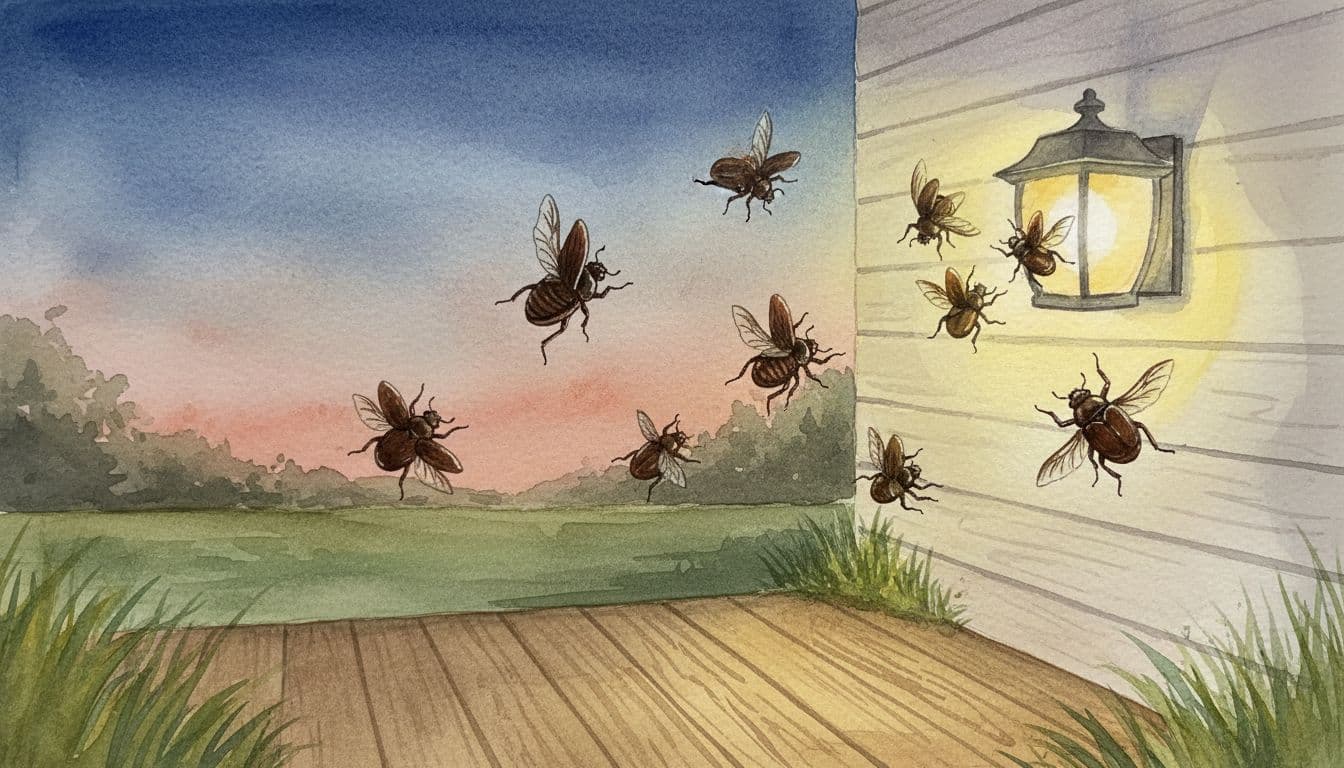
Artificial light throws off how they navigate
Like many flying insects, June bugs use natural light cues at night. Bright outdoor bulbs can confuse that pattern. A porch light, garage coach light, or floodlight may pull them in and keep them circling.
Cool white bulbs usually attract more insects than warm or yellow-toned lights. That does not mean bug bulbs stop all activity, but they often reduce it enough to matter. If your front entry looks like a tiny beetle airport every June, the bulb color may be part of the reason.
Indoor light can also draw them toward windows. When the house is bright and the yard is dark, beetles may collect on screens or bang against glass.
Warm weather and mating season make swarms more noticeable
In Illinois, June bug activity often starts in May or early June and can stretch into July, sometimes longer in warm years. Local weather plays a big role. A run of mild evenings after rain can make flights seem sudden and heavy.
That timing is why Quincy homeowners tend to notice them during cookouts, late yard work, and nights on the porch. Adults are simply out at the same time you are. Their season is short, but it is active enough to get your attention.
Are June bugs harmful, and when should you worry
For people and pets, June bugs are usually low-risk. They do not bite, sting, or spread disease the way mosquitoes, ticks, or some flies can. They may blunder into your shirt, bounce off a screen, or buzz around a lamp, but they are not a direct health threat.
The bigger distinction is between the adult beetle and the larva. Adults are mostly a nuisance. White grubs, which live in the soil, are the stage that can harm lawns and roots.
A quick comparison makes that easier to sort out:
| Concern | Adult June bugs | White grubs |
|---|---|---|
| Risk to people and pets | Low | Low |
| Main issue | Nuisance around lights | Root damage in soil |
| Usual location | Around lights, plants, screens | Under turf and garden soil |
| Damage level | Often light and temporary | Can be serious in lawns |
The takeaway is simple. Seeing beetles around the porch does not always mean you have a lawn emergency.
Adults are a porch-light nuisance. Grubs are the lawn problem worth tracking.
They are mostly harmless to people, pets, and your house
June bugs do not chew wiring, hollow out wood, or damage walls. They are nothing like termites, carpenter ants, or rodents. If one gets indoors, it usually flies toward a lamp, falls on its back, and makes a lot of noise trying to recover.
Pets may chase or eat them. That is usually more gross than dangerous, though a large number of insects can upset a sensitive stomach. The main household issue is annoyance near doors, screens, and lighted windows.
The bigger problem is what their grubs can do underground
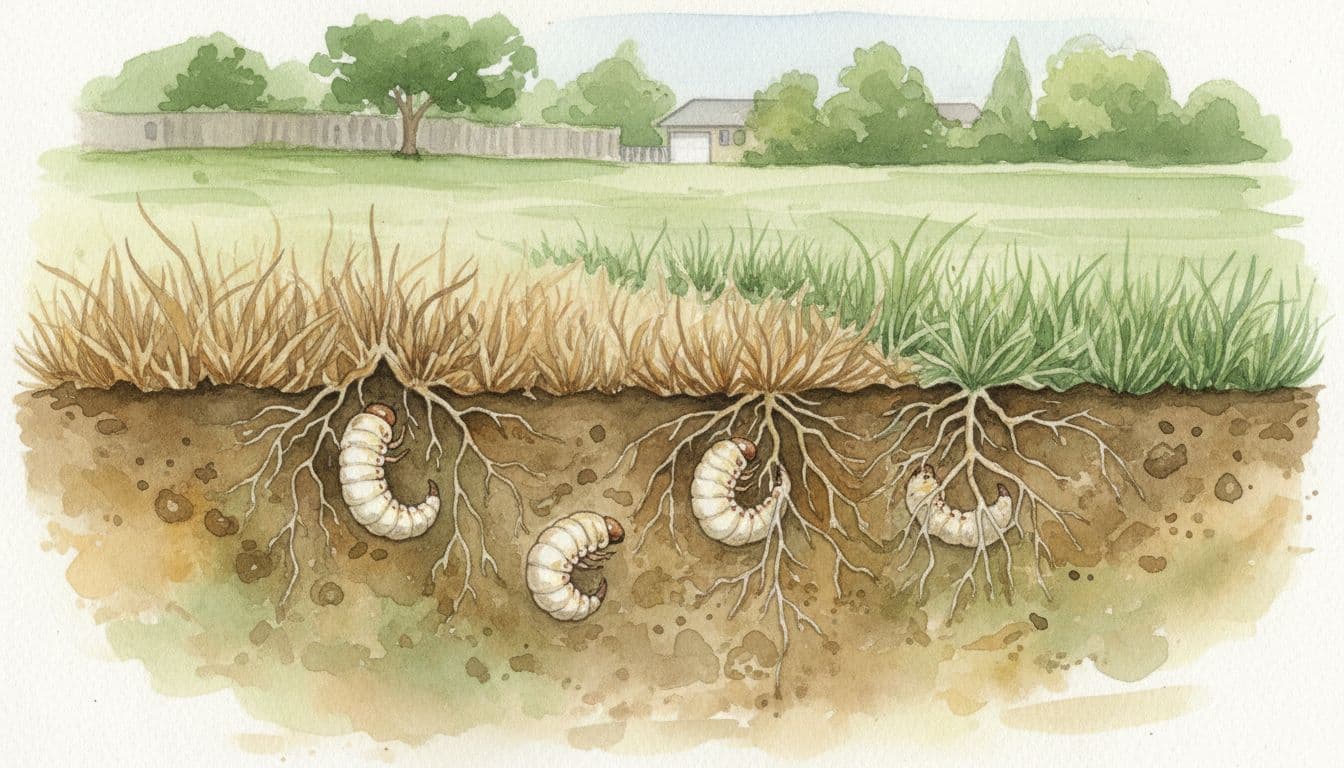
White grubs are C-shaped larvae that live in the soil and feed on roots. When grub numbers rise, turf can weaken because the grass cannot take up enough water and nutrients. Illinois homeowners often first notice patchy brown spots, thinning grass, or sod that lifts easily like loose carpet.
Another clue is animal digging. Skunks, raccoons, and birds may tear into the yard to feed on grubs. The Illinois Extension lawn grub guidance is useful if you want to compare those signs with other lawn problems, such as drought or disease.
What June bugs do to lawns, gardens, and landscape plants
Adult June bugs can feed on leaves, flowers, and some fruit at night. In many yards, that damage stays light. You might see ragged edges on leaves or some chewing on tender plants, but a few beetles near a light do not always lead to major plant loss.
The more lasting yard issue usually comes later, below ground. Adult flights can mean egg-laying, and that can lead to grub pressure after hatching. Michigan State University has noted that heavy June beetle flights can point to more grubs later, which helps explain why some lawns struggle after a summer with lots of evening beetle activity.
Adult beetles may chew leaves, but the damage is often limited
Adults feed at night, so plant damage can seem to appear out of nowhere. Roses, tree leaves, shrubs, and garden plants may show chewing, especially when beetle numbers are high. Still, many healthy plants outgrow that feeding.
A small cluster at your porch light is not proof of a serious garden problem. Damage matters more than sightings. If leaves show light nibbling but the plant still grows well, watch it rather than rushing into treatment.
Grubs can thin out turf and stress shallow-rooted plants
Grub feeding becomes more obvious when the lawn is already under stress. During a hot Quincy summer, shallow roots and dry soil make weakened turf look worse, faster. Brown patches may spread, and grass may feel spongy or loose underfoot.
That is why grub damage often gets confused with drought. The difference is root loss. Grass that has lost roots will not rebound well after watering, and pieces may peel up easily. Nearby plants with shallow roots can also struggle because the soil food source is being eaten below the surface.
How to reduce June bugs around your home without making it complicated
The best approach is to lower attraction, block easy entry, and keep your lawn healthy enough to handle some pressure. Trying to wipe out every adult beetle is rarely practical because they fly in from nearby areas. A simpler plan usually works better.
Change outdoor lighting and seal easy entry points
Start with the lights. Turn off unneeded porch and garage lights when possible. Swap bright cool-white bulbs for warm or yellow bug lights near doors. Pull blinds or curtains at night if bright indoor rooms face the yard.
Then check screens and door sweeps. Even a small tear gives clumsy beetles a way inside. Repair damaged screens, seal gaps around doors, and limit the time doors stay open on lit evenings.
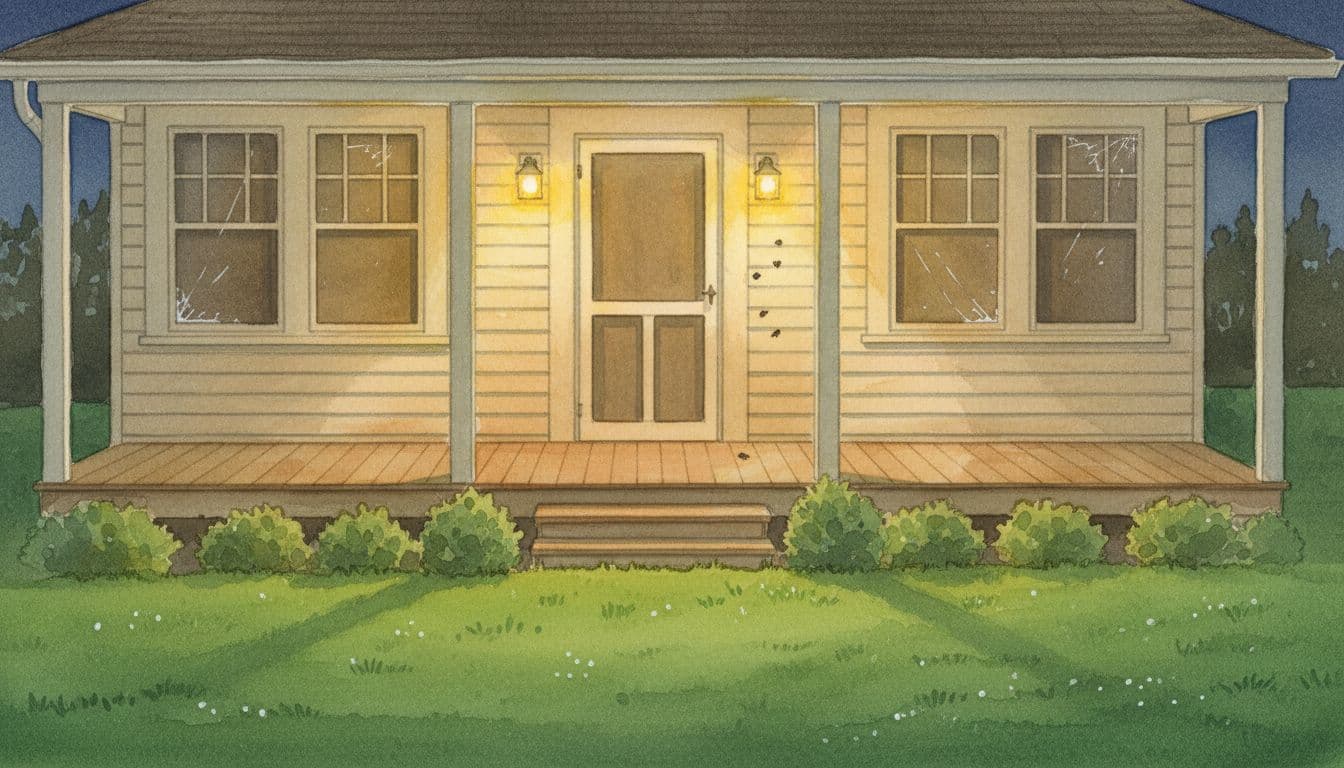
These small changes often cut down the nightly swarm around entry points. For a homeowner-friendly overview of common control ideas, The Spruce's June bug guide covers many of the same practical steps.
Use yard care that helps your lawn handle grub pressure
Healthy turf tolerates some grub feeding better than weak turf. Keep grass at the right mowing height for the variety you have, and avoid scalping it during summer heat. Water deeply, but not too often, so roots grow down instead of staying shallow.
It also helps to reduce heavy thatch. Thick thatch can create a better place for pests and can make water movement uneven. Keep an eye on the lawn in mid to late summer, when grub injury often becomes easier to spot.
Treat grubs only when damage or high numbers justify it
Adult June bugs are hard to control in large outdoor areas, and their season is short. When lawn damage shows up, it usually makes more sense to focus on grubs. Treatment timing matters because products work best on younger larvae, not on every stage equally.
Homeowners may look at beneficial nematodes, milky spore where appropriate, or labeled grub-control products. Read the label closely and match the product to the pest and timing. If you are unsure whether the yard has grubs, confirm the problem first. Brown grass caused by drought or fungus will not improve from grub treatment.
For Quincy-area homes with spreading lawn patches, repeat beetle swarms, or plant decline, a pest and lawn inspection can save time and guesswork. The main goal is not to chase every beetle you see. It is to catch the root problem if grubs are the real cause.
👉 Homeowner Pest Control Guides
Bed Bugs: The Complete Guide to Identifying, Understanding, and Getting Rid of Them
Termite prevention guide for Illinois homeowners 2026
Bed Bug Bites vs Mosquito Bites: How to Tell Them Apart