
In Quincy, ants often show up right when the weather shifts. A few warm days, a heavy rain, or a dry stretch can send them indoors fast. That is why the ant problem in Quincy, IL feels small one day and hard to control the next.
Local homes and businesses give ants what they want, food, water, and easy entry points. Older foundations, damp basements, kitchen crumbs, and slow leaks all add up. If you are searching for pest control near Quincy, IL, it helps to know why ants settle in and when a minor nuisance becomes a real infestation.
What drives the ant problem in Quincy, IL
Ants are active in Quincy through much of spring and summer. Still, indoor problems can keep going all year when a colony finds warmth, moisture, and food. Once ants start using a path into a building, they often return to it again and again.
Many homes give them plenty of access. Small gaps around doors, foundation cracks, utility lines, and window frames are enough. Ants do not need a wide opening. A tiny space near a sill or pipe can work.
Food pulls them in, but water often keeps them there. Crumbs under appliances, grease near the stove, pet food bowls, and standing water near sinks all help ants stay active. Damp wood, wet soil near the foundation, and mulch piled too close to the home can also support nesting nearby.
Weather, moisture, and older buildings give ants an easy start
Rain often pushes ants indoors. When the soil gets soaked, colonies look for drier ground and stable shelter. In contrast, hot dry spells can send ants inside for water. So, the same house may see activity after storms and again during summer heat.
Basements, crawl spaces, garages, and utility rooms are common starting points. These areas stay cooler, hold moisture, and often have more gaps. In older Quincy homes, worn seals and settled foundations can make entry even easier.
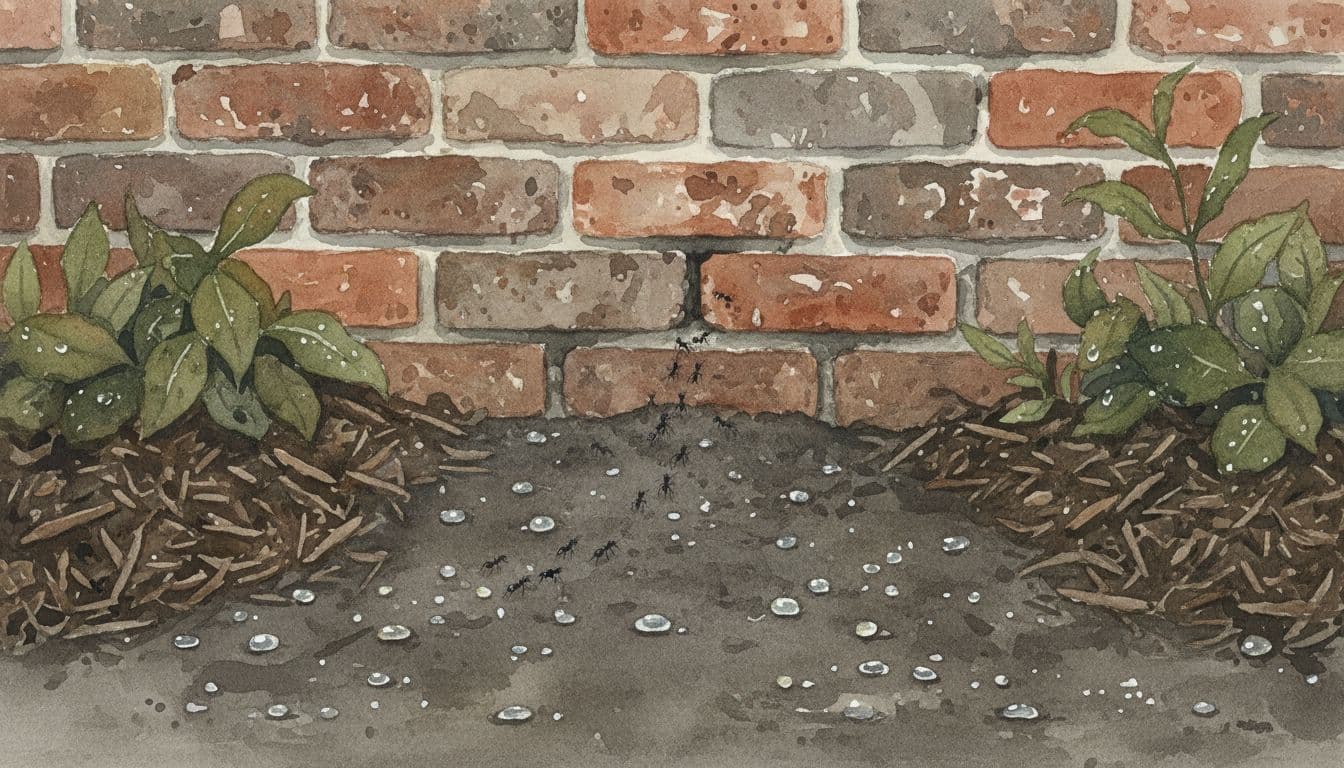
Outside conditions matter too. Thick mulch, leaf buildup, stacked firewood, and overgrown plants hold moisture near the house. That creates a good staging area for ants before they move inside.
Ant activity often starts outside the home, even when the problem shows up in the kitchen first.
Food and water inside the home keep colonies active
Kitchens are the usual hotspot, but they are not the only one. Bathrooms, laundry rooms, pantry shelves, trash areas, and pet feeding spots can all support steady ant traffic. A few crumbs behind the toaster or a sticky spot under a trash can is sometimes enough.
Water is just as important. A slow drip under the sink, dampness around a tub, or condensation near laundry lines can support ants for weeks. When a colony has both food and water nearby, you may see trails at the same time every day.
That is why quick wipe-downs do not always solve the issue. You may remove what you can see, but the colony keeps sending more workers back to the same source.
The ants Quincy residents are most likely to see
Not every ant problem is the same. Some species mostly invade for food. Others point to a bigger issue, such as wet wood or hidden nesting sites. Correct identification matters because the right treatment for one type may fail on another.
In Quincy, homeowners often report small nuisance ants in kitchens and along baseboards. Odorous house ants and pavement ants fit that pattern. People also notice larger black ants near wood, porches, or foundations, and those may be carpenter ants.
Small sugar ants can spread through kitchens fast
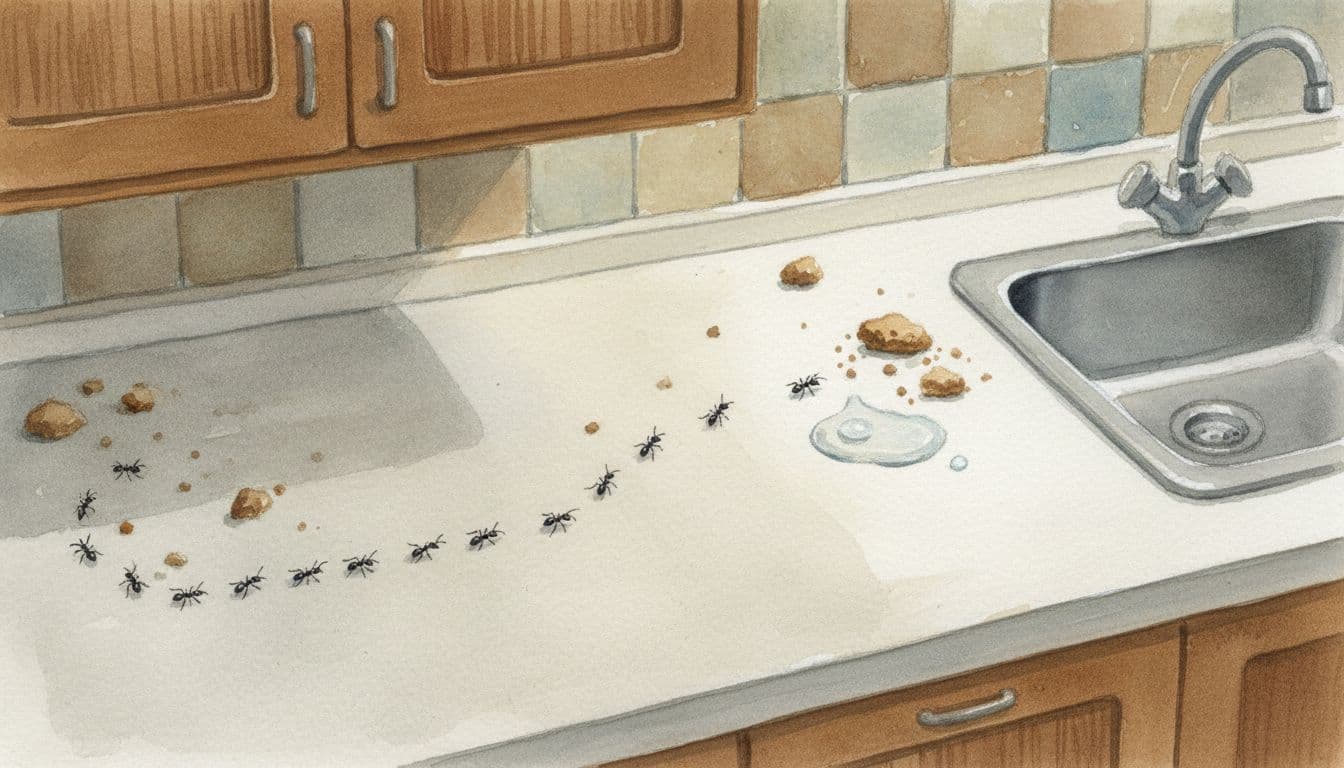
Many people call them "sugar ants" because they show up around sweets, sinks, and pantry items. You may see thin trails along the counter edge, around the dishwasher, or under the coffee maker. They can also appear near pet bowls and garbage bins.
These ants are easy to underestimate because they are small. Yet they spread fast once scouts find a food source. After that, a loose line can turn into a steady trail moving from wall cracks to counters and back again.
Store sprays often kill the ants you can see. However, they may not reach the nest. In some cases, the colony shifts its path, splits, or stays active behind walls while surface activity seems better for a few days.
Carpenter ants are a bigger warning sign
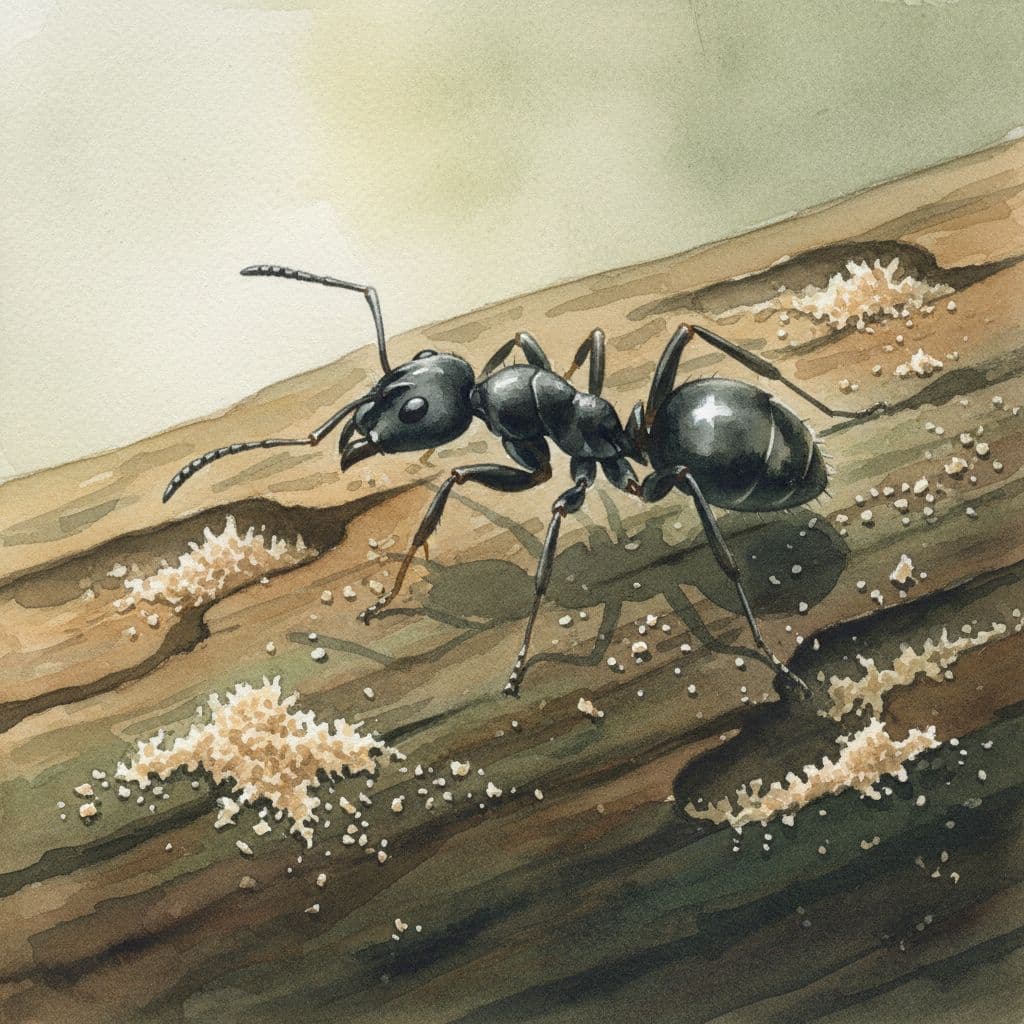
Carpenter ants deserve more attention. They do not eat wood, but they tunnel through damp or damaged wood to nest. Because of that, they often point to moisture trouble inside walls, window frames, sills, or other structural areas.
They are larger than common kitchen ants, and they are easier to spot. Some people hear faint rustling in a wall at night. Others notice sawdust-like material near trim, baseboards, or wood beams.
If you suspect carpenter ants, do not ignore it. The ants themselves are one problem. The moisture that attracted them may be the larger issue.
How to tell if you have a minor ant issue or a real infestation
One or two ants do not always mean you have a major problem. Scouts often search alone before a trail forms. Still, repeated sightings in the same spot usually mean a nest is close or a colony has already mapped a route into the home.
A minor issue may look like a few ants near a door after rain. You clean the area, dry it out, and the activity stops. A real infestation behaves differently. Ants keep showing up after cleaning. Trails appear in more than one room. You notice them near plumbing, food storage, or wall gaps on a regular schedule.
Winged ants are another sign to take seriously. They can mean a colony is mature and trying to expand. If ants return after DIY treatment, that also points to a deeper nesting problem.
Early signs homeowners often miss
Many infestations start with easy-to-dismiss activity. A few ants near the sink at dusk. A small trail along a baseboard after a storm. Ants moving around stones, mulch, or pavers outside the house. These seem minor, but they can be the first clue.
Pay attention to places with moisture. Ants often show up near bathrooms, laundry hookups, water heaters, and under kitchen sinks. In the yard, nests may sit under stones, edging, or moist mulch near the foundation.
Seeing ants in one room does not mean the colony is in that room. The nest may be behind a wall, under a slab, or outside near the structure. The ants you see are often the tip of the problem.
Signs it is time to call a Quincy ant control professional
Carpenter ants are a strong reason to call for help quickly. So are repeated infestations that come back after sprays or bait. When ants are moving through wall voids, ceilings, or multiple rooms, the source is harder to track without a full inspection.
Rental units and multi-family housing add another layer. Ants can move between walls, shared plumbing, and neighboring units. In those cases, treating one apartment may not solve the source.
There are also safety reasons to skip trial-and-error products. If you have children, pets, or food prep areas affected by ants, a more targeted plan is often the better fit.
If ants return after cleaning and treatment, the colony is usually still active somewhere nearby.
What works best for ant control in Quincy homes
Long-term control starts with the species and the nesting site. That is why random treatment often disappoints. If the colony is under the slab, inside damp wood, or outside near the foundation, the right approach needs to match that location.
Good ant control usually includes finding the nest, using the right bait or treatment method, sealing easy entry points, and correcting the moisture or sanitation issue that keeps ants coming back. One step without the others may reduce activity, but it often does not end it.
Why DIY ant sprays often fail
Most spray products work on contact. They kill the workers you can see, but the rest of the colony may stay untouched. That matters because the nest is often hidden behind walls, under flooring, or outside in soil and mulch.
Some ants also avoid the wrong bait. Others react to surface sprays by shifting routes. In some cases, a stressed colony can spread into nearby areas, which makes the problem feel random even though it started in one place.
This is where many Quincy homeowners get stuck. The ants disappear for a weekend, then reappear in the bathroom or pantry. The issue was never the trail alone. The issue was the colony behind it.
Simple prevention steps that make a real difference
Prevention does not need to be fancy, but it does need to be consistent. Start with the spots ants use every day. Wipe counters, sweep under appliances, and store dry goods in sealed containers. Keep trash closed, and do not leave pet food out overnight if ants are active.
Next, reduce indoor moisture. Fix leaks under sinks, dry out damp areas, and watch for condensation near laundry lines or basement walls. Outside, trim plants away from the house, keep mulch from pressing against the foundation, and avoid stacking wood close to exterior walls.
Finally, seal small gaps where you can. Door thresholds, utility openings, window trim, and foundation cracks are common access points. These steps help, but they work best when paired with proper treatment if a colony is already established.
When ants keep returning, local ant control is often the fastest route to a lasting fix. A Quincy pest control professional can identify the species, locate the nesting area, and build a plan that fits the property.
The ant problem in Quincy, IL usually starts small, then grows when ants find easy food, steady moisture, and a simple way inside. That is why a few kitchen ants should not be ignored, especially after rain, during heat, or in homes with damp basements and older entry points.
Early action saves time and frustration. If ants keep coming back, or if you suspect carpenter ants, it makes sense to get a local inspection and a clear treatment plan before the colony spreads further.
👉 Learn More About Your Pest Problem
How to Kill Ants in Your Quincy Yard Before They Reach the House
Bed Bugs: The Complete Guide to Identifying, Understanding, and Getting Rid of Them