
In Quincy, ant activity starts picking up fast in April as the soil warms and spring moisture settles in. If you wait until ants show up in the kitchen, you're already behind.
The best move is to stop yard ants early, break their trails, and keep the colony away from your foundation. That starts with one simple fact: not all ants respond to the same treatment, so the right fix depends on the species and where it's nesting.
Find out which ants are in your yard before you treat them
A lot of homeowners waste time by spraying every ant they see. That may kill a few workers, but it often misses the nest and queen. When that happens, the trail comes right back.
Species matters because bait, contact sprays, and nest treatments all work differently. In Quincy yards, spring ants usually nest in soil, under hard surfaces, or in damp wood near the house.
The ants Quincy homeowners see most often in spring
Pavement ants are small and dark, and they often nest in cracks along sidewalks, patios, and driveways. Odorous house ants are also small, brown to dark brown, and they give off a rotten smell when crushed. Field ants tend to build visible soil mounds in open areas. Carpenter ants are larger, usually black, and often point to damp wood in stumps, logs, or wet trim.
You may also run into acrobat ants in rotting wood or hollow branches. Thief ants are tiny and pale yellow, often near other ant nests. Pharaoh ants are tiny and yellow-brown, but they are more often an indoor problem than a true yard ant issue.
For carpenter ants, size alone is not enough. The Illinois Department of Public Health's carpenter ant guide explains that they hollow out wood for nesting, which is why damp outdoor wood deserves close attention.
Yard signs that ants are getting ready to enter the house
Watch for these early signs around the yard and foundation:
- Steady ant trails moving toward doors, siding, or utility lines
- Small nests near patios, sidewalks, and the edge of the slab
- Loose soil mounds in turf or mulch beds
- Ants gathering under stones, boards, or landscape fabric
- Sawdust-like frass near damp wood, stumps, or fence posts
- A sudden jump in activity after a warm rain
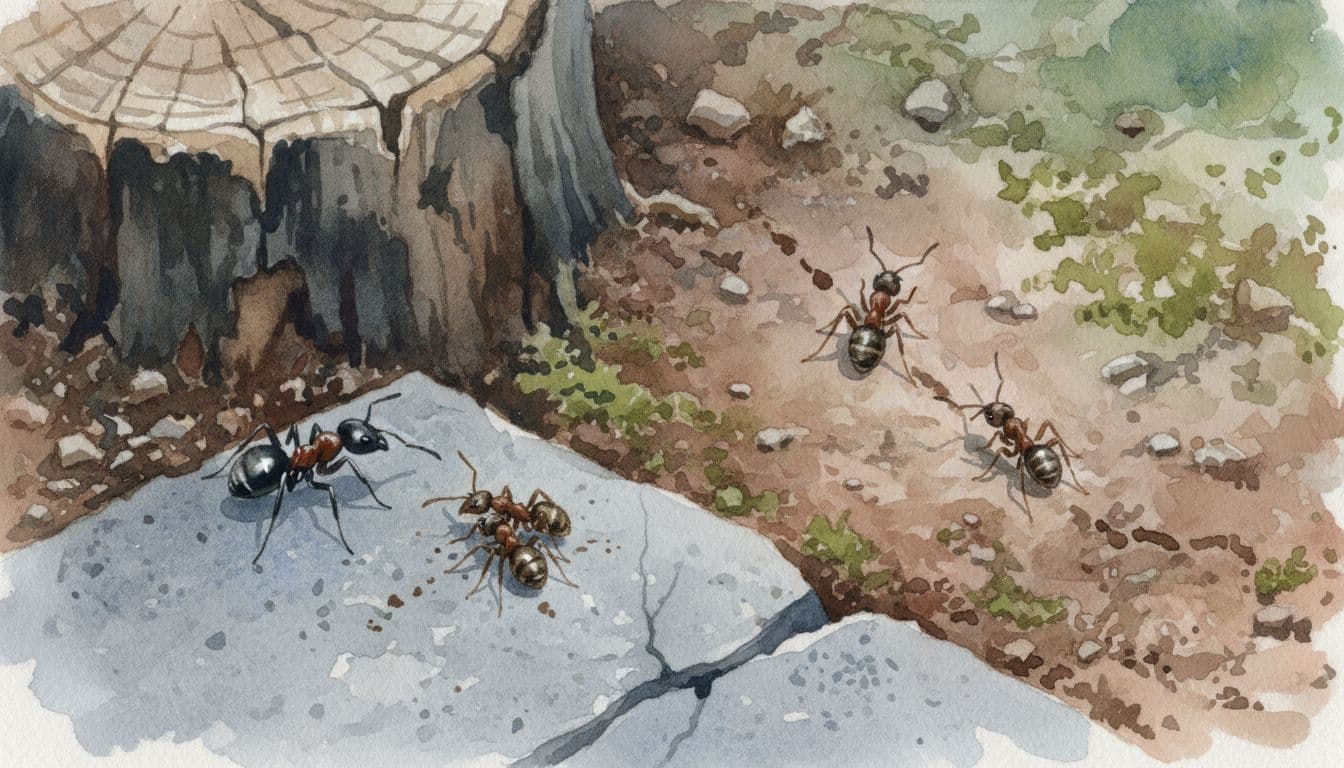
Most ants head indoors for food, moisture, or shelter. Once they find an opening, your yard problem becomes a house problem.
Kill ants at the source in the yard
The fastest way to lose ground is to treat only the ants you can see. Surface sprays may wipe out foragers, yet the colony often survives a few feet away.
If you want the problem gone, target the nest and the trail feeding it.
Use ant bait when you need the colony and queen gone
Outdoor ant bait is often the best first move for pavement ants, odorous house ants, and other common yard ants. Slow-acting bait works because worker ants carry it back to the colony. That gives the toxicant time to reach the queen and brood.
Place gel or granular bait near active trails, nest entrances, and along the path between the yard and the house. Keep it close enough for ants to find it, but not so close that rain washes it away. Also, don't spray repellent insecticide over the bait. That can contaminate it and drive ants off before they feed.
Bait choice matters. Some ants prefer sweets. Others go after grease or protein. If one bait gets ignored for a day or two, switch formulas instead of dumping on more product. For a broader look at species habits and treatment choices, this Illinois ant control overview is a useful reference.
Treat visible nests the right way
When you can clearly find the nest, direct treatment can help. Boiling water may knock down a small, exposed nest in bare soil, but it has limits. It rarely works on deep or spread-out colonies, and it can damage plants.
Food-grade diatomaceous earth can help in dry areas, especially around cracks, stones, and edges where ants travel. It loses punch when wet, so Quincy spring weather can reduce its value.
Larger nests usually need a labeled outdoor ant granule or mound treatment. Field ant mounds and pavement ant nests near concrete often respond well to direct treatment. Carpenter ants are different. If they are nesting in a stump, wet board, or rotting landscape timber, you need to remove or treat the wood source too. Always follow the label, and keep children and pets away until the product is dry or settled.
Make your yard less inviting so ants stay away from the house
Killing the colony is half the job. The other half is changing the yard so new ants don't move in right behind them.
Clean up the spots where ants like to nest
Ants love cover, moisture, and quiet corners. That means overgrown beds, heavy mulch against siding, and piles of damp yard debris all work in their favor.
Trim grass and plants back from the foundation. Pull mulch a few inches away from the house. Pick up fallen fruit if you have trees nearby. Store firewood off the ground and away from the wall. If you have rotting stumps, wet boards, or old landscape timbers, remove them.
These steps don't kill ants by themselves. Still, they reduce nesting sites and hidden travel lanes, which makes bait and nest treatment work better.
Cut off moisture and easy access around the foundation
Water draws ants as much as food does. Fix dripping spigots, improve poor drainage, and clear clogged gutters that dump water near the base of the house. If soil stays soggy after rain, correct the grade or redirect runoff.
Then check the transition from yard to home. Seal cracks around the foundation, utility penetrations, and door thresholds. If ants can't find moisture outside and can't find a gap inside, their route gets much harder.
Know when DIY ant control is enough, and when to call a Quincy pest pro
Some yard ant problems are small and stay small. Others spread fast, especially in a wet spring.
Yard ant problems you can usually handle yourself
DIY treatment is often enough for a few pavement ant trails, light odorous house ant activity, or one or two visible nests in the yard. If you use the right bait, clean up nesting spots, and recheck after rain, you can often shut the problem down.
Give bait time to work. Ant traffic may rise at first because more workers are feeding.
Signs you need professional ant treatment fast
Call a pro when you see large recurring infestations, multiple nests around the foundation, or ants already showing up indoors. Fast help also makes sense when carpenter ants are near damp wood, or when pharaoh ants are involved. Spraying pharaoh ants the wrong way can make them spread.
If DIY efforts fail after a week or two, hidden nests are likely part of the problem. The Illinois IPM carpenter ant identification page is helpful for wood-nesting clues, but a local pest pro can inspect the yard, find nesting sources, and build a treatment barrier before trails reach the walls.
Spring is the best time to act in Quincy, because colonies are active and still easier to intercept outdoors. Identify the ant, treat the nest, use the right bait, and clean up the yard conditions that pull ants toward the house.
If trails keep returning after rain, or if ants are already crossing the foundation, it's time to move faster before the problem shifts indoors.