

A sudden cloud of winged insects near a window can make any Quincy homeowner uneasy. The hard part is that flying ants vs termites can look similar at first glance, especially when you're trying to inspect them in poor light.
Still, the difference matters. One is often more of a nuisance, while the other can point to wood damage and a nearby colony. A quick, accurate ID helps you decide whether to monitor the problem or call for a termite inspection.
The fastest way to tell flying ants from termite swarmers
If you only remember three things, remember these: antennae, waist, and wings. Color and size can fool you. Body shape usually does not.
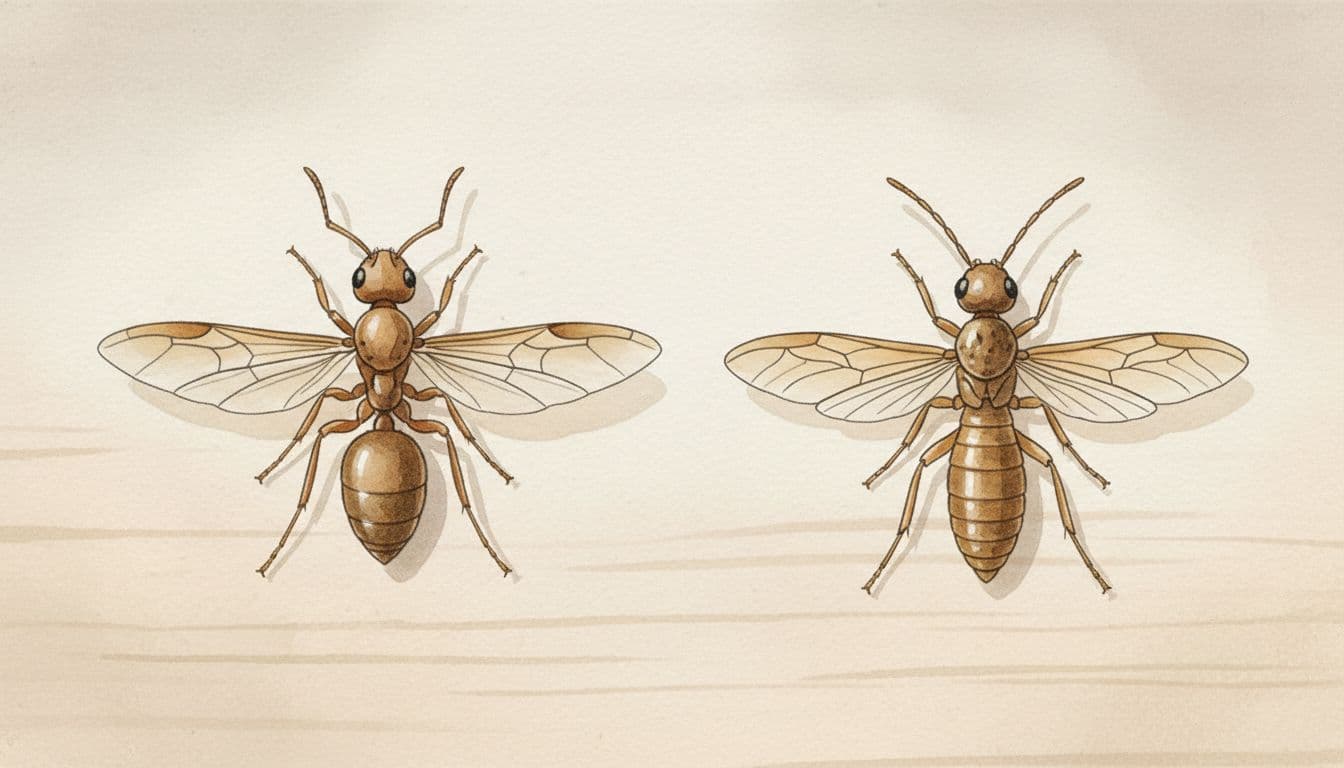
This quick chart makes the ID easier:
| Feature | Flying ants | Termite swarmers |
|---|---|---|
| Antennae | Bent or elbowed | Straight |
| Waist | Narrow, pinched waist | Broad, straight body |
| Wings | Front wings longer than back wings | All four wings about the same length |
| Body look | More segmented, ant-like | More uniform, tube-like |
| Common first impression | Looks like a winged ant or small wasp | Looks soft-bodied and even-shaped |
The wing shape is a strong clue, but the waist is often easiest to spot. Ants have that clear "pinch" in the middle. Termite swarmers look straighter from head to tail. The University of Maryland Extension guide on how to tell the difference shows these features clearly.
Another common mistake is relying on color. Some ants are dark brown or black. Termite swarmers can also look dark from a distance. Because of that, color alone is not enough.
In Quincy homes and apartment buildings, people often find these insects on window sills, around patio doors, or near lamps. That happens because swarmers move toward light. You may also find piles of shed wings after the insects land. Those wings matter. If the wings are all about the same size, termites move higher on the suspect list.
Why the distinction matters for Quincy homes and rentals
Flying ants are not harmless in every case, but termite swarmers raise a different level of concern. A termite swarm indoors can mean a colony is inside the structure or close to it. That does not prove major damage, but it should not be ignored.
When swarmers show up inside, treat them as a warning sign, not a one-time odd event.
Ant swarmers often come from a nest outdoors, although some ant species can nest in wall voids or damp wood. Termites are different because they feed on cellulose in wood and other paper-based materials. That is why the wrong ID can cost time and money.
Timing can also help, although it won't confirm the insect by itself. Kansas State Extension notes that warm weather and rain often trigger swarms. In West Central Illinois, that usually means spring into early summer is when calls pick up.
Property managers should take indoor swarms seriously, even if the insects disappear in a day. Tenants may only notice the flyers, while the bigger clue is what you do not see, the colony nearby. A Mississippi State Extension comparison makes the same point: misreading termite swarmers as ants can delay the right response.
What to do if you find winged insects indoors
First, do not panic and do not crush every insect before you look closely. A sample helps far more than a sprayed floor.
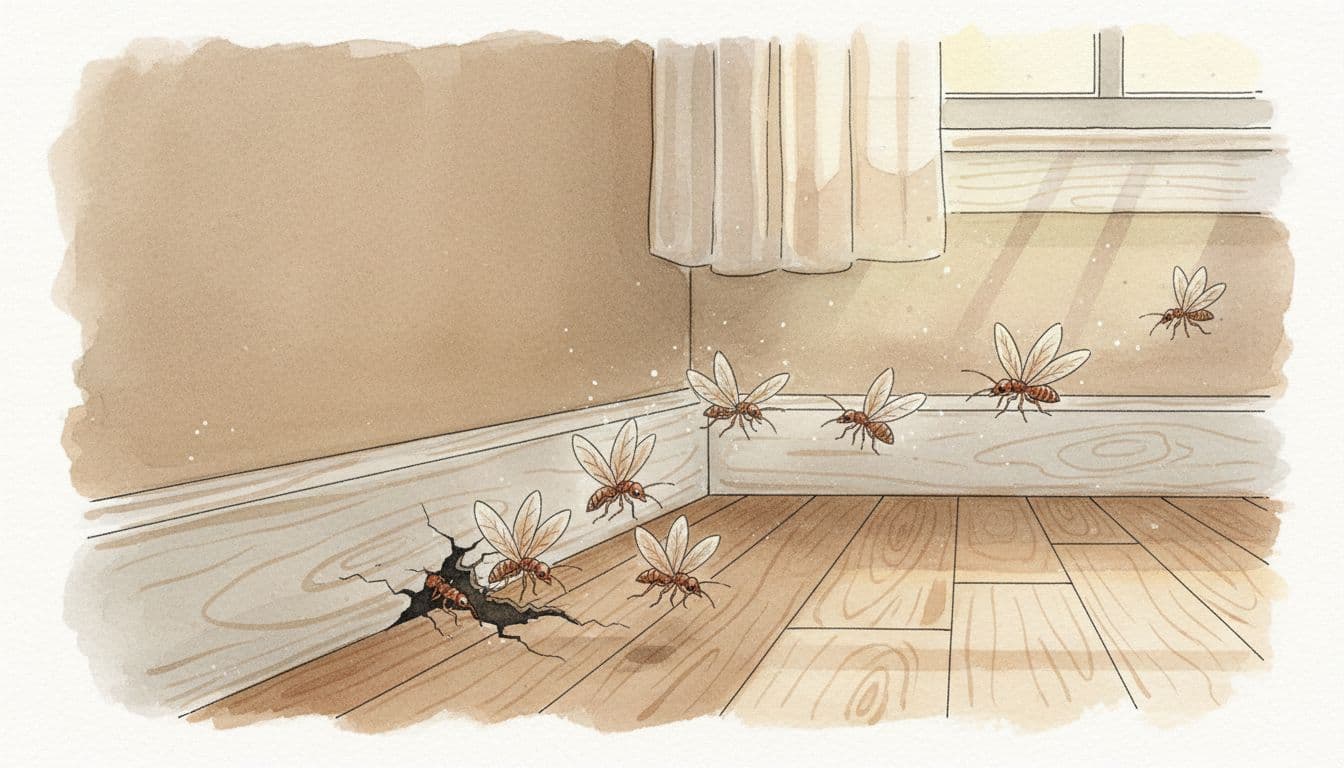
A few practical steps can save time:
- Catch two or three insects in a jar, cup, or sealed bag.
- Take clear phone photos from above and from the side.
- Check nearby window sills for loose wings.
- Note where you found them, especially if they came from a baseboard, wall crack, or window frame.
- Hold off on heavy spraying until someone identifies them, because spray will not remove a hidden colony.
If you are renting out a home or managing units, document the room, date, and unit number. That record helps if the issue shows up again. It also helps a pest pro inspect the right area first.
Watch for extra clues nearby. Mud tubes on foundation walls, soft wood, bubbling paint, or repeated swarms indoors point more strongly toward termites. On the other hand, a one-time swarm near an open door may turn out to be ants that entered from outside. The pattern matters as much as the insects themselves.
When a professional inspection is worth it
A professional inspection makes sense when you find equal-length wings, straight-bodied insects, or any swarm coming from inside the structure. The same goes for repeat sightings, shed wings in the same room, or signs of damaged wood.
For Quincy homeowners, speed matters most when the insects are indoors and you cannot identify them with confidence. For property managers, it is smart to arrange an inspection early, because one overlooked unit can become a larger building issue. In attached housing, nearby colonies can affect more than one space.
Even if the insects turn out to be ants, an inspection can still help if they are emerging from walls, trim, or damp wood. Indoor swarms always mean there is a nest source somewhere.
The next time a cluster of winged insects shows up by a Quincy window, slow down and look at the body, not the panic. Straight antennae, a thick waist, and matching wings deserve fast attention, because swarmers rarely appear without a reason.