
Essential Ant Control Tips for Illinois Homeowners
TL;DR:
- Effective ant control relies on prevention, targeted baiting, and consistent monitoring.
- Baits are more successful long-term because they eliminate the colony, unlike sprays.
- Carpenter ants can damage structures, requiring specific inspection and treatment strategies.
Ants in Illinois don’t give up easily. You seal one crack, clean the counter, and three days later there’s a fresh trail running across your kitchen floor. The frustration is real, and it’s shared by thousands of homeowners across the state every spring and summer. The problem isn’t effort. It’s strategy. Most quick fixes target what you can see while the colony keeps growing out of sight. This article walks you through the proven, multi-step approach that actually works: prevention, targeted treatment, integrated management, and consistent follow-up. Each layer builds on the last, giving you a durable defense instead of a temporary fix.
Table of Contents
- Start with prevention: Seal entry points and remove attractants
- Use baits over sprays for lasting colony control
- Integrated Pest Management: Sanitation, exclusion, and targeted treatments
- When to treat carpenter ants: Signs, solutions, and special precautions
- Follow up and monitor: Evaluate success and adjust your approach
- Why most DIY ant control falls short—and what actually works
- Tough ant problems? BugEvicta can help
- Frequently asked questions
Key Takeaways
| Point | Details |
|---|---|
| Seal entry points | Small cracks are a main entry for ants—seal them to block infestations. |
| Choose baits over sprays | Slow-acting baits kill entire colonies more effectively than surface sprays. |
| Combine control methods | An integrated approach with cleaning, baits, and perimeter treatments yields the best result. |
| Special care for carpenter ants | Check for and treat wood nests to prevent costly home damage from carpenter ants. |
| Monitor and adjust | Follow up on your treatments regularly to ensure long-term ant control and adapt as needed. |
Start with prevention: Seal entry points and remove attractants
Prevention is where lasting ant control begins. Before you reach for any spray or bait, you need to cut off the two things ants are looking for: a way in and a reason to stay.
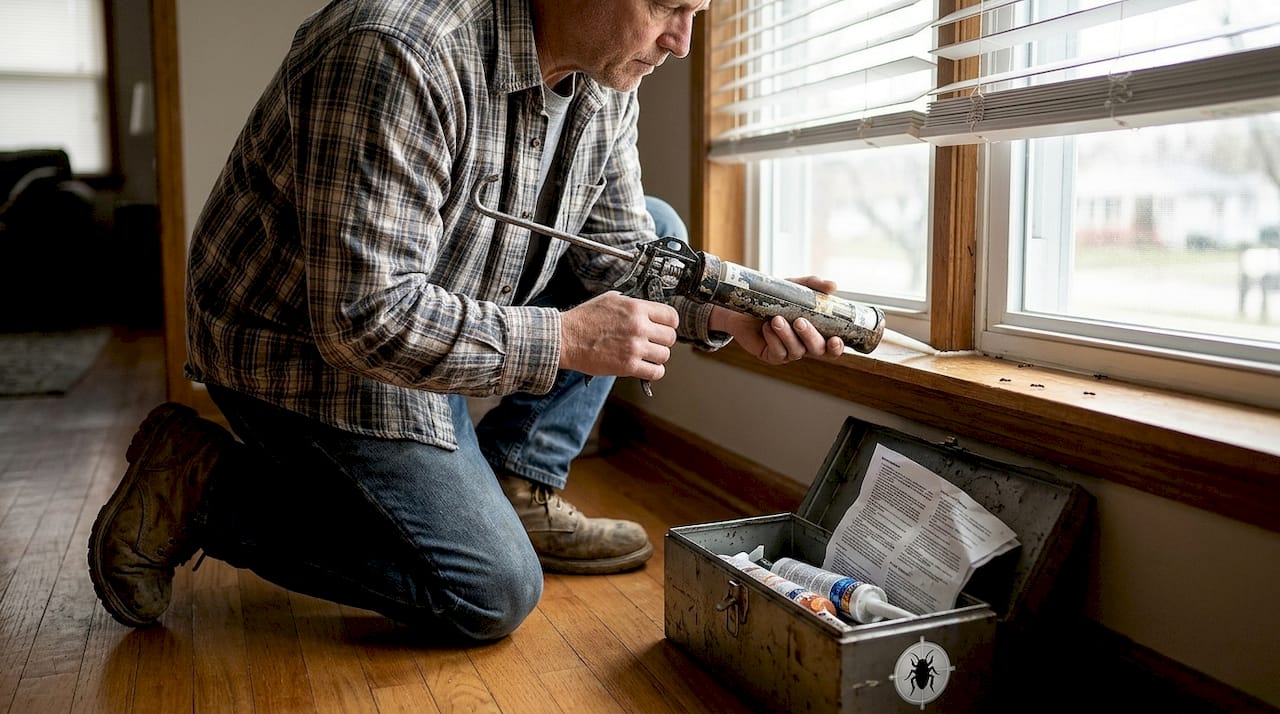
Ants can squeeze through gaps as small as 1/32 of an inch. That’s smaller than a pencil tip. Caulk cracks in foundations, around windows, doors, and utility entry points to block those invisible highways. Keep mulch at least 1 foot from your siding and trim shrubs and ground cover away from the house. Vegetation pressed against your walls gives ants a sheltered path straight to your foundation.
Inside the home, food and moisture are the main draws. Here’s what to address right away:
- Store all food in sealed, airtight containers, including pet food
- Wipe counters and sweep floors after every meal
- Empty trash cans regularly and rinse recyclables before binning them
- Fix dripping faucets and leaky pipes under sinks
- Don’t leave standing water in trays under houseplants
These steps aren’t glamorous, but they work. Ants are highly efficient foragers. Remove the reward and most scouts will stop reporting back to the colony.
Pro Tip: Add weatherstripping to the bottom of exterior doors. Many Illinois homes have a small gap at the door sweep that’s wide enough for ants to walk through in a single file line.
If you’re already noticing activity near your foundation or along baseboards, spotting pavement ants early can help you identify the species before it spreads. Different ant types respond to different treatments, so knowing what you’re dealing with saves time. You can also explore local pest insights to understand which species are most active in your area by season. For a broader look at safe options, the DIY pest control methods resource from the National Pesticide Information Center is a solid reference.
Use baits over sprays for lasting colony control
With attractants managed and entry points sealed, the next step is tackling existing colonies from the inside out.
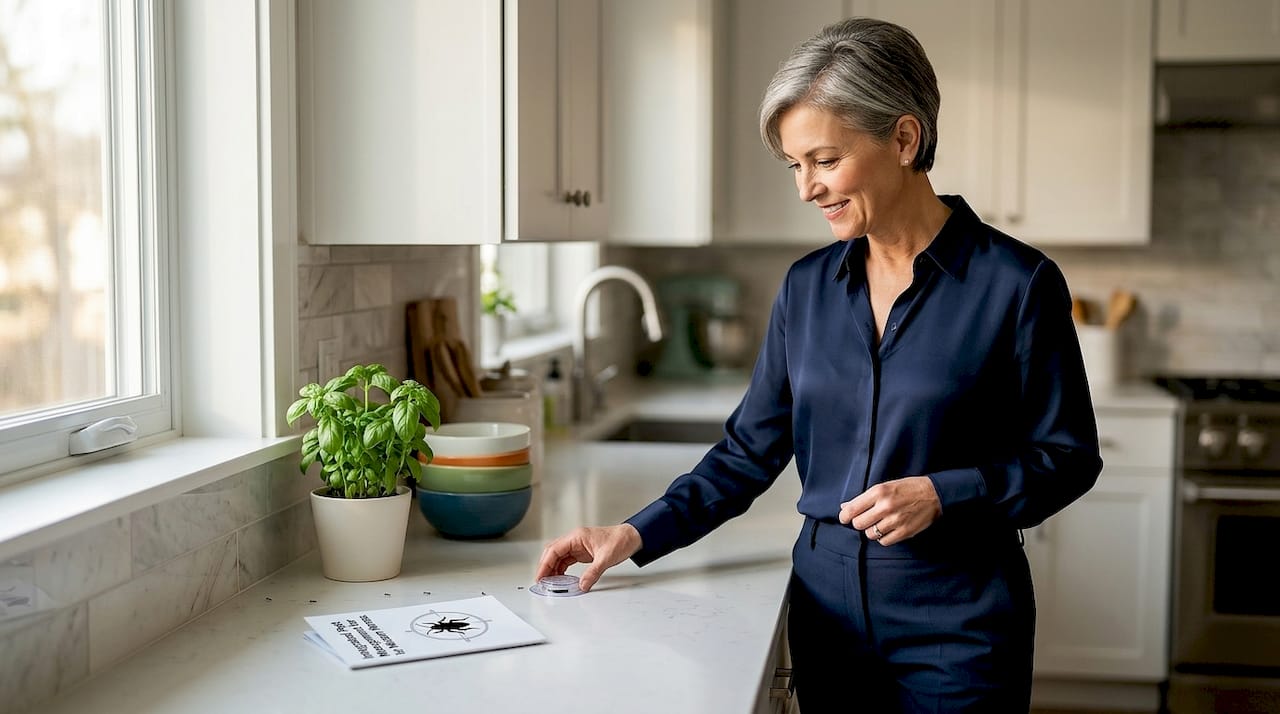
Most homeowners grab a can of spray when they see ants. It feels satisfying. The ants die on contact and the trail disappears. But here’s the problem: you just killed the workers, not the queen. The colony is still intact, and it will send more workers within hours. Surface sprays also leave a repellent residue that scatters ants into new areas of your home rather than eliminating them.
Slow-acting baits, such as those containing boric acid or hydramethylnon, work differently. Workers pick up the bait, carry it back to the nest, and share it with the colony. The queen gets exposed. The whole colony declines. That’s the outcome you actually want.
Here’s how to use baits correctly:
- Identify active ant trails before placing baits
- Set bait stations directly along those trails, not randomly around the room
- Never spray near bait stations, since repellent chemicals will drive ants away from the bait
- Leave the bait alone for at least a week, even if you see more ants initially
- Replace bait if it dries out or ants stop visiting it
Pro Tip: Place bait stations behind appliances, under sinks, and along baseboards where ants travel but kids and pets can’t reach them easily.
For more guidance on choosing the right product, check out pest insights on ant baits or visit this expert advice on home ants from Colorado State University Extension.
| Factor | Baits | Sprays |
|---|---|---|
| Targets whole colony | Yes | No |
| Time to results | 1 to 2 weeks | Immediate but temporary |
| Risk of scattering ants | Low | High |
| Pet and child safety | Moderate (placement matters) | Lower (residue risk) |
| Long-term effectiveness | High | Low |
Integrated Pest Management: Sanitation, exclusion, and targeted treatments
Controlling ants isn’t a one-dimension game. Here’s where a unified strategy makes all the difference.
Integrated Pest Management, or IPM, is the gold standard for ant control. It combines multiple tactics so that if one layer slips, the others hold. IPM combines sanitation, exclusion, baits, and targeted treatments rather than relying on a single approach.
Here’s what each layer looks like in practice:
- Sanitation: Keep all surfaces clean, eliminate food debris, and address moisture sources like leaky pipes or condensation buildup
- Exclusion: Maintain weatherstripping, caulk new cracks as they appear, and repair damaged screens or door frames
- Baits: Use slow-acting baits strategically in high-activity zones and rotate formulas if ants stop responding
- Targeted treatments: Spot-treat confirmed nest locations or perimeter zones rather than broadcasting chemicals throughout the home
The ant management strategies outlined by university extension programs consistently show that combining these steps outperforms any single method. The reason is simple: ants adapt. A colony that avoids one type of bait may respond to another. A gap you sealed in spring may reopen after winter frost heaves the foundation. Staying layered keeps you ahead.
“The most successful ant control programs rely on multiple coordinated steps rather than any single treatment. Homeowners who integrate sanitation, exclusion, and targeted baiting consistently see better long-term results.”
If you’re also managing other structural pest risks, reviewing termite prevention for Illinois homes alongside your ant strategy is worth the time since both pests exploit similar moisture and wood vulnerabilities.
| IPM Tactic | Effectiveness | Effort Level | Duration of Results |
|---|---|---|---|
| Sanitation | High | Low to moderate | Ongoing |
| Exclusion (sealing) | High | Moderate | Seasonal to long-term |
| Slow-acting baits | Very high | Low | 1 to 2 weeks per cycle |
| Targeted spot treatment | High | Moderate | Short to medium term |
When to treat carpenter ants: Signs, solutions, and special precautions
Some infestations carry particular risks. Let’s spotlight carpenter ants, a key Illinois concern.
Carpenter ants are not the same as the small sugar ants raiding your pantry. They’re larger, often black or reddish-black, and they don’t eat wood. They excavate it to build nests. Over time, that excavation weakens structural beams, window frames, and floor joists. The damage is slow but serious.
The first sign is often frass, which looks like coarse sawdust mixed with insect parts, near baseboards or window sills. You may also hear faint rustling sounds in walls at night. Moist or previously water-damaged wood is where they prefer to nest, so check areas around roof leaks, plumbing, and crawl spaces.
Here’s a step-by-step approach for carpenter ant control:
- Inspect: Check all moist wood areas including attics, basements, and around exterior doors for frass or soft spots
- Treat: Locate and treat nests in moist wood using targeted insecticide dust or bait formulated for carpenter ants
- Repair: Replace any structurally compromised wood and fix the moisture source that attracted them
- Maintain: Apply perimeter treatments every 4 to 6 weeks, especially after heavy rainfall, to prevent re-entry
- Follow up: Reinspect treated areas after two weeks to confirm activity has stopped
Pro Tip: Don’t just treat the ants you can see. The visible workers are a small fraction of the colony. Finding and treating the source nest is what stops the infestation for good.
Hidden nests are a leading cause of recurring carpenter ant problems in Illinois homes. For more detail on local carpenter ant advice specific to this region, or to read more about carpenter ant biology and control, the University of Georgia Extension has thorough guidance.
Follow up and monitor: Evaluate success and adjust your approach
After treating and outsmarting ants, success comes down to how you monitor and maintain your work.
Treatment without follow-up is one of the most common reasons ant problems come back. You apply bait, see fewer ants after a few days, and assume the problem is solved. Then six weeks later the trail is back.
Here’s how to monitor effectively:
- Inspect all previously treated areas once a week for the first month
- Look for fresh trails, new frass near wood, or bait stations that have been emptied quickly
- Mark the date you placed each bait station so you know when to refresh it
- Check exterior entry points after rain since water can wash away caulk and reopen gaps
Colonies can take 1 to 2 weeks to fully collapse after baiting begins. That’s normal. Resist the urge to spray if you still see a few ants during that window. Spraying will interrupt the baiting process and reset your progress.
If ants persist beyond two weeks or you notice new activity in a different area of the home, switch to a different bait formula and reassess placement. Ants can develop preferences, and a fresh product often gets better uptake. For ongoing Illinois-specific pest monitoring tips, staying informed about seasonal patterns in your area helps you time treatments more effectively.
Know when to call in help. If you’re seeing wood damage, recurring activity despite consistent treatment, or multiple species active at once, a licensed pest control professional can identify what’s driving the problem and apply solutions that aren’t available over the counter.
Why most DIY ant control falls short—and what actually works
Here’s the honest truth we see play out repeatedly: homeowners spend money on spray cans, get a few days of relief, and end up right back where they started. It’s not because they didn’t try. It’s because the spray was never going to solve the real problem.
The ants you see are scouts, maybe 10% of the colony. Killing them doesn’t threaten the colony’s survival. It barely registers. The queen keeps laying eggs. New workers emerge. The trail reappears.
What actually works is the unglamorous stuff: fixing the leaky pipe under the sink, replacing the rotted wood in the crawl space, keeping the bait station in place even when you don’t see results yet. The real-life pest control insights that matter most aren’t about finding the perfect product. They’re about staying consistent with a layered system. Prevention plus baiting plus monitoring beats any single spray every single time. That’s not a theory. That’s what works in Illinois homes, season after season.
Tough ant problems? BugEvicta can help
If you’ve tried these tips and still see ants, it may be time for expert help.
Some infestations go deeper than DIY methods can reach. Hidden nests inside walls, multiple colonies, or carpenter ant damage that’s already spread through structural wood all require a more targeted response than store-bought products can deliver.
At BugEvicta, we inspect your home thoroughly, identify the species and source, and build a custom treatment plan based on what’s actually happening in your space. Our professional pest control approach combines the IPM principles covered in this article with professional-grade treatments and scheduled follow-up visits. Don’t let a manageable problem become a structural one. Visit BugEvicta to schedule your inspection and get lasting protection for your Illinois home.
Frequently asked questions
What is the fastest way to get rid of ants in my house?
Slow-acting baits are the most effective method, but expect full colony elimination to take 1 to 2 weeks since workers need time to carry the bait back to the queen.
Are sprays or baits better for home ant infestations?
Baits outperform sprays because workers carry the active ingredient back to the colony, while sprays only kill the ants you can see and may scatter the rest.
How can I prevent ants from entering my Illinois home?
Seal cracks in foundations, trim vegetation away from your siding, keep mulch at least 1 foot from the house, and store all food in sealed containers to cut off access and attractants.
How often should I reapply ant treatments around my house?
Perimeter treatments should be reapplied every 4 to 6 weeks and always after heavy rain, which can wash away chemical barriers and reopen treated zones.
Do carpenter ants cause damage to homes?
Yes. Carpenter ants nest in moist wood and excavate galleries over time, which can weaken structural wood in walls, floors, and roof areas if the infestation isn’t treated at the source.