
If you woke up with unexplained bites this morning, there's a good chance you already have a feeling about what's going on. Bed bugs are one of those problems most people don't want to say out loud — but the longer you wait, the worse it gets. And I mean that literally. A single female bed bug can lay up to five eggs a day. Give an infestation two months of unchecked growth and you're looking at hundreds of bugs in your mattress, box spring, baseboards, and even inside your walls.
I've been doing this for over 15 years, and bed bugs are the one pest that I've seen destroy people's sleep, their peace of mind, and their relationship with their own home. This guide is going to give you the straight facts — no fluff, no scare tactics — on what bed bug treatment actually costs in Quincy, what your options are, and when it's time to stop trying to handle it yourself.
If you'd rather skip the reading and just get someone out there today, call us now at 217.919.5111. Licensed, insured, and backed by a first-time success guarantee.
What Are Bed Bugs and Why Are They Such a Pain to Deal With?
Bed bugs are tiny, reddish-brown insects about the size of an apple seed when fully grown. They survive entirely on blood — human blood, mostly — and they're incredibly good at hiding. They flatten their bodies to squeeze into the thinnest seams, behind outlet covers, inside electronics, and underneath furniture trim you haven't moved in years.
The biggest reason bed bugs are so hard to eliminate isn't because they're dangerous in a direct sense. The CDC notes that bed bug bites can cause allergic reactions and secondary skin infections, but the real challenge is biological — they reproduce fast, hide well, and most store-bought sprays don't reach the eggs. That's why DIY has a notoriously high failure rate with this particular pest.
They don't come in through your yard. They hitch rides — on luggage, secondhand furniture, clothing after hotel stays, movie theater seats, even public transit. No neighborhood or income level is immune. I've treated homes in every zip code in this state, and bed bugs don't discriminate.
Early Warning Signs of a Bed Bug Infestation
The sooner you catch this, the cheaper and easier it is to treat. Here's what to look for:
- Bites in a line or cluster — usually on exposed skin like your arms, neck, or shoulders. Bed bug bites often show up in a row of three, sometimes called "breakfast, lunch, and dinner."
- Small reddish or rust-colored stains on your sheets — these are either crushed bugs or dried blood spots from bites.
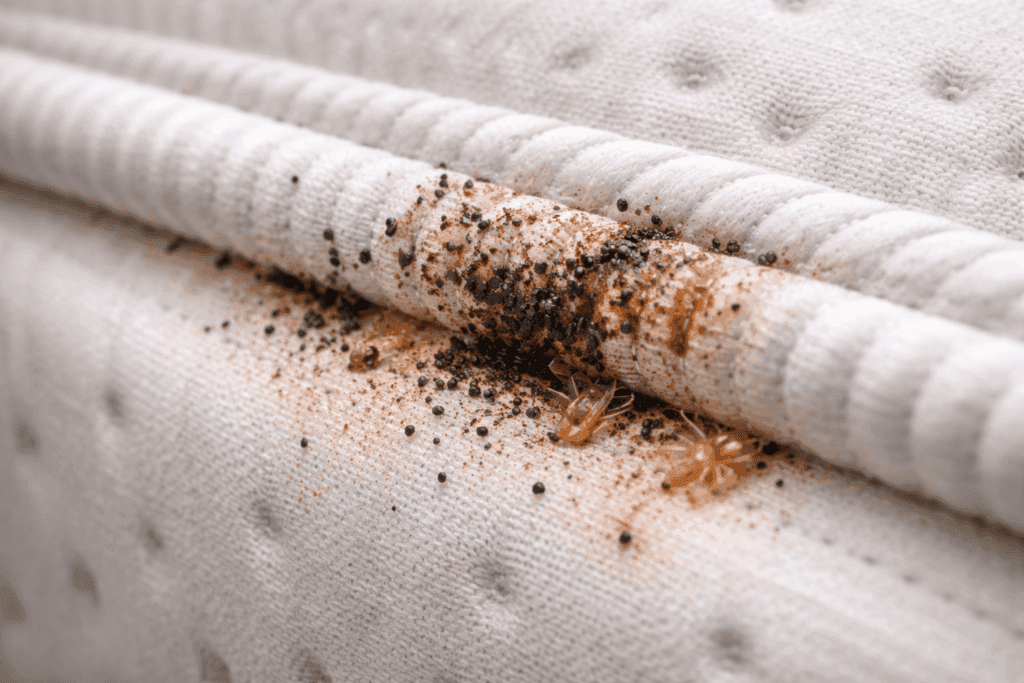
- Tiny dark specks along your mattress seams — that's fecal matter. It looks like someone dotted a fine black marker along the stitching.
- A faint, sweet, musty smell — a heavy infestation produces a noticeable odor, often described as slightly sweet or similar to coriander.
- Shed skins (exoskeletons) — bed bugs molt five times before adulthood. You'll find translucent, papery shells around the bed frame and in seams.
If you're seeing two or more of those signs, you're past the "maybe it's nothing" stage. Pull back the mattress tag, check the box spring corners, and look along the headboard where it meets the wall. That's where they concentrate.
[Insert Body Image 1 here — close-up of bed bug signs on mattress seam]
The Real Damage Bed Bugs Cause If You Let Them Sit
Bed bugs don't tear up your home's structure the way termites do, but the damage is real — just different. From a financial standpoint, people who wait too long often end up replacing mattresses, box springs, couches, and sometimes entire bedroom sets by the time they call a pro. That furniture replacement cost can easily exceed what treatment would have run at the start.
The EPA's guidance on bed bug control makes clear that these infestations get exponentially harder to treat the longer they're left alone. A contained infestation in one room might need a single treatment. A whole-house infestation that's been spreading for months is a completely different job — in scope, in cost, and in disruption to your life.
Beyond the physical and financial damage, there's a mental health side that doesn't get talked about enough. Sleep deprivation, anxiety, embarrassment about having people over — all of it adds up. Get ahead of it.
DIY Bed Bug Treatment vs. Hiring a Professional — The Honest Comparison
I'll give it to you straight: DIY works for a lot of pests. Bed bugs aren't one of them, at least not once an infestation is established.
Over-the-counter sprays kill bugs on contact but don't reach eggs. Bed bug eggs are coated in a waxy protective shell that most retail-grade chemicals can't penetrate. You spray, you kill the adults you can see, and two weeks later the eggs hatch and the cycle starts over. The National Pest Management Association also points out that bed bugs have developed resistance to common pyrethroids — the active ingredient in most store-bought sprays — which makes DIY even less effective than it used to be.
That said, there are steps worth taking right now while you're waiting for a professional:
- Wash all bedding, clothing, and curtains on the hottest setting safe for the fabric, then dry on high heat for at least 30 minutes.
- Vacuum thoroughly along mattress seams, baseboards, and furniture — then immediately seal and toss the vacuum bag outside.
- Use bed bug-proof mattress encasements. They won't kill what's already there, but they trap bugs inside and cut off access to you.
- Reduce clutter around the bed. Fewer hiding spots means fewer places for them to regroup between treatments.
These steps matter, but they won't eliminate an established infestation on their own.
How Much Does Bed Bug Treatment Cost in Quincy?
Here's the honest answer — with the caveat that the final number always depends on infestation size, square footage, and which method is right for your situation.
| Treatment Type | Typical Range | Best For |
|---|---|---|
| Chemical Treatment (1–2 rooms) | $250 – $600 | Early, contained infestations |
| Chemical Treatment (whole home) | $700 – $1,500 | Moderate, multi-room infestations |
| Heat Treatment (1–2 rooms) | $400 – $1,000 | Severe or chemical-resistant bugs |
| Heat Treatment (whole home) | $1,200 – $3,500 | Heavy infestations, fastest results |
| Combination (heat + chemical) | $1,700 – $4,000 | Worst-case scenarios |
The cost of doing nothing — replacing furniture, losing sleep, the infestation spreading room to room — almost always runs higher than getting treatment done right the first time. I've watched people spend $800 on a new mattress without treating the room, then re-infest the new bed within three weeks.
For a free quote based on your actual situation in Quincy, call 217.919.5111. We'll give you a number before we ever touch your home.
Professional Treatment Options — What Actually Works
There are three methods licensed professionals use. All three can work — the right one depends on your situation.
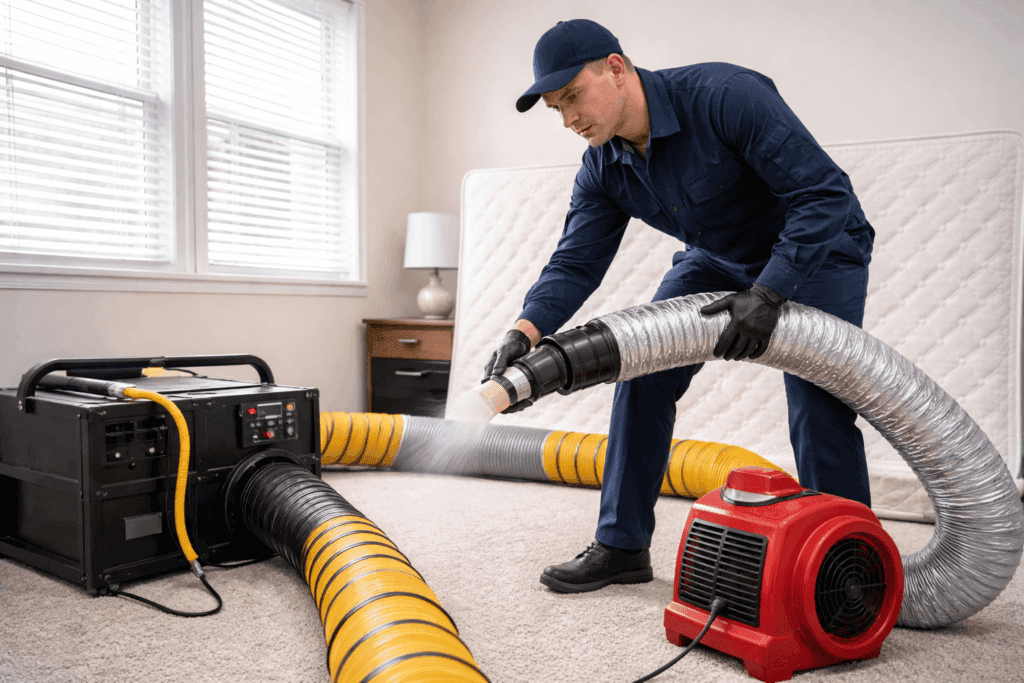
Heat Treatment This is the gold standard. Specialized equipment raises the room temperature to around 120–135°F and holds it there for several hours. Bed bugs and their eggs die at sustained heat above 113°F. No chemicals, no residue, and you're back in the room the same day in most cases. Research from the University of Florida's extension entomology program shows heat treatment has the highest single-visit success rate of any bed bug method when performed correctly.
Chemical Treatment Professional-grade chemical treatments use a rotating combination of products — residual insecticides, insect growth regulators that prevent eggs from hatching, and contact killers — across two or three visits spaced about two weeks apart. Costs less upfront than heat but requires more follow-through between visits.
Combination Treatment For severe cases or whole-home infestations, we often pair heat and chemical together. Heat handles the immediate kill; the chemical residual provides protection against any stragglers hiding in spots the heat couldn't fully reach — inside walls, under heavy appliances, behind built-ins.
Is Bed Bug Treatment Safe for My Kids and Pets?
This comes up on nearly every job, and it's a completely fair question.
Heat treatment is the cleanest option — no compounds applied, so re-entry is usually the same day once the space cools. For chemical treatments, we give you a specific re-entry window based on what was used, typically 4 to 6 hours. All products we use are EPA-registered. The EPA maintains a searchable database of approved bed bug pesticides if you want to look up exactly what's going into your home.
Follow the re-entry guidelines, keep pets out of treated areas during the waiting period, and you're fine. We do this every day in homes with kids and animals — it's a routine part of the job.
How to Keep Bed Bugs from Coming Back
After treatment, a few habits go a long way:
- Use mattress encasements permanently. They make future inspections much easier — nowhere for bugs to hide.
- Check hotel rooms before unpacking. Pull back the sheets, check the mattress seams, look behind the headboard. Takes 60 seconds.
- Be cautious with secondhand furniture. Upholstered pieces, bed frames, and box springs are the highest-risk picks. Inspect before bringing inside.
- Reduce clutter in and around the bedroom. Less stuff on the floor means fewer places for them to regroup.
- Do a quick visual check quarterly, especially after travel. Catching it early is the whole game.
Frequently Asked Questions About Bed Bugs in Quincy
How do I know for sure if I have bed bugs and not something else? The most reliable confirmation is actually seeing a bug or its shed skin. Bites alone aren't definitive — flea bites and allergic reactions can look similar. Check your mattress seams and box spring corners with a flashlight. If you find tiny reddish-brown insects, dark fecal spots, or translucent shed skins, that's your answer. A professional inspection will give you certainty without any commitment to treatment.
How long does bed bug treatment take? Heat treatment for a single room typically runs 6 to 8 hours. Whole-home heat treatment can take 8 to 12 hours depending on square footage. Chemical treatments are faster per visit — usually 2 to 4 hours — but require two or three follow-up appointments spaced about two weeks apart.
Can I sleep in my bedroom after treatment? For heat treatment, yes — usually the same day once the room cools. For chemical treatments, stay out for the re-entry window we give you, typically 4 to 6 hours, then you're good. Sleeping in the treated room between chemical visits can actually help, since your presence draws out any remaining bugs to contact the residual product.
Do I need to throw away my mattress? In most cases, no. A proper treatment — especially heat — can clear a mattress without replacement. Where we recommend disposal is when the mattress has large tears that give bugs an unreachable hiding spot, or when the customer just wants a fresh start. If you do toss a mattress, wrap it in plastic before moving it out so you don't spread bugs through the house.
How did bed bugs get in if I haven't traveled? Travel is one route but far from the only one. They come in on used furniture, clothing, delivery packaging, and on visitors who unknowingly carry them. In apartments and attached housing, they migrate through shared walls, electrical conduit, and plumbing spaces from neighboring units. It doesn't mean you did anything wrong.
What is bed bug season in West Central Illinois? Bed bugs are active year-round indoors — there's no true off-season. Activity peaks in summer because people travel more and warmer temps speed up their reproductive cycle. But if you have them in December, they're just as active and just as capable of spreading.
Is one treatment enough to get rid of them completely? Heat treatment has the best single-visit success rate, but even that isn't guaranteed in every case — especially if bugs were inside walls or areas the heat couldn't fully penetrate. Chemical treatment almost always needs follow-up visits to catch newly hatched eggs. Either way, we stand behind our work with a re-treatment guarantee if the problem persists within the warranty window.
What should I look for when choosing a bed bug exterminator in Quincy? Verify they're licensed and insured in Illinois— non-negotiable. Ask specifically about their protocol: heat, chemical, or combination? Do they offer a re-treatment guarantee? Be cautious of unusually low prices — proper bed bug treatment requires specialized equipment and trained people, and cutting corners is how infestations come back. A legitimate company will inspect your home and give you a specific quote, not a flat rate over the phone sight unseen.
Bed bugs don't fix themselves and don't get cheaper to deal with the longer you wait. If you're seeing the signs, the smart move is getting an expert in there now — get a clear picture of what you're dealing with and make a plan. Our team has been handling bed bug cases in Quincy and throughout Illinois for over 15 years. Licensed, insured, and we get it right the first time — or we come back and make it right at no charge.
Call us now at 217.919.5111 . No obligation, free inspection, same-day service available in most areas.