

You wake up with itchy bites, and the guesswork starts fast. Was it bed bugs, fleas, or something else?
That confusion is common because bed bug bites and flea bites can look alike at first. Skin reactions vary a lot, so bites alone rarely give a sure answer. The best clues come from the bite's look, where it appears, how it's grouped, when it starts itching, and what you find in your home.
Start with the bite itself, size, shape, color, and how fast it itches
A close look can point you in the right direction. Flea bites are often smaller, around 1 to 3 mm. They tend to look like bright red dots, sometimes with a faint halo around them. Bed bug bites are often larger, about 5 to 7 mm, and may look more raised, like small welts. Some show a darker center.
Flea bites also tend to itch fast. In many cases, the itching starts right away. Bed bug bites can be sneakier. You might not notice them until hours later, or even the next day. Some people barely react at all, while others get large, angry welts.
Here's a quick side-by-side view:
| Feature | Flea bites | Bed bug bites |
|---|---|---|
| Size | Usually 1 to 3 mm | Often 5 to 7 mm |
| Color | Bright red, sometimes with halo | Red or pink, often raised |
| Center | Usually plain | May have a darker center |
| Itch timing | Often starts quickly | May appear later |
The short version is simple: flea bites are usually smaller and faster to itch, while bed bug bites are often larger and slower to show.
What flea bites usually look and feel like
Flea bites usually appear as tiny red bumps. They often itch hard, early, and long enough to tempt constant scratching. In sensitive people, they may swell more or even blister.
The grouping can look random. You might see a few bites close together, then one or two nearby with no clear shape.
What bed bug bites usually look and feel like
Bed bug bites often look like raised itchy welts. Some have a darker red spot in the middle. Because reactions can be delayed, you may go to bed with clear skin and wake up marked later in the day.
That delay matters. Recent guidance on bite timing and pattern still supports the same basic rule: fleas often bother you fast, while bed bugs may leave a slower, less obvious trail.
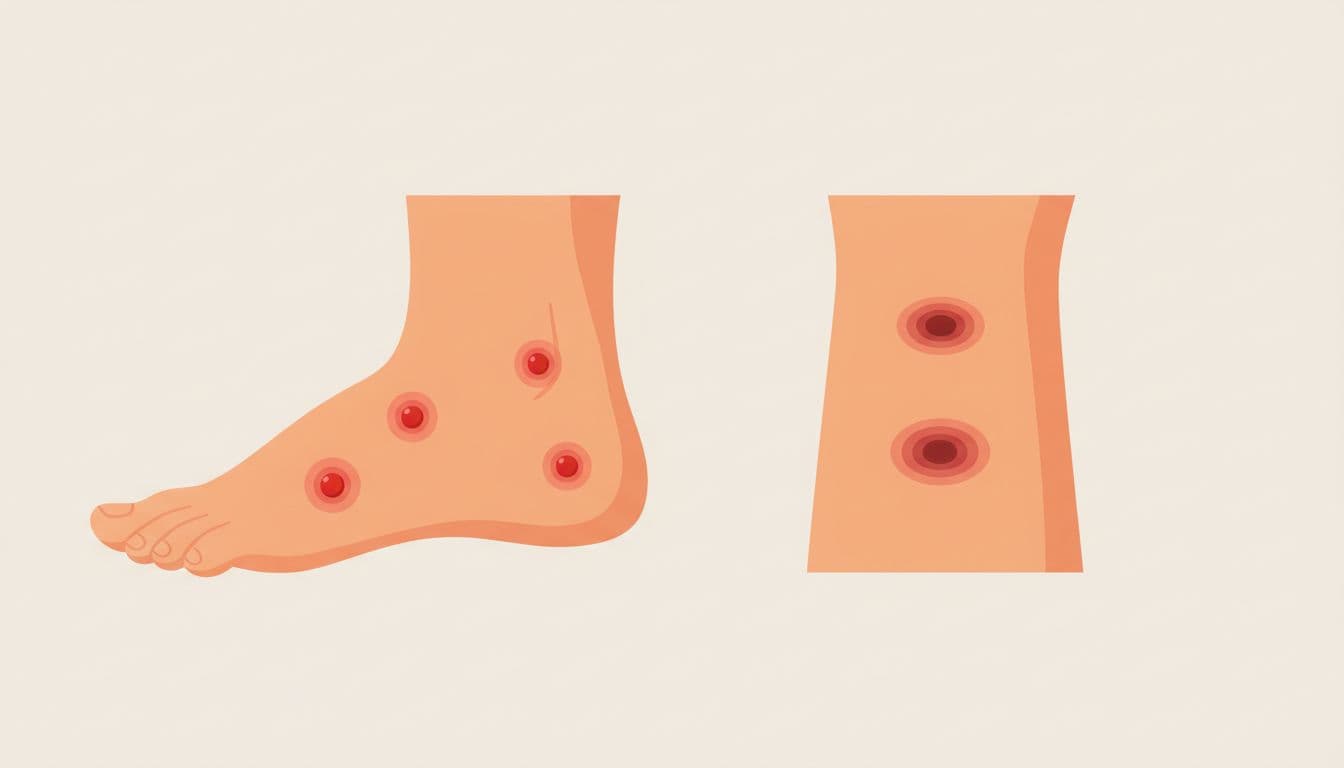
Bites can suggest the pest, but they don't confirm it by themselves.
Where the bites show up on your body can give you a big clue
Body location often tells a clearer story than the bite alone. Fleas usually jump from floors, rugs, pet bedding, or grass. Because of that, they often bite ankles, feet, and lower legs. Bed bugs feed while you sleep, so they often target exposed skin like the arms, hands, neck, shoulders, and face.
Still, location isn't proof. Pajamas, blankets, sleep position, and pet contact can change the pattern. A flea can bite higher up, and a bed bug can bite a leg. Yet the usual body zones are still useful.
Why flea bites tend to stay low, around ankles and legs
Fleas live close to where pets rest and where people walk. Carpets, rugs, cracks near baseboards, and pet beds are common hot spots. If the bites keep showing up on your lower body, fleas move higher on the suspect list.
That pattern makes sense in homes with pets, but it can also happen in pet-free homes after wildlife exposure or a previous infestation. Resources on signs of fleas in the house often point to the same lower-leg pattern.
Why bed bug bites often appear on arms, neck, and other exposed skin
Bed bugs come out at night and feed where skin is easy to reach. That's why bites often show on arms, hands, shoulders, neck, or face. Bites under tight clothing are less common because the bug usually chooses exposed areas first.
If you see marks mostly where your skin was uncovered in bed, bed bugs become more likely.
The pattern matters too, random flea bites vs lines of bed bug bites
Think of flea bites as confetti and bed bug bites as footprints. Flea bites often look scattered or loosely clustered, with no clear order. Bed bug bites more often show up in lines, zigzags, triangles, or tight groups. People often call this the breakfast, lunch, dinner pattern.
Still, real life isn't a textbook. One flea can bite more than once in a small area, and one bed bug may leave only a single mark. That's why pattern helps most when you compare it with body location and home evidence.
Common flea bite patterns, scattered, clustered, and hard to predict
Flea bites usually look irregular. You might see three small bumps near an ankle, then two more on the calf, with space between them.
Common bed bug bite patterns, lines, zigzags, and tight groups
Bed bugs may probe the skin more than once while feeding. That can leave several bites close together in a row or zigzag, especially on exposed arms or shoulders.
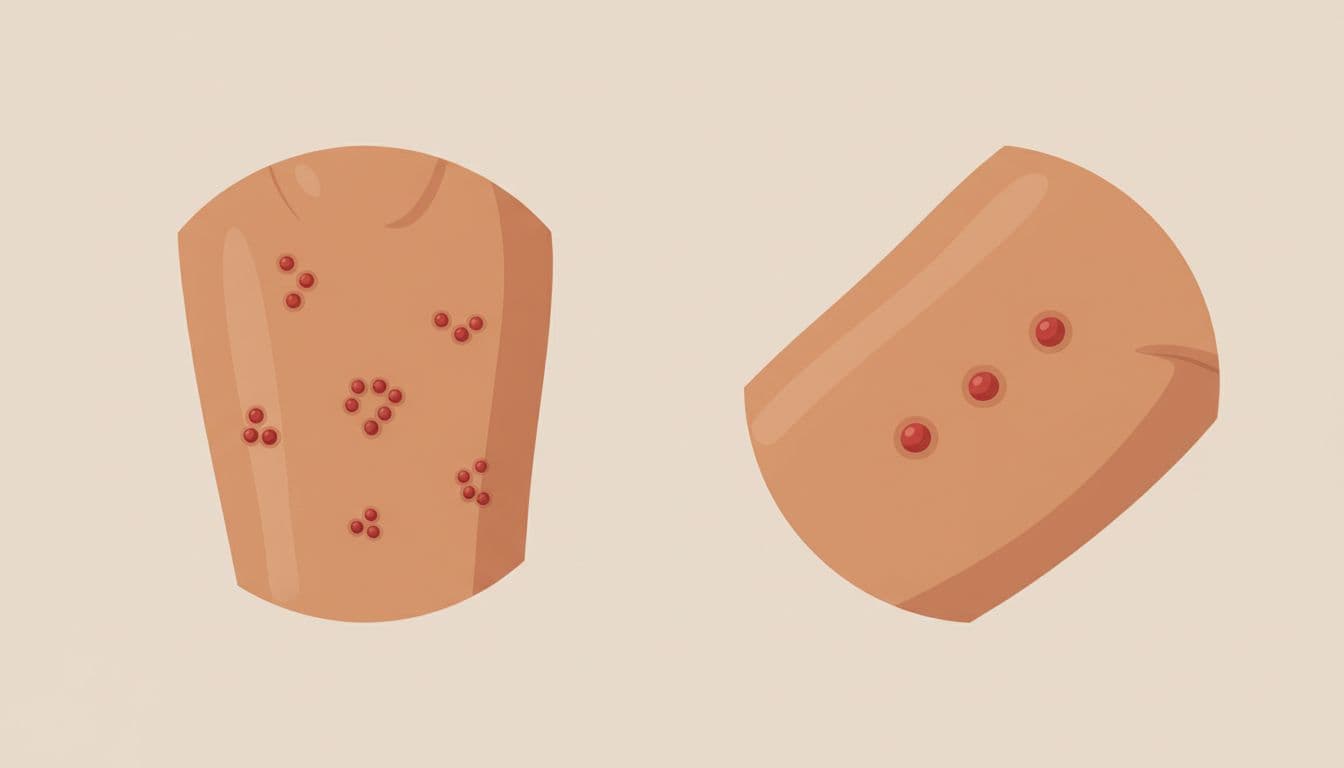
Don't rely on bites alone, check your home for signs of bed bugs or fleas
This is the most useful next step. Skin can mislead you, but the home often doesn't.
For bed bugs, inspect mattress seams, box springs, bed frames, headboards, nightstands, and nearby soft furniture. Look for tiny blood spots, dark fecal stains, shed skins, eggs, or live bugs. The EPA's guide to finding bed bugs is a solid reference if you want a room-by-room inspection approach.
Signs that point to bed bugs in bedrooms and furniture
Use a flashlight and check cracks, folds, and seams. Bed bugs hide in narrow spaces during the day. If the problem is growing, you may also notice stains on sheets or dark spotting near the bed. WebMD's bed bug infestation guide also lists these common signs.
Signs that point to fleas on pets, floors, and fabrics
Fleas leave different clues. Pets may scratch more than usual. You might see flea dirt, which looks like tiny black specks, on fur or bedding. Some people notice fleas hopping onto socks or pant legs. Rugs, upholstered furniture, and pet beds often hold the worst of it, and common flea infestation signs usually show up there first.
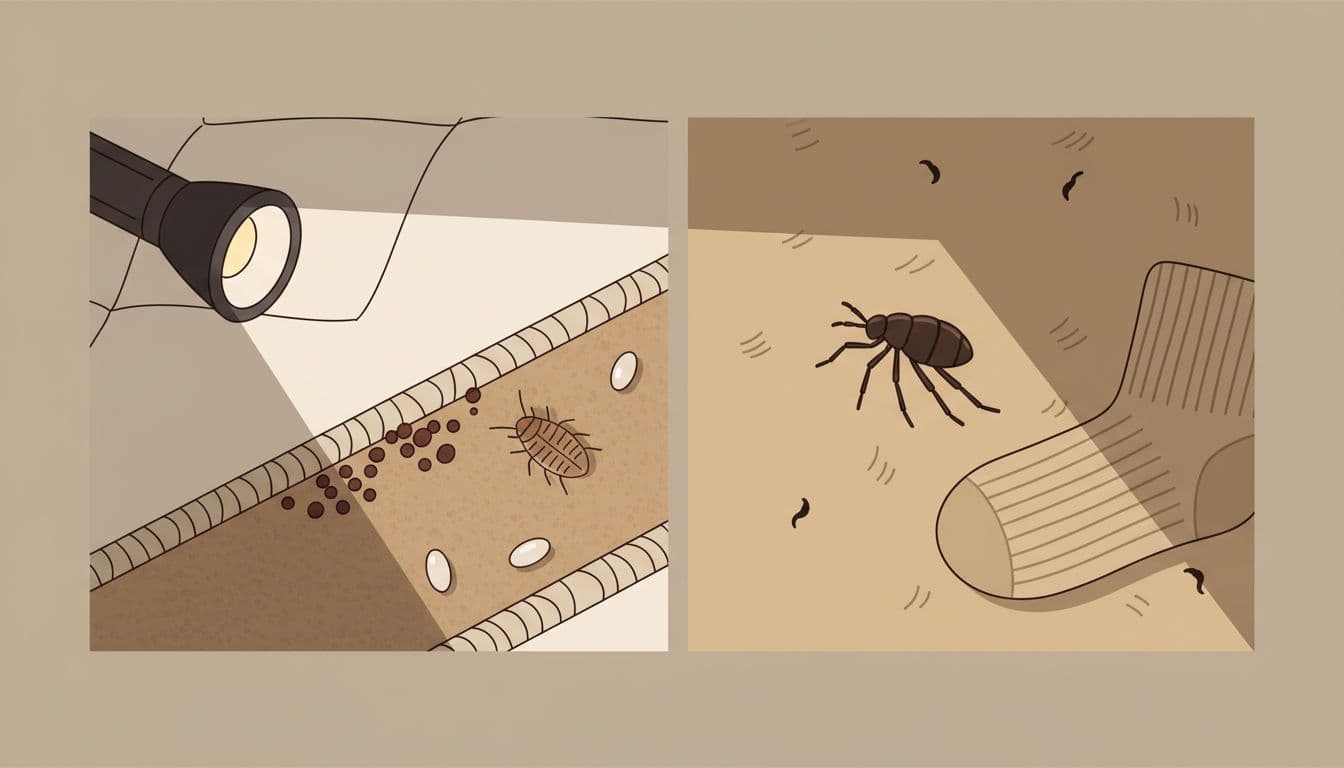
What to do next, soothe the bites and stop the infestation at the source
Wash the area gently with soap and water. Then try not to scratch, because broken skin can get infected. An over-the-counter anti-itch cream or antihistamine may help. If you get severe swelling, signs of infection, or any trouble breathing, get medical care right away.
For the pest itself, the fix depends on what you find. Bed bugs often need careful inspection and professional treatment. Fleas usually require a full plan that treats pets, indoor fabrics, floors, and sometimes the yard at the same time. If you're in Quincy or West Central Illinois and the source still isn't clear, a local pest inspection can save time and stop the spread before it gets worse.
Flea bites are usually smaller, itch fast, and show up low on the body in scattered groups. Bed bug bites are often larger, may appear later, and tend to show on exposed skin in lines or tight clusters.
The strongest answer comes from matching bite clues with signs in your home. If the bites keep appearing or the infestation seems to grow, get expert help before a small problem turns into a stubborn one.