

Bed bugs can turn one apartment problem into a building problem faster than most people expect. In some properties, they stay close to one unit for a while. In others, they reach nearby units within weeks, especially if people move infested items around.
The hard part is that there isn't one fixed timeline. Bed bugs in apartment buildings spread at different speeds based on infestation size, clutter, unit layout, resident habits, and how quickly someone reports the issue.
Why spread speed varies so much from one building to another
Bed bugs don't fly or jump. On their own, they crawl, hide, and stay close to where people sleep. That means their natural spread is often slow at first. Still, apartment buildings give them extra pathways, such as wall voids, outlet gaps, pipe openings, and doors that don't seal well.
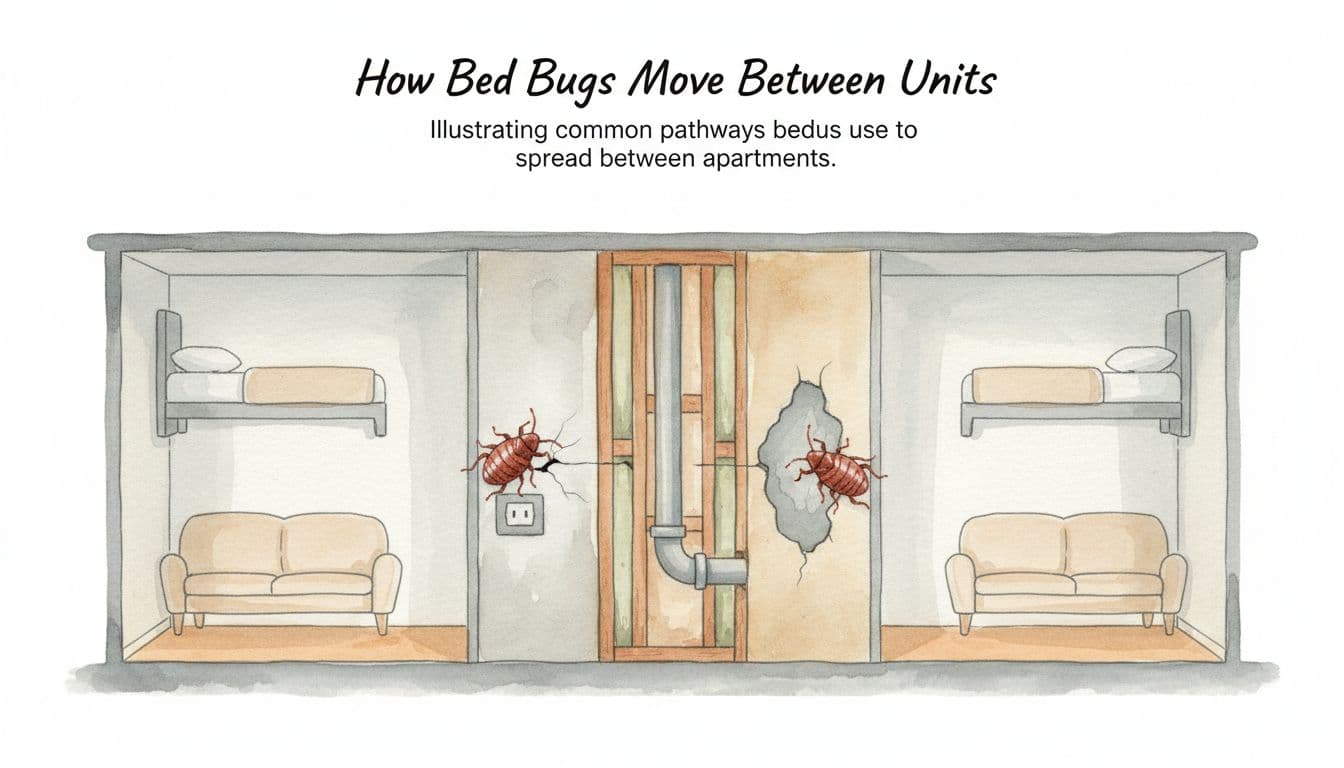
A small, early infestation may stay hidden in one bedroom for some time. A larger infestation behaves differently because more bugs are looking for places to hide and feed. Units beside, above, and below the source usually face the highest risk first.
Building condition matters too. Older buildings with gaps around plumbing or loose baseboards give bugs more room to travel. Clutter also helps them because it creates safe hiding spots and makes treatment harder. Meanwhile, slow reporting gives eggs time to hatch, so the population grows before anyone takes action.
Recent 2026 reporting shows bed bug cases are rising in dense, travel-heavy US cities, with spring and summer bringing more introductions from luggage and visitors. In multi-unit housing, that trend hits harder because one missed unit can affect several others. For more context on bed bugs in multi-unit housing, it helps to look at how shared structures make containment harder.
In apartment buildings, bed bugs usually spread fastest when people move them, not when they crawl on their own.
How bed bugs move between units, and how people speed it up
Natural travel does happen. Bed bugs can crawl through cracks in walls, around pipes, behind outlet covers, under doors, and into hallways. That kind of movement is usually local, which is why the next-door unit or the one above often gets checked first.
Human-assisted spread is the bigger problem. Bed bugs hitch rides on laundry bags, backpacks, purses, suitcases, moving boxes, and used furniture. A couch picked up from the curb can move them farther than any wall gap ever will. The same goes for mattresses, bed frames, and shared moving carts.
That distinction matters because it changes how you respond. If bugs are only crawling naturally, the first ring of nearby units may be the main focus. If people are carrying them through the building, the pattern can look random. One unit on the third floor might link back to a visitor, a recent move, or secondhand furniture from another part of town.
This is also why bug bombs often backfire. They may scatter bugs deeper into walls or into nearby units, while doing little to eggs hidden in cracks. A better overview of how bed bugs spread between apartments shows why quick, targeted treatment works better than guesswork.
What tenants, landlords, and property managers should do right away
What tenants should do first
The best first move is simple, report signs fast. That includes live bugs, dark spotting on seams, shed skins, or bites paired with other evidence. If you can, check mattress seams, the bed frame, the headboard, and nearby baseboards. Then report what you find in writing.

Don't move your bed to another room. Don't drag furniture into the hallway. Also, don't bring in used mattresses or couches unless they've been carefully inspected. Wash and dry clothing and bedding on high heat if advised, bag cleaned items, and follow prep directions from the pest pro. If signs keep showing up, or if nearby units also report activity, a professional inspection is the right next step.
What landlords and property managers need to coordinate
Treating one apartment in isolation often fails. Good response means inspecting the reported unit and nearby units, usually the ones beside, above, and below. Management should document reports, act quickly, and bring in a licensed pest professional with apartment experience.

Clear instructions matter. Residents need to know how to prepare rooms, handle laundry, reduce clutter, and avoid moving infested items between units. Follow-up visits matter too because bed bug control often takes more than one service. For a practical look at landlord duties and tenant rights, it's helpful to review how fast containment depends on both building staff and residents.
The bottom line on bed bug spread in apartment buildings
Bed bugs can spread slowly, or they can move through a building faster than expected. The difference usually comes down to infestation size, shared building gaps, clutter, human movement, and how fast the response starts.
If there's one point to remember, it's this: early reporting beats guessing. In apartment buildings, quick inspection and a coordinated building-wide plan stop a small problem from riding along with the next load of laundry or the next used couch.
Recommended Reads:
Bed Bugs: The Complete Guide to Identifying,
Emergency Bed Bug Removal Service — Immediate Relief from Infestations