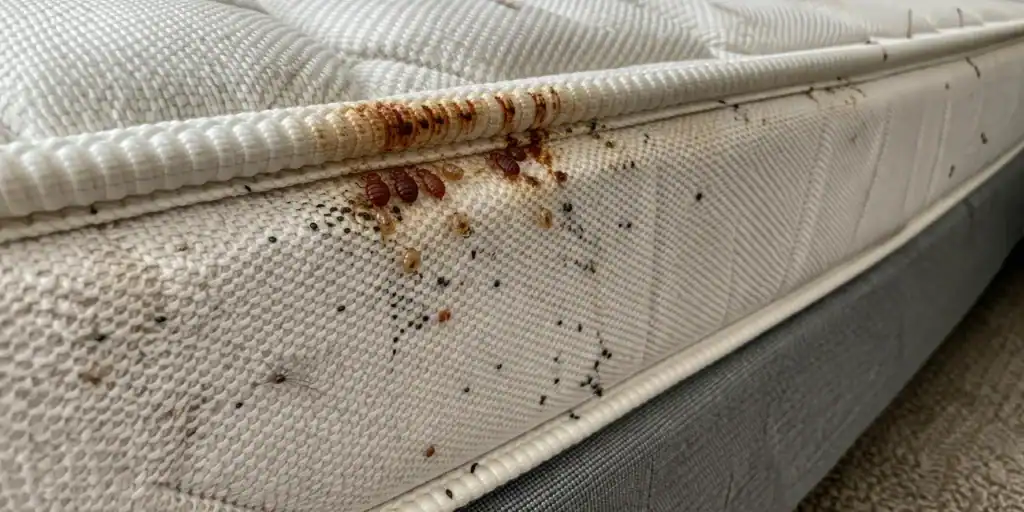
You woke up with unexplained bites. You found small rust-colored stains on your sheets. Or worse — you actually spotted one. If any of that sounds familiar, you do not have time to wait. Bed bugs multiply fast, spread through an entire home within weeks, and do not go away on their own. The longer you wait, the harder — and more expensive — the problem becomes to fix.
Our licensed exterminators have 15 years of hands-on pest control experience and have handled bed bug infestations from single apartments to multi-unit buildings. We get the job done right the first time, at the best price — and we back every job with a service guarantee.
Don't let another night go by. Call now for a free inspection and same-day service availability in most areas call now : 1-877-919-5113
Crossfire Liquid Concentrate 13 oz - Long-Lasting Bed Bug Control, Kils Bed Bugs and Their Eggs, pyrethroid-Resistant.
What Are Bed Bugs and Why Are They Such a Serious Problem?
Bed bugs (Cimex lectularius) are small, flat, reddish-brown insects about the size of an apple seed. They feed exclusively on blood — usually while you're asleep — and are experts at hiding in the tiniest cracks, seams, and crevices near where people rest.
Unlike many household pests, bed bugs are not a sign of poor hygiene. They hitchhike into homes through luggage, used furniture, clothing, and even visitors. Five-star hotels, college dorms, and suburban family homes are all equally at risk. Once they're in, they breed rapidly — a single female can lay up to 500 eggs in her lifetime.
According to the EPA's guidance on bed bug control, bed bugs are one of the most challenging pest problems to eliminate without professional help. They are resistant to many over-the-counter treatments and can survive months without feeding.
The bottom line: an emergency bed bug removal service is not an overreaction — it is the smart response to a pest that does not respond to half-measures.
Early Warning Signs of a Bed Bug Infestation
Catching a bed bug problem early is the single most important factor in keeping treatment costs down. Here is what to look for:
- Unexplained bites: Small, red, itchy welts that appear overnight — often in a line or cluster on exposed skin like arms, shoulders, and neck.
- Rust-colored stains on bedding: Small dark spots on your sheets or mattress — either crushed bugs or fecal matter that bleeds into fabric like a marker.
- Shed exoskeletons: Bed bugs molt five times before adulthood. Pale, papery shell casings near seams or hiding spots are a clear sign of active infestation.
- A sweet, musty odor: Large infestations produce a distinctive smell from the bugs' scent glands — often compared to raspberries or almonds.
- Live bugs: Check mattress seams, box spring folds, bed frame joints, headboard cracks, and nearby furniture with a bright flashlight.
- Blood spots on your pillow: Small red or brown smears on your pillowcase can indicate you rolled over a recently fed bed bug overnight.
The National Pest Management Association reports that 97% of pest control professionals treated bed bugs in the past year — making this one of the most widespread pest problems in the country. If you are seeing any of the signs above, do not wait.
Get DYI Bed Bug Treatment that works CROSSFIRE Bed Bug Concenrate
What Happens If You Ignore a Bed Bug Infestation?
Bed bugs do not carry diseases the way mosquitoes do, but ignoring an infestation carries real costs that grow every single week you delay.
- Rapid spread: A small infestation in one bedroom can reach every room in the house within 4–6 weeks. Each female lays 1–5 eggs per day.
- Sleep deprivation and anxiety: Living with bed bugs causes significant mental health strain — documented anxiety, insomnia, and hypervigilance are common in affected households.
- Skin reactions: While most people experience mild bite reactions, some develop severe allergic responses. Scratching bites can lead to secondary skin infections.
- Exponentially higher treatment costs: A contained early-stage infestation costs a fraction of what a whole-home infestation costs to treat.
- Spread to neighbors: In apartments, condos, or townhomes, an untreated infestation can spread to adjacent units — creating liability and far more expensive remediation.
Every day you delay, the problem compounds. An emergency bed bug removal service today is almost always the most cost-effective decision you can make.
DIY Bed Bug Treatment vs. Hiring a Professional — An Honest Comparison
You will find dozens of sprays, powders, and heat guns at the hardware store. Here is the honest truth about what they can and cannot do.
What DIY Can Do
- Reduce surface-level bug populations temporarily
- Kill bugs that are directly contacted with certain products
- Slow the spread if applied very consistently and extensively
What DIY Cannot Do
- Reach bugs hiding deep inside walls, electrical outlets, and furniture joints
- Eliminate eggs — most store-bought products are not ovicidal, meaning the infestation restarts within 6–10 days as eggs hatch. The CDC also cautions that improper pesticide use poses health risks to household members and pets.
- Guarantee full eradication — without professional verification you cannot know when the infestation is truly gone
- Prevent re-infestation through proper exclusion and monitoring
Professional exterminators use commercial-grade treatments — heat, residual chemical application, and targeted steam — that reach every hiding spot and eliminate bugs at every life stage including eggs. The University of Florida Extension program provides excellent independent guidance on why professional treatment achieves results DIY methods consistently cannot.
How Much Does Emergency Bed Bug Removal Cost?
Cost varies based on infestation size, home size, and treatment method. Here are realistic ranges:
- Single room chemical treatment: $300 – $600 for a contained early-stage infestation
- Whole-home chemical treatment: $1,000 – $2,500 for a 3-bedroom home depending on severity
- Heat treatment (whole-home): $2,000 – $4,000 — considered the gold standard for complete eradication in a single visit
- Follow-up treatments: Chemical methods often require 2–3 treatments spaced two weeks apart
The cost of waiting: a $300–$500 single-room problem can become a $2,000–$4,000 whole-home problem within 4–6 weeks. We offer free inspections and transparent, no-surprise pricing. Call us now for an accurate quote: 1-877-919-5113B
Bed Bugs: The Complete Guide to Identifying, Understanding, and Getting Rid of Them
What Happens When You Call an Emergency Bed Bug Exterminator?
Here is exactly what the process looks like from your first call to a fully treated home:
- Step 1 — Free phone consultation: Tell us what you are seeing. We assess likely severity and recommend the right approach.
- Step 2 — Inspection: A licensed technician visits, conducts a thorough inspection of all affected areas, and confirms the infestation. Typically 30–60 minutes.
- Step 3 — Treatment plan and quote: We explain exactly what we recommend, why, and what it costs. No hidden fees, no pressure.
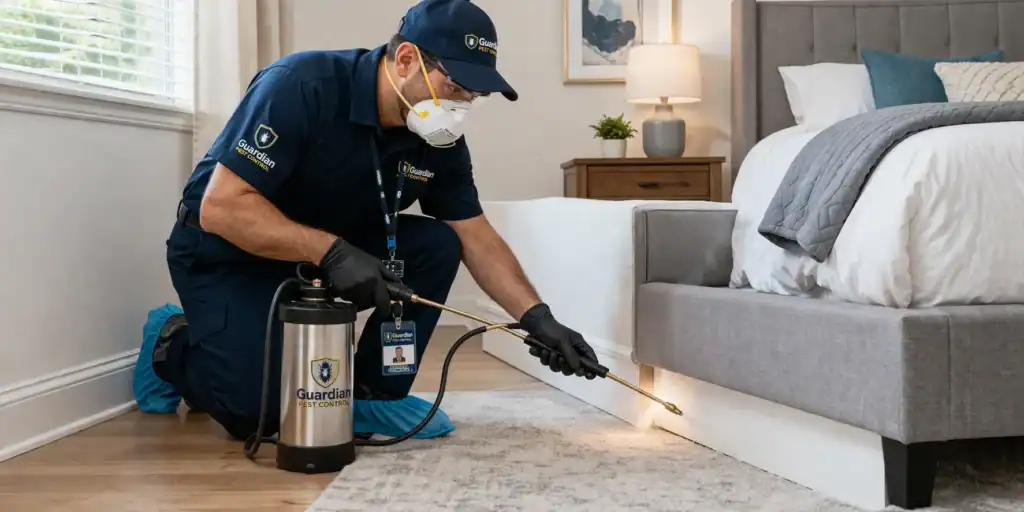
- Step 4 — Treatment: We apply the appropriate method — heat, chemical, steam, or a combination. Most treatments are completed in a single day.
- Step 5 — Follow-up verification: We schedule a follow-up to confirm full eradication. If any activity remains, we return — that is our guarantee.
All technicians are licensed, insured, and trained in the latest bed bug protocols. Same-day service is available in most areas.
How to Prepare for Your Bed Bug Treatment Appointment
Proper preparation makes treatment significantly more effective. Here is what to do before we arrive:
- Wash all bedding, clothing, and curtains in hot water (120°F or higher) and dry on high heat for at least 30 minutes
- Vacuum your mattress, box spring, bed frame, and surrounding floors — seal and dispose of the vacuum bag immediately after
- Clear clutter from floors and around all furniture to give the technician full access to every surface
- Move furniture 6–12 inches away from walls
- Remove pets and keep children out of the treatment area on service day
- Bag and seal items that cannot be washed or heat-treated. The EPA's bed bug preparation checklist is a helpful reference for additional steps.
The more thoroughly you prepare, the more effective your treatment — and the less likely you are to need a follow-up visit.
How to Prevent Bed Bugs from Coming Back
After a successful treatment, a few smart habits dramatically reduce your risk of reinfestation:
- Use mattress encasements: Zippered bed-bug-proof encasements on your mattress and box spring eliminate the most common hiding spots and make future self-inspections easy.
- Inspect hotel rooms when traveling: Check mattress seams, the headboard, and the luggage rack before unpacking. Store luggage on hard surfaces — never on the bed or carpet.
- Be cautious with used furniture: Secondhand beds, couches, and bed frames are the most common way bed bugs re-enter a home. Inspect carefully or avoid entirely.
- Regular self-inspections: Check mattress seams and bed frame joints every 2–3 months. Catching a small problem early keeps costs minimal.
- Ask about monitoring: Ongoing pest monitoring can catch any reinfestation before it becomes a full problem again.
For additional prevention guidance, the USDA Forest Service pest management resources offer solid independent information on integrated pest management approaches.
Frequently Asked Questions About Emergency Bed Bug Removal
How fast can a bed bug infestation spread through my home?
Bed bugs can spread from one room to an entire home in 4–6 weeks. A single fertilized female can lay up to 500 eggs in her lifetime and establish a new population anywhere she travels — in clothing, along baseboards, or inside walls. A small infestation treated today costs a fraction of what a whole-home infestation costs six weeks from now.
Can I get rid of bed bugs myself without calling an exterminator?
DIY treatments can reduce surface populations temporarily, but they almost never eliminate an infestation completely. The core problem is eggs — most store-bought products do not kill bed bug eggs, which hatch in 6–10 days and restart the cycle entirely. After 15 years in this industry, the cases we see most often are homeowners who spent 2–3 months on DIY before calling us. It is always more expensive than calling on day one.
Is professional bed bug treatment safe for my kids and pets?
Yes, when performed by a licensed professional. Our technicians use EPA-registered products and follow all safety protocols. We will walk you through exactly how long to stay out of treated areas and any specific precautions for your pets. Heat treatment uses no chemicals at all and is completely safe once the area returns to normal temperature.
How long does emergency bed bug treatment take?
A single-room chemical treatment typically takes 2–4 hours. A whole-home heat treatment takes 6–8 hours as we bring every area up to and hold it at lethal temperature (118–122°F). We give you a specific time estimate after the inspection.
Do I have to throw away my mattress?
In most cases, no. Professional treatment can eliminate bed bugs from your existing mattress. After treatment we recommend a bed-bug-proof encasement to prevent future infestation and make monitoring easy. The only time a mattress truly needs to be discarded is if it is so severely damaged that treatment no longer makes sense — which is rare, and something we will tell you honestly.
What if bed bugs come back after treatment?
We stand behind our work with a first-time success guarantee. If you experience continued activity after your treatment, contact us and we will return to re-treat at no additional charge. Our goal is a permanently solved problem.
How do I know if I actually have bed bugs and not something else?
The most reliable confirmation is a professional inspection. If you want to check first, focus on mattress seams, box spring folds, and bed frame joints with a bright flashlight. Bites alone are not reliable since they look similar to mosquito, flea, and spider bites. The combination of bites plus physical evidence — stains, shed skins, or live bugs — is your clearest confirmation.
Bed Bug killer Spray on a Budget that WORKS- Premo Guard Bed Bug Killer Spray
University Tested 100% Kill Rate - Natural Non Toxic, Stain & Scent Free - Kill Bedbugs & Mites On Bed & Blankets, Furniture, Clothing - Child & Pet Safe Premo Guard Bed Bug Killer
Ready to Get Your Home Back? Call Us Now.
Bed bugs are not a problem that solves itself — and every night you wait is another night of bites, lost sleep, and a spreading infestation. You deserve to feel safe and comfortable in your own home again.
Our licensed exterminators are ready to respond fast. With 15 years of experience, same-day availability in most areas, transparent pricing, and a first-time success guarantee, we get the job done right — the first time.
Call now for your free inspection:1-877-919-5113 — No obligation. No surprise fees. Just results.

Some links on this page are affiliate links. As an Amazon Associate, I earn from qualifying purchases at no extra cost to you.