

How to Treat Termites: Expert Steps for Illinois Homes
TL;DR:
- Early detection of termite signs can prevent extensive structural damage in Illinois homes.
- Professional treatment combining soil barriers and bait systems offers the most effective control.
- Ongoing prevention habits, like elimination of wood contact and moisture control, are essential.
Termites cause billions in property damage annually, and Illinois homeowners are not immune. These insects work silently inside walls, floors, and foundations, often going unnoticed until serious structural damage has already occurred. The good news is that early detection, the right treatment method, and consistent prevention can protect your home from costly repairs. This guide walks you through every stage of the process, from spotting the first warning signs to working with licensed professionals and keeping termites out for good.
Table of Contents
- Recognizing termite infestation in Illinois homes
- Preparing your home for termite treatment
- How professionals treat termites: Step-by-step process
- Long-term prevention strategies for Illinois homes
- What Illinois homeowners often miss about termite control
- Take action: Professional termite solutions for Illinois homes
- Frequently asked questions
Key Takeaways
| Point | Details |
|---|---|
| Early detection is critical | Spotting mud tubes, frass pellets, or hollow wood helps prevent costly damage. |
| Professional treatment required | Illinois law demands licensed pros; DIY fixes rarely succeed. |
| Bait and barrier combo works best | Using both soil termiticides and bait systems delivers faster and longer-lasting protection. |
| Prevention saves money | Annual inspections and maintenance keep termites at bay for the long term. |
Recognizing termite infestation in Illinois homes
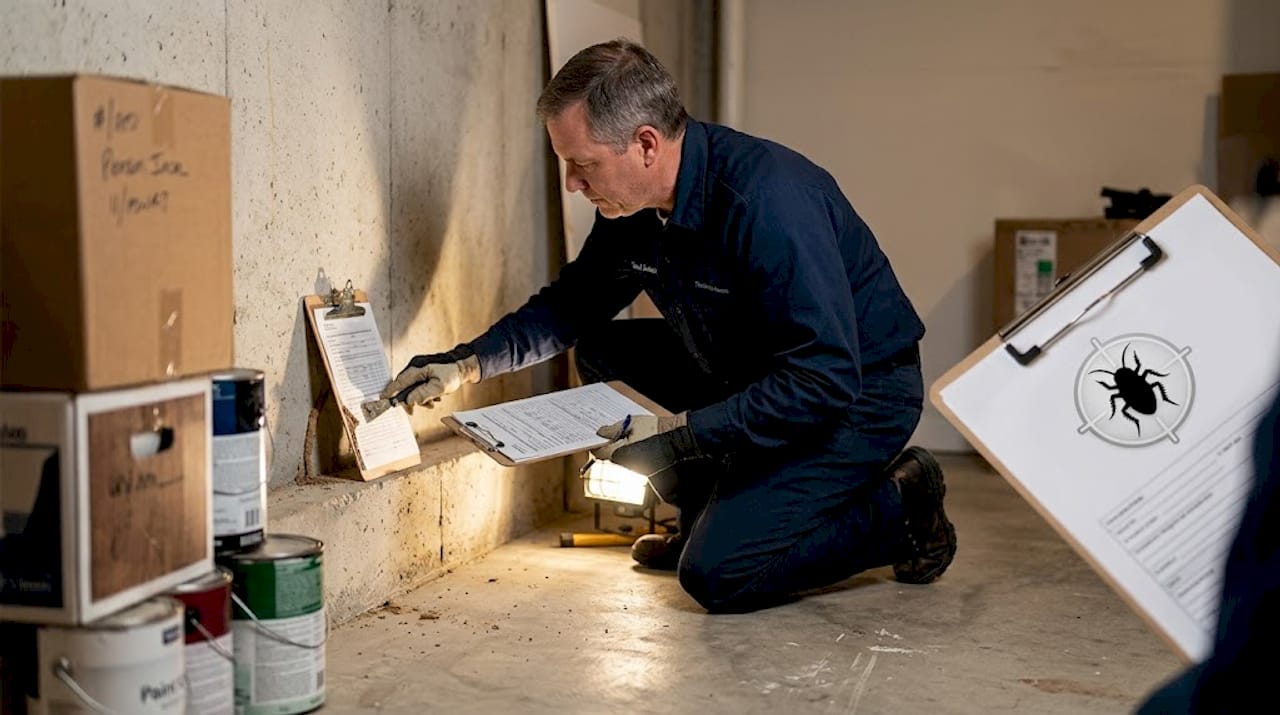
The earlier you catch a termite problem, the less damage you will deal with. Most homeowners do not notice termites until the infestation has been active for months or even years. Knowing exactly what to look for gives you a real advantage.
The most common detection signs include mud tubes running along your foundation or basement walls, wood that sounds hollow when you tap it, small piles of frass pellets (which look like sawdust or coffee grounds), and discarded wings near windowsills or door frames. These are all signals that a colony is active somewhere in or around your home.
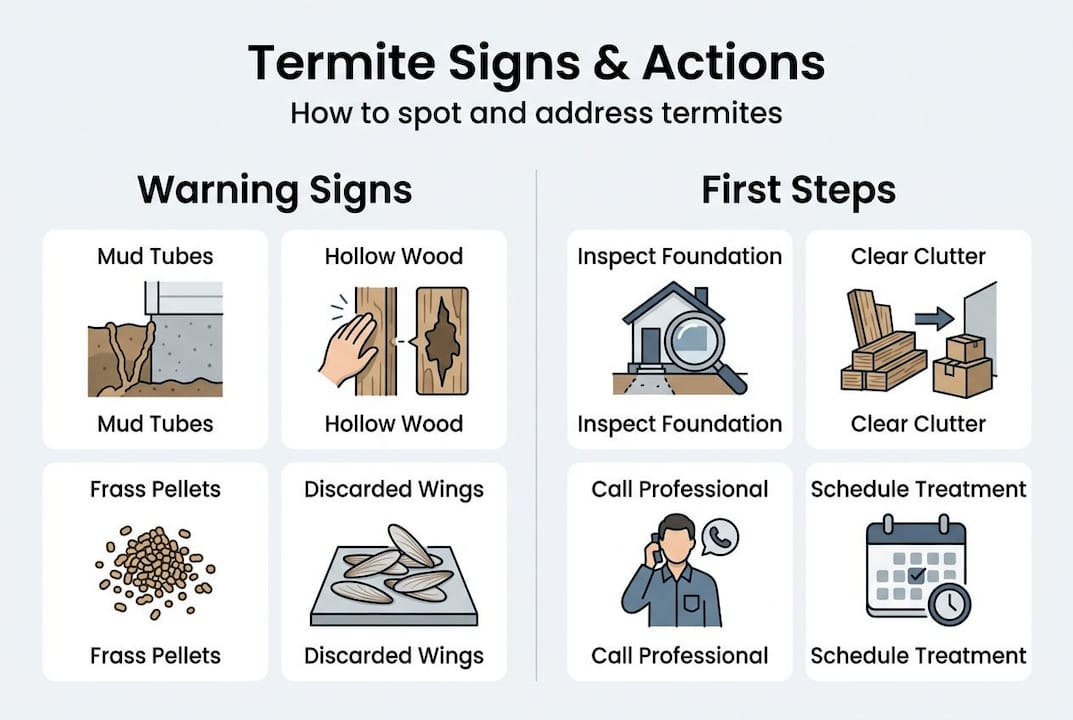
Here is a quick reference for the most important visual clues:
| Sign | What it looks like | Where to check |
|---|---|---|
| Mud tubes | Narrow, pencil-wide dirt tunnels | Foundation, basement walls |
| Hollow wood | Dull thud when tapped | Door frames, floor joists |
| Frass pellets | Tiny wood-colored droppings | Near baseboards, windowsills |
| Discarded wings | Small, equal-length wings | Entry points, light sources |
Beyond what you can see yourself, professionals use specialized tools to detect problems that are invisible to the naked eye:
- Moisture meters identify areas with elevated moisture, which termites are drawn to
- Thermal imaging cameras detect heat differences behind walls where colonies are active
- Borescopes allow inspectors to look inside walls without tearing them apart
These professional detection methods make a real difference in catching infestations before they reach critical levels. A trained inspector can find evidence you would never spot on your own.
Pro Tip: Schedule an annual inspection with a licensed pest control company. Catching a small colony early costs far less than repairing structural damage after years of undetected activity. Pairing inspections with a solid Illinois termite prevention plan is the smartest combination.
Preparing your home for termite treatment
Once you know what to look for, you are ready to prepare your home for effective treatment. Preparation is not just about clearing space. It is about choosing the right approach and setting the stage for it to actually work.
There are three main treatment options licensed professionals use, each with distinct advantages:
| Treatment type | Active ingredients | Timeline | Best for |
|—|—|—|
| Liquid soil termiticides | Fipronil, imidacloprid, chlorantraniliprole | Immediate barrier | Active infestations near foundation |
| Bait systems | Noviflumuron, diflubenzuron | 60 to 180 days | Colony elimination, lower chemical use |
| Wood treatments | Borates | Ongoing protection | New construction or exposed wood |
According to treatment research, liquid termiticides create barriers through trenching and rodding around the foundation, while bait systems work by feeding termites a slow-acting growth inhibitor that spreads through the colony. Wood treatments using borates penetrate wood fibers and make them toxic to termites on contact.
Before your scheduled treatment, follow these preparation steps:
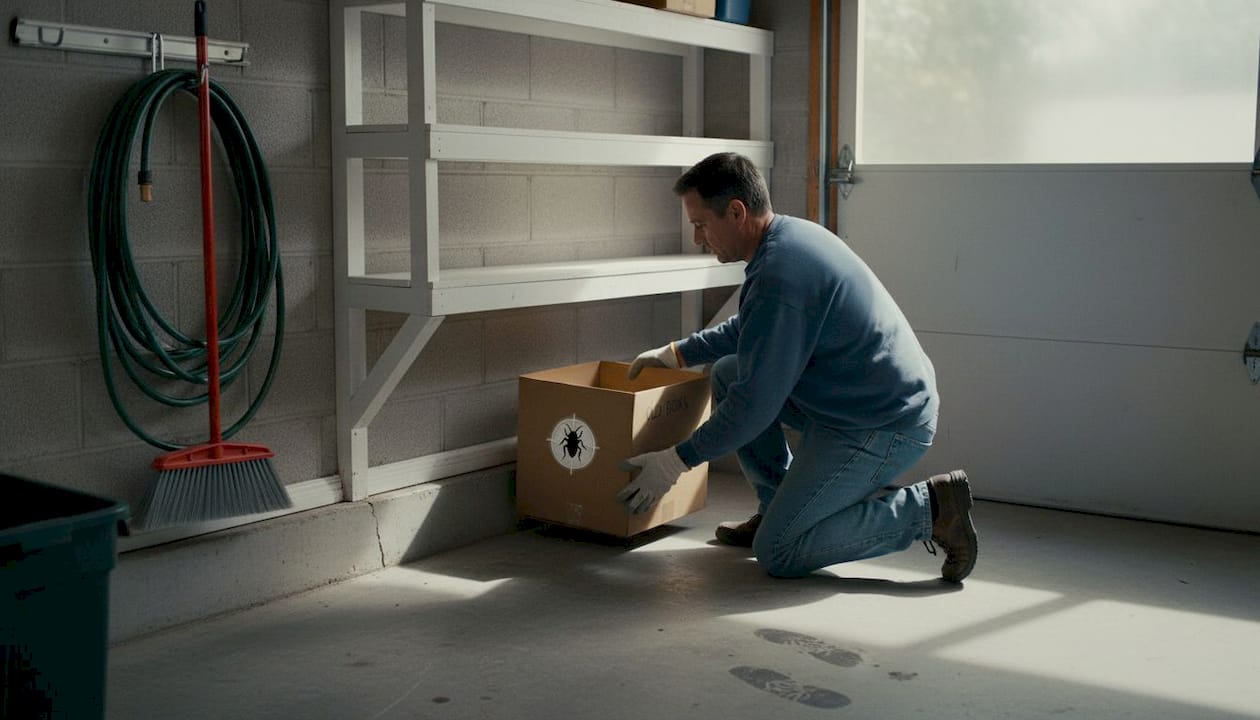
- Clear access to all foundation walls, crawl spaces, and basement areas
- Remove wood debris, old lumber, and cardboard from around the home’s perimeter
- Fix any leaking pipes, faucets, or drainage issues that create moisture near the foundation
- Pull mulch and soil back from direct contact with siding or wood framing
- Move stored items away from walls inside the basement or crawl space
These steps are not optional. A technician who cannot reach key treatment zones will leave gaps in your termite barrier guide, and gaps are exactly where termites find their way back in.
How professionals treat termites: Step-by-step process
With your home ready, the next step is understanding how professionals tackle the problem. The process is more involved than most homeowners expect, and that is exactly why DIY approaches fall short.
Here is how a licensed pest control professional handles a full termite treatment:
- Full property assessment — The technician inspects the structure, identifies the species, locates entry points, and maps the extent of the infestation
- Soil treatment application — Liquid termiticide is applied by trenching along the foundation and rodding into the soil to create a continuous chemical barrier
- Bait station installation — Stations are placed in the ground around the perimeter at regular intervals, targeting foraging termites
- Interior treatment — Any exposed wood, wall voids, or active galleries inside the home are treated directly
- Monitoring and follow-up — Bait stations are checked on a scheduled basis, and soil treatment zones are inspected for gaps or reactivation
Illinois law under 415 ILCS 60 requires that all chemical termite treatments be performed by a licensed pest control operator. Hiring an unlicensed contractor not only puts your home at risk but also voids any warranty on the treatment.
As noted in termite treatment research, liquid barriers provide immediate protection but require significant soil disturbance, while bait systems have a lower environmental impact but work more slowly. For most Illinois homes, combining both methods gives you the fastest results with the most complete coverage.
DIY termite treatments are largely ineffective. Store-bought sprays do not penetrate soil or reach colony centers. For Illinois termite treatment that actually works, you need a licensed professional with access to commercial-grade products and the training to apply them correctly.
When hiring a company, look for these key factors:
- Licensed by the Illinois Department of Agriculture
- Uses an Integrated Pest Management (IPM) approach
- Offers a written warranty on treatment results
- Willing to provide multiple quotes and explain the treatment plan in detail
For broader pest concerns beyond termites, connecting with a provider that also handles general pest control gives you more complete coverage under one roof. The EPA termite control guide also provides solid background on approved treatment methods.
Long-term prevention strategies for Illinois homes
After treatment, prevention is your best defense against future infestations. Termites do not give up easily. Once a colony has been eliminated, neighboring colonies can move in within months if conditions around your home remain favorable.
Here are the most critical prevention steps every Illinois homeowner should follow:
- Maintain a 6-inch gap between soil and any wood framing, siding, or structural lumber
- Fix leaks and improve drainage so moisture does not accumulate near the foundation
- Store firewood at least 20 feet away from the house and off the ground
- Seal cracks as small as 1/32 inch in the foundation, around pipes, and at entry points
- Schedule annual professional inspections to catch new activity before it becomes a colony
- Use inorganic mulch such as gravel or rubber near the foundation instead of wood-based mulch
These home termite prevention habits work because they remove the three things termites need most: moisture, food, and easy access. Cutting off even one of those factors makes your home significantly less attractive to foraging termites.
Maintenance routines matter just as much as one-time fixes. Check gutters and downspouts twice a year to make sure water drains away from the foundation. Inspect crawl spaces for standing water after heavy rain. Replace any wood that shows signs of rot, since soft or damaged wood is far easier for termites to penetrate.
Pro Tip: Switching to inorganic mulch near your foundation is one of the most overlooked prevention upgrades a homeowner can make. Wood mulch holds moisture and gives termites a direct food source right next to your home. Gravel or rubber mulch eliminates both problems at once. Pair this with the termite prevention tips on our site for a full seasonal checklist.
What Illinois homeowners often miss about termite control
Most homeowners think the hardest part of termite control is the treatment itself. In our experience, the real mistakes happen before and after that treatment window.
The first mistake is assuming a single treatment is permanent. Termite pressure in Illinois is ongoing. Soil treatments can degrade over time, and bait stations require regular monitoring to stay effective. A treatment without a follow-up plan is an incomplete solution.
The second mistake is prioritizing price over quality. We have seen homeowners choose the cheapest quote, skip the warranty conversation, and end up paying twice when the infestation returns. As industry data confirms, non-repellent termiticides work because termites unknowingly transfer the product through the colony. That only happens when the right product is applied correctly by a licensed professional.
Combining bait systems with soil termiticides is not a premium upgrade. It is the recommended standard for Illinois homes. If a company is only offering one method, ask why. The best providers use both and back their work with a written warranty. For deeper guidance, our advanced termite prevention resource covers what ongoing protection actually looks like year to year.
Take action: Professional termite solutions for Illinois homes
You now have a clear picture of how termites are identified, treated, and prevented. The next step is putting that knowledge into action with a licensed partner who knows Illinois pest patterns inside and out.

At BugEvicta Pest Control, we provide Illinois termite extermination backed by licensed technicians, proven treatment methods, and full warranties on our work. We combine soil termiticides and bait systems for complete coverage, and we do not consider the job done until your home is protected. Whether you are dealing with an active infestation or want to get ahead of the problem, our termite prevention guide is a great place to start. Contact BugEvicta today to schedule your inspection and get a clear plan in place.
Frequently asked questions
What are the first signs of termite infestation in Illinois?
Common early signs include mud tubes along your foundation, discarded wings near windows, frass pellets near baseboards, and wood that sounds hollow when tapped. Spotting any one of these is enough reason to call a licensed inspector right away.
How long do termite bait systems take to work?
Bait systems typically reduce termite activity within 39 to 65 days and can fully eliminate a colony within 60 to 180 days depending on colony size and station placement. They work best when combined with a liquid soil treatment for faster initial protection.
Do I need a professional to treat termites?
Yes. DIY treatments are ineffective against established colonies, and Illinois law under 415 ILCS 60 requires licensed operators for all chemical termite applications. Unlicensed work also voids any treatment warranty.
What are the best prevention steps for Illinois homeowners?
The most effective steps include eliminating wood-soil contact with a 6-inch gap, repairing leaks, keeping firewood away from the house, sealing cracks as small as 1/32 inch, and booking annual professional inspections. Using inorganic mulch near the foundation also removes a major moisture and food source.