
Mosquito control tips: protect your Illinois home effectively
TL;DR:
- Eliminating standing water sources weekly is the most effective way to control mosquitoes.
- Using EPA-registered repellents and maintaining physical barriers protect against mosquito bites.
- Consistent routine and community efforts are crucial for lasting mosquito control success.
Every summer in Illinois, mosquitoes turn backyards into no-go zones and put families at real risk. These insects are not just a nuisance. They carry West Nile virus, and Culex mosquito risks are well documented across Cook County and surrounding areas. Many homeowners spend money on gadgets and sprays that simply do not work, while the mosquitoes keep breeding. This guide cuts through the noise and gives you clear, research-backed strategies to reduce mosquito populations around your home, protect your family, and actually enjoy your outdoor spaces from late May through October.
Table of Contents
- Identify and eliminate standing water: The number one tip
- Use the right repellents and barriers for personal protection
- Maintain your yard and home environment
- Smart solutions for tricky mosquito sources
- Why consistency and community are your real mosquito secret weapons
- Get lasting relief with help from local experts
- Frequently asked questions
Key Takeaways
| Point | Details |
|---|---|
| Eliminate standing water | Regularly remove stagnant water to break the mosquito life cycle right at home. |
| Use proven repellents | Choose EPA-approved repellents and physical barriers for the best personal protection. |
| Maintain yard and screens | Keep lawns trimmed and screens repaired to reduce breeding sites and indoor entry. |
| Debunk the myths | Skip gadgets and ‘natural’ remedies; stick with strategies experts endorse. |
| Consistency and teamwork | Frequent checks and community action offer the strongest, safest mosquito control. |
Identify and eliminate standing water: The number one tip
If you only do one thing this season, make it this: find and remove every source of standing water on your property. Mosquitoes can lay eggs in water as shallow as a bottlecap. That small puddle in a forgotten plant saucer or the water sitting in a folded tarp is enough to produce hundreds of new mosquitoes within days.
The most effective mosquito control for Illinois homeowners is source reduction, meaning you eliminate the standing water in containers, gutters, birdbaths, and low spots around your yard, and you check these spots every week, especially after rain. This is not a one-time task. It is a weekly habit during peak season.
Here is what to check every week:
- Birdbaths and pet water bowls: Empty and scrub them at least twice a week.
- Plant saucers and trays: Dump any collected water after every rain.
- Gutters and downspouts: Clogged gutters hold water for days. Clean them out and keep them clear.
- Children’s toys, buckets, and wading pools: Flip them upside down when not in use.
- Tarps and plastic sheeting: These fold and collect water in pockets you might not notice.
- Low spots in the lawn: If water pools after rain and sits for more than a day, consider regrading or filling those areas.
The neighborhood factor is huge here. When a significant majority of neighbors in a given area participate in mosquito breeding reduction efforts, mosquito populations can drop dramatically, because mosquitoes do not respect property lines. One neglected yard can undo your entire effort. Talk to your neighbors, share what you know, and make it a block-wide habit.
Pro Tip: Create a simple standing-water checklist for your yard and set a recurring calendar reminder every Saturday morning. Walk the property with the list in hand. It takes less than ten minutes and makes a measurable difference over the course of the season.
For more context on local pest insights specific to Illinois, understanding seasonal patterns helps you time your efforts more effectively.
Use the right repellents and barriers for personal protection
While reducing standing water cuts the source, you also need smart personal protection for the moments when mosquitoes are already active around you. Not all repellents are equal, and using the wrong product wastes money and leaves you exposed.
EPA-registered repellents with 20 to 30 percent DEET are proven effective for adults and children over two months old. Picaridin is another excellent option with fewer skin sensitivities. Oil of lemon eucalyptus works well for adults but should never be used on children under three years old.
Here is a quick comparison of the top repellent options:
| Repellent type | Safe for children | Protection duration | Notes |
|---|---|---|---|
| DEET (20-30%) | Yes, over 2 months | 4 to 8 hours | Most widely tested option |
| Picaridin | Yes, over 2 months | 4 to 8 hours | Less greasy, odor-free |
| Oil of lemon eucalyptus | No, under age 3 | 4 to 6 hours | Plant-based, effective for adults |
| IR3535 | Yes, over 2 months | 2 to 4 hours | Gentle, good for sensitive skin |
How you apply repellent matters just as much as what you use. Follow these steps:
- Apply only to exposed skin, not under clothing.
- Never apply to cuts, wounds, or irritated skin.
- Avoid applying near eyes or mouth.
- Wash treated skin after coming indoors.
- For children, apply to your own hands first, then onto the child’s skin.
Physical barriers are just as important as repellents. Keep window and door screens in good repair, because a single torn screen can let dozens of mosquitoes inside on a warm evening. Wear loose, light-colored, long-sleeved clothing during peak mosquito hours, which are dusk and dawn. Mosquitoes are attracted to dark colors and can bite through tight-fitting fabric.
For a deeper look at science-backed mosquito protection options, professional-grade treatments can complement your personal protection routine.
Pro Tip: Keep a small bottle of picaridin repellent near your back door so the whole family applies it automatically before heading outside in the evening.
Maintain your yard and home environment
Next, make your yard and home’s exterior as unwelcoming to mosquitoes as possible. Adult mosquitoes do not just breed in water. They also rest in cool, shaded, humid spots during the heat of the day. Your yard may be giving them exactly what they need.

According to yard maintenance guidance from public health experts, mowing grass regularly, trimming weeds and shrubs, and keeping gutters clean all reduce the adult resting sites that mosquitoes depend on. A well-maintained yard is genuinely less hospitable to them.
Here is what to stay on top of:
- Mow your lawn weekly during peak season. Tall grass holds moisture and shade.
- Trim shrubs and low-hanging branches to increase airflow and reduce shaded resting spots.
- Clear dead leaves and brush piles, especially along fences and in corners of the yard.
- Fix leaking outdoor spigots and redirect any water flow away from your home’s foundation.
- Remove unused tires, containers, or equipment that collect rainwater and are easy to overlook.
For Illinois-specific guidance on Illinois pest trends and seasonal activity, knowing when mosquito pressure peaks in your region helps you schedule maintenance at the right times. You can also explore general pest control approaches that address both mosquitoes and other common yard pests in one structured plan.
Pro Tip: Enlist your kids to help scout the yard for trouble spots every Saturday morning. Make it a game. Whoever finds the most hidden water sources gets to pick the weekend activity. You get a thorough inspection, and they learn a valuable habit.
Smart solutions for tricky mosquito sources
Some sources of water or stubborn mosquitoes require targeted solutions, and smart skepticism about what actually works. Not every product on the market delivers what it promises.
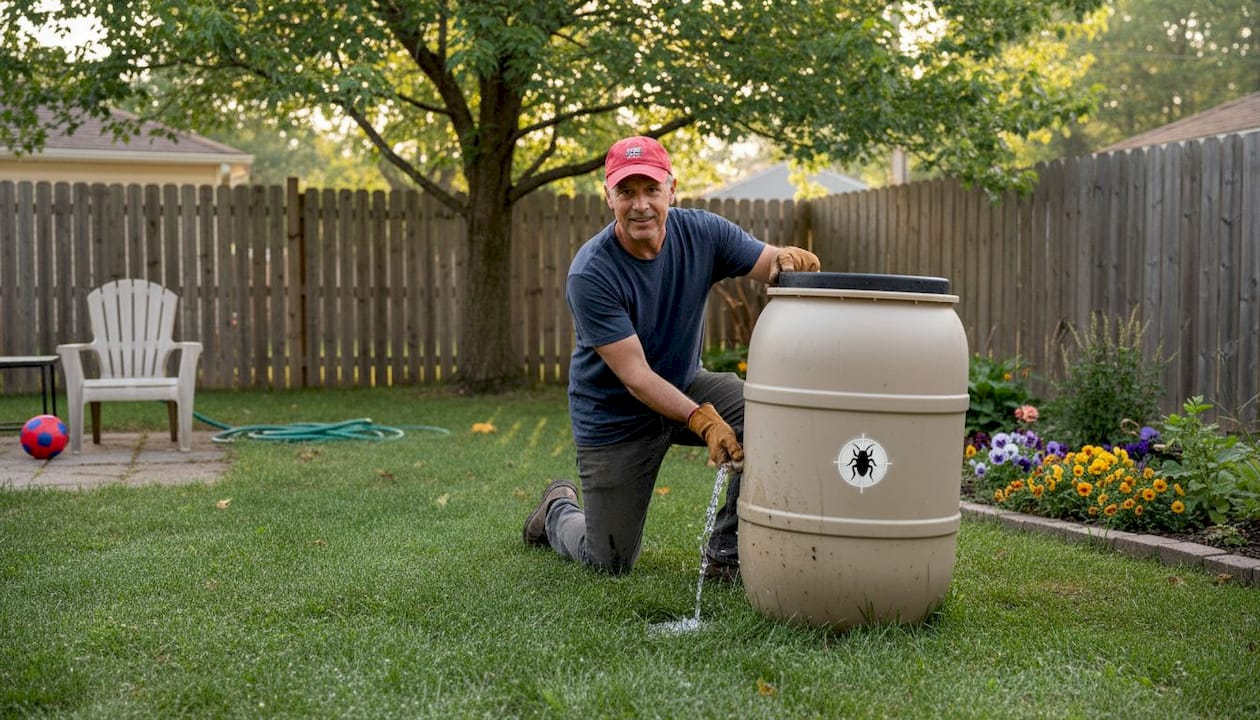
For water you cannot empty, such as ornamental ponds, rain barrels, or large fountains, use Bti mosquito dunks or granules. Bti stands for Bacillus thuringiensis israelensis, a naturally occurring bacterium that kills mosquito larvae but is completely safe for pets, fish, birds, and other wildlife when used as directed. Drop a dunk in any standing water you cannot drain, and replace it every 30 days for continuous protection.
Here is a comparison of common mosquito control products:
| Product | Does it work? | Safe for pets/wildlife? | Best use case |
|---|---|---|---|
| Bti dunks/granules | Yes | Yes | Ponds, rain barrels, fountains |
| Bug zappers | No | Mostly | Kills beneficial insects, not mosquitoes |
| Citronella candles | No | Yes | Minimal effect, not reliable |
| Sonic repellents | No | Yes | No scientific backing |
| Mosquito-repelling plants | Minimal | Yes | Not a standalone solution |
The myth-busting part is important. Bug zappers, sonic repellents, citronella candles, and mouthwash have all been tested and found ineffective at meaningfully reducing mosquito populations. Mosquito-repelling plants like citronella grass have very limited real-world impact.
“Focus your time and money on what actually works: source elimination, proven repellents, and larvicides for water you cannot remove. Everything else is marketing.”
Community action also multiplies your results. Reporting neglected standing water to local authorities and supporting community mosquito efforts in your municipality means the whole neighborhood benefits. When you want to go beyond DIY, professional mosquito solutions from certified technicians can target breeding sites you might miss on your own.
Why consistency and community are your real mosquito secret weapons
Here is the uncomfortable truth that most mosquito control articles skip over: no single spray, gadget, or product will solve your mosquito problem. Not even close. A single female mosquito can lay up to 300 eggs per batch, and generations cycle through in as little as a week. That means even a brief lapse in your routine can allow populations to rebound fast.
We have seen this pattern repeatedly. Homeowners do everything right for three weeks, then skip one Saturday inspection after a rainstorm. By the following weekend, they are back to swatting mosquitoes at every cookout. The biology does not give you a grace period.
Integrated Pest Management, or IPM, is the framework that actually works. It prioritizes source reduction over chemicals, and it demands consistency above all else. Chemicals have a role, but they are a supplement to discipline, not a replacement for it. The homes with the fewest mosquito problems are not the ones with the most expensive treatments. They are the ones with the most consistent weekly habits and the most engaged neighbors.
If you want proven pest control frameworks that follow IPM principles, the approach starts with inspection and source elimination, then layers in targeted treatments only where needed. That is the honest, effective path.
Get lasting relief with help from local experts
You now have a solid, research-backed plan for tackling mosquitoes around your Illinois home. DIY efforts work best when paired with professional backup, especially for properties with complex landscaping, persistent water features, or recurring mosquito pressure despite regular maintenance.

At BugEvicta, our certified technicians know exactly where mosquitoes hide and breed in Illinois yards. We offer targeted mosquito control services that go beyond surface sprays, including inspection, larvicide application, and seasonal treatment plans. We also provide broader pest control options if mosquitoes are just one part of a bigger pest challenge. Visit BugEvicta to learn more and schedule a consultation with a local expert who understands your neighborhood’s specific pest patterns.
Frequently asked questions
How often should I check for standing water around my home?
You should inspect and empty potential standing water sources at least once a week, and more often after heavy rain. Pet bowls, wading pools, and gutters are the most commonly overlooked spots.
Which mosquito repellent is best and safest for young children?
EPA-registered repellents with 20 to 30 percent DEET or picaridin are safe for children over two months old. Avoid oil of lemon eucalyptus entirely for children under three years old.
Are bug zappers and citronella candles effective against mosquitoes?
No. Bug zappers and citronella candles do not significantly reduce mosquito populations in real-world settings and are not worth the investment as standalone solutions.
When is mosquito season at its peak in Illinois?
Illinois mosquito season runs from late May through early October, with the highest activity in July and August when temperatures and humidity are at their peak.
Are natural remedies or mosquito-repelling plants worth trying?
Most homemade remedies and mosquito-repelling plants have minimal real-world effect. Your time is better spent on proven methods like eliminating standing water and using proper EPA-registered repellents.