
Mosquito control workflow: step-by-step guide for Illinois
TL;DR:
- Effective mosquito control requires regular assessment, source reduction, and scheduled treatment cycles.
- Consistency in mosquito management significantly reduces populations and enhances outdoor enjoyment.
- Professional services ensure comprehensive, timely treatments and ongoing protection for homeowners.
Spending a summer evening on your back porch in Illinois should be relaxing, not a battle against swarms of biting mosquitoes. Between the itchy welts, the constant swatting, and the real health risks that come with mosquito season, many homeowners simply give up on their outdoor spaces from June through September. That’s a lot of lost time with your family. The good news is that a structured, repeatable control workflow can dramatically reduce mosquito pressure on your property. This guide walks you through every step, from identifying the problem to treating your yard and keeping mosquitoes from coming back.
Table of Contents
- Understanding the mosquito problem in Illinois
- Preparing for mosquito control: Tools and assessment
- Executing the mosquito control workflow: Step-by-step process
- Verifying effectiveness and preventing future infestations
- The overlooked truth about mosquito control in Illinois
- Professional mosquito control made easy
- Frequently asked questions
Key Takeaways
| Point | Details |
|---|---|
| Identify mosquito risks | Assess your property for problem areas like standing water before starting control efforts. |
| Follow a proven workflow | Use targeted tools and step-by-step methods for safe, effective mosquito reduction. |
| Prioritize ongoing maintenance | Regular monitoring and treatment are necessary for lasting protection during Illinois mosquito season. |
| Professional help is available | Local experts can simplify the process and deliver reliable results for homeowners. |
Understanding the mosquito problem in Illinois
Illinois sits in a climate zone that mosquitoes love. Warm, humid summers, frequent rainfall, and plenty of shaded vegetation create near-perfect breeding conditions across the state. Mosquito activity typically picks up in late May, peaks through July and August, and tapers off in October. The species you’re most likely to encounter include the common house mosquito (Culex pipiens) and the Asian tiger mosquito (Aedes albopictus), both of which are aggressive biters.
The health stakes are real. Mosquitoes can transmit diseases such as West Nile virus right here in Illinois, and cases are reported every year. West Nile virus can cause serious neurological illness in vulnerable individuals, including older adults and people with weakened immune systems. It’s not just a nuisance issue.
Important: Even if you never get bitten by an infected mosquito, the constant presence of mosquitoes can cut your outdoor enjoyment in half. Many Illinois homeowners report avoiding their yards entirely during peak season.
Here are the most common signs your property has a mosquito problem worth addressing:
- You notice large numbers of mosquitoes at dawn and dusk near your yard
- Standing water collects in flower pots, gutters, birdbaths, or low spots in your lawn
- You find yourself retreating indoors earlier than you’d like during summer evenings
- Neighbors in your area are also reporting heavy mosquito activity
- You’ve had itchy bites even while wearing long sleeves
Mosquitoes don’t just make outdoor living uncomfortable. They affect your kids’ ability to play outside, your ability to host gatherings, and your overall quality of life during the best months of the year. Understanding the scope of the problem is the first step toward fixing it.
Preparing for mosquito control: Tools and assessment
With the problem clearly defined, the next step is to prepare for a targeted mosquito control effort. Walking out into your yard with a can of bug spray is not a plan. Effective mosquito control starts with a proper assessment and the right equipment in hand.
Essential equipment checklist:
- Protective clothing: long sleeves, gloves, and eye protection when applying treatments
- Pump or backpack sprayer for applying liquid treatments
- Larvicide granules or dunks for standing water sources
- Adulticide spray concentrate (EPA-approved)
- Flashlight for inspecting shaded and low-visibility areas
- Notepad or phone to map out problem zones
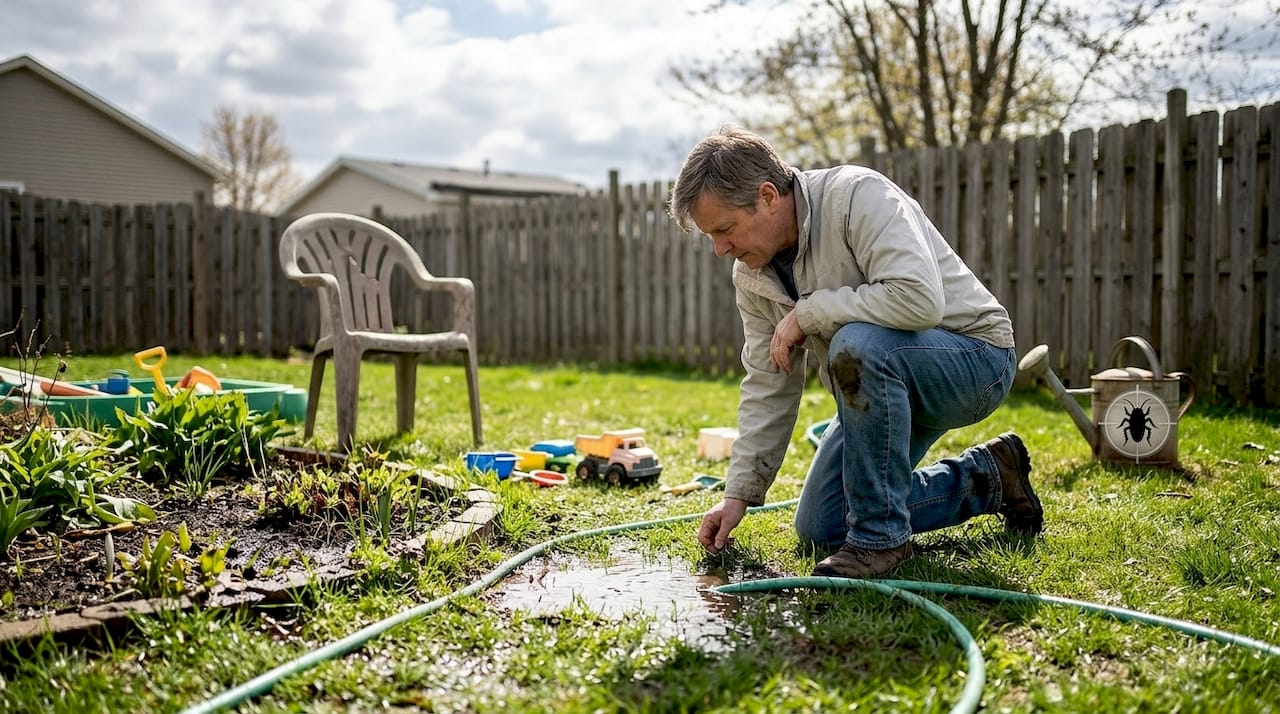
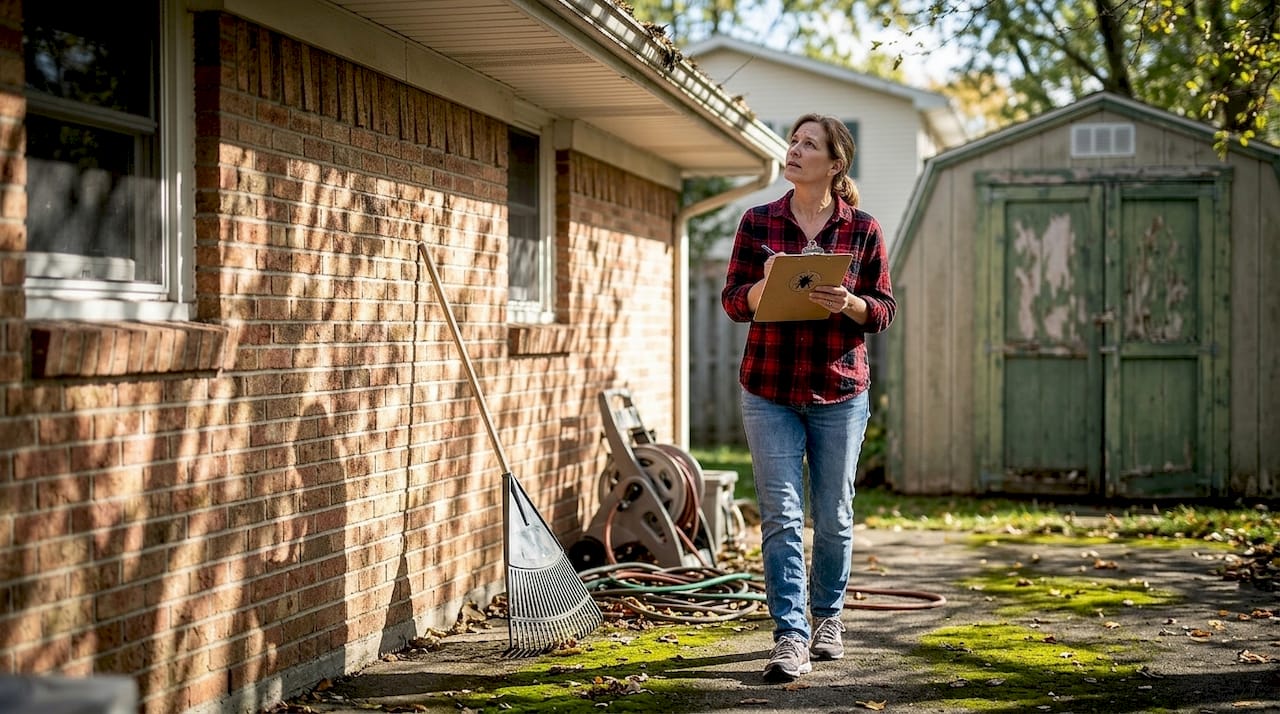
Once you have your gear, walk your entire property with fresh eyes. Standing water around the home is the primary breeding ground for mosquitoes, and even a bottle cap’s worth of still water can support a new generation of larvae. Look for gutters that don’t drain properly, tarps that collect rainwater, low spots in the lawn, and any containers left outside.
| Area to inspect | Common issue | Risk level |
|---|---|---|
| Rain gutters | Clogged, standing water | High |
| Flower pots and saucers | Water pooling underneath | High |
| Birdbaths | Stagnant water | High |
| Children’s toys | Water collecting inside | Medium |
| Lawn low spots | Puddles after rain | Medium |
| Woodpiles and debris | Shaded, moist habitat | Medium |
For professional mosquito control options, a trained technician will conduct this same assessment but with the benefit of experience spotting spots homeowners regularly miss, like tree holes, condensation drains from AC units, and neighbor fence lines.
Pro Tip: Set a calendar reminder every two weeks throughout mosquito season to walk your property and check for new standing water sources. After heavy rain, do it within 24 hours. Mosquito eggs hatch fast, and catching them early is far easier than treating an established population.
Executing the mosquito control workflow: Step-by-step process
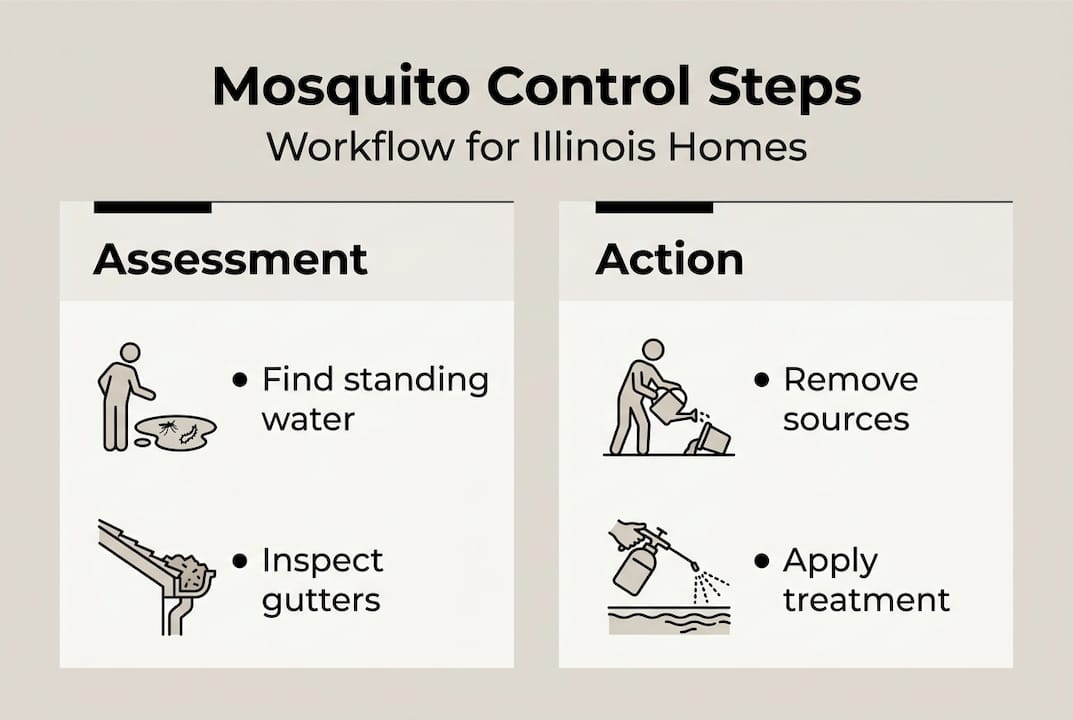
Once you’ve assessed your property and gathered supplies, it’s time to execute the workflow that transforms your outdoor space. A combination of source reduction, larvicides, and adulticides yields the most reliable results for mosquito control. No single method does the whole job.
Follow these steps in order:
- Remove standing water. Empty, scrub, or flip over any containers that hold water. Clean gutters. Fill in low spots in the lawn with topsoil.
- Apply larvicide to water you can’t eliminate. For birdbaths, decorative ponds, or drainage ditches, use mosquito dunks or granules containing Bacillus thuringiensis israelensis (Bti). This kills larvae before they become adults.
- Treat vegetation with adulticide. Adult mosquitoes rest in cool, shaded vegetation during the day. Apply an EPA-approved adulticide spray to shrubs, ground cover, and the underside of leaves around your yard’s perimeter.
- Treat around the home’s foundation. Pay special attention to the shaded zone along your home’s base, fence lines, and under decks.
- Repeat on schedule. Most treatments are effective for 3 to 4 weeks. Mark your calendar and reapply before effectiveness fades.
| Approach | Cost | Effectiveness | Best for |
|---|---|---|---|
| DIY source removal | Low | Moderate | Small yards, low infestation |
| DIY larvicide and adulticide | Low to medium | Moderate to high | Motivated homeowners |
| Professional treatment | Medium to high | High | Large yards, severe infestations |
| Ongoing pest control program | Medium | Very high | Long-term protection |
Pro Tip: Apply adulticide treatments in the early morning or evening when mosquitoes are most active and resting in vegetation. Midday application is less effective because mosquitoes are less accessible and the heat can break down the product faster.
Always read product labels carefully. Wear gloves and eye protection, keep children and pets indoors during application, and allow treated areas to dry before anyone re-enters.
Verifying effectiveness and preventing future infestations
After you’ve carried out the treatment, it’s crucial to confirm your success and keep mosquitoes away for good. Many homeowners treat once, see improvement, and then stop, only to find mosquitoes return in full force three weeks later.
Here’s how to know your workflow is actually working:
- Noticeably fewer mosquitoes during evening hours within 48 to 72 hours of treatment
- No new larvae visible in standing water sources you’ve treated
- Family members spending more time outdoors without complaints
- Reduced biting activity near vegetation and shaded areas
If you’re still seeing heavy activity after a full treatment cycle, look for missed breeding sites. Common oversights include neighbor properties with standing water, clogged downspout extensions, and dense ground cover that holds moisture. Regular inspections and consistent maintenance are key to lasting mosquito control, and skipping even one cycle can allow populations to rebound quickly.
Building a maintenance calendar is one of the most practical things you can do. Schedule treatments from late May through early October. Add inspection reminders after any significant rainfall event. Note which areas of your yard consistently produce problems so you can prioritize them each cycle.
For ongoing mosquito prevention, consider pairing your treatment schedule with physical barriers like door and window screens in good repair, and outdoor fans on patios, since mosquitoes are weak fliers and struggle in even mild air movement.
Pro Tip: After a major storm or flooding event, treat your yard within 48 to 72 hours. Floodwater mosquitoes can hatch in enormous numbers and become adults within a week. Getting ahead of that cycle is far easier than reacting to it.
The overlooked truth about mosquito control in Illinois
Here’s something most guides won’t tell you: the biggest reason mosquito control fails for Illinois homeowners isn’t the wrong product or the wrong technique. It’s inconsistency. People treat once in June, see good results, and assume the problem is solved. Then they’re surprised when August brings a full reinfestation.
Mosquitoes are relentless breeders. A single female can lay up to 300 eggs at a time, and a new generation can emerge in as little as a week under warm conditions. One missed treatment cycle is all it takes to lose the ground you gained.
What we’ve seen across multi-year control programs is that homeowners who commit to a seasonal schedule, not just a one-time spray, experience dramatically better results year over year. Each season of consistent treatment reduces the local breeding population and makes subsequent seasons easier to manage.
If you’re serious about reclaiming your yard, expert mosquito management built around a repeating schedule is the approach that actually works. Shortcuts feel satisfying in the moment but rarely hold up past the first summer storm.
Professional mosquito control made easy
If you want the hassle-free route to mosquito-free living, BugEvicta has solutions tailored to Illinois homeowners. Managing a full mosquito control workflow takes time, attention, and the right products applied correctly on schedule. That’s exactly what our team handles for you.

Our local mosquito control specialists conduct a thorough property inspection, identify every breeding and resting site, and apply targeted treatments on a schedule that keeps protection consistent throughout the season. No guesswork, no missed cycles, and no wasted product. Whether you’re dealing with a minor nuisance or a serious infestation, BugEvicta pest control gives you back your outdoor space. Contact us today for a free consultation and find out what a professionally managed mosquito program can do for your yard.
Frequently asked questions
How often should I repeat the mosquito control workflow in Illinois?
Most homeowners should repeat the workflow every 3 to 4 weeks during peak mosquito season for best results. Regular inspections and maintenance are essential for lasting control, especially after rain events.
What is the safest way to kill mosquitoes around my home?
Remove standing water first, then use EPA-approved larvicides and adulticides applied according to label instructions. This combination of methods minimizes risk while delivering effective control.
Are professional mosquito control services worth it?
For large or complex properties, professional services offer expert application and consistent scheduling that’s hard to match with DIY efforts. A combination of approaches provides optimal control, and professionals ensure nothing gets missed.
When is mosquito season in Illinois?
Mosquitoes are most active from late spring through early fall in Illinois, with peak pressure in July and August, especially after periods of heavy rainfall.