

A small nest in April can turn into a high-risk problem by late summer. Around Hannibal and nearby Quincy, local wasp and hornet nest removal matters most when activity shows up near doors, play areas, garages, and rooflines.
Right now, in mid-April 2026, northeast Missouri is entering the early nest-building window. Queens become active on warm days, and that makes spring the best time to spot trouble before colonies grow larger and more defensive.
The wasps and hornets most people see around Hannibal
Most calls in this area involve yellowjackets, paper wasps, bald-faced hornets, European hornets, or mud daubers. They don't behave the same way, so a good description helps a lot when you call for service.
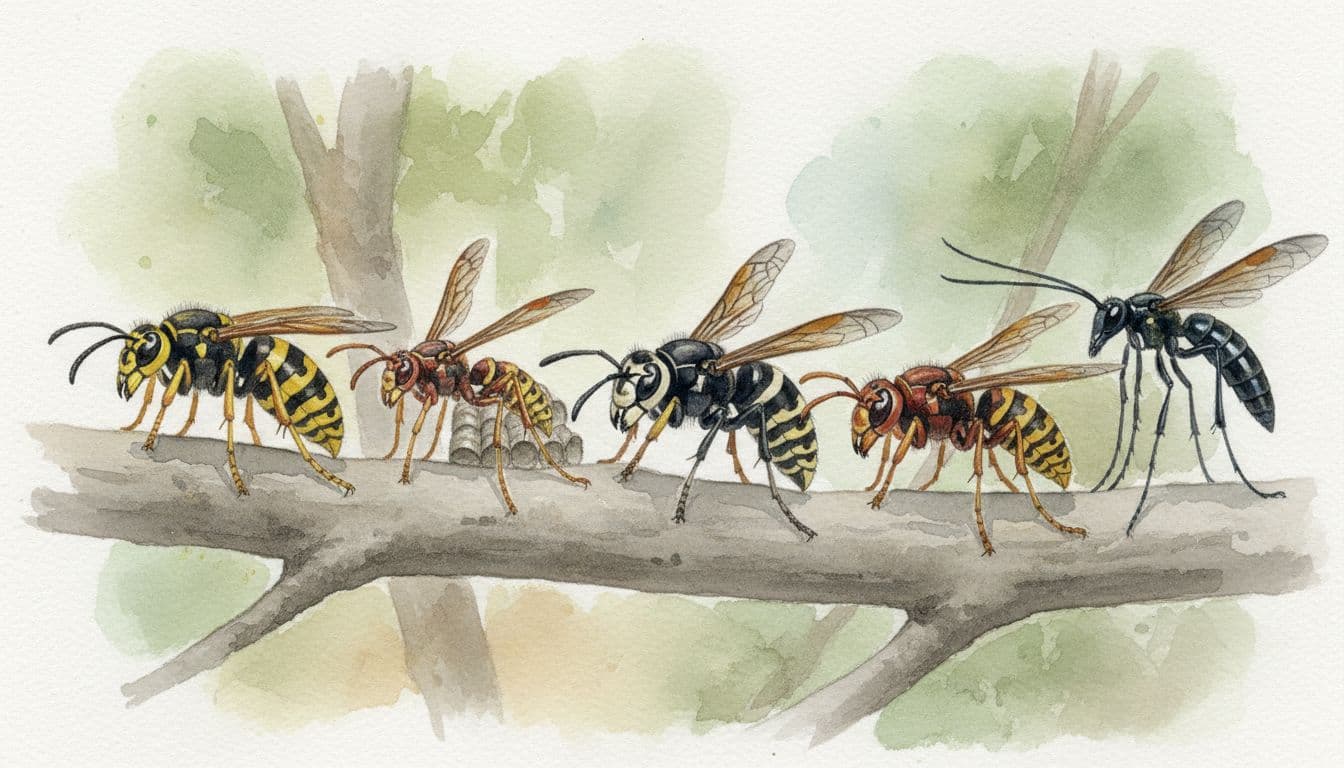
Yellowjackets, paper wasps, and hornets are not the same problem
Yellowjackets are compact, bright yellow and black, and often the most aggressive. They commonly nest in the ground, wall voids, attics, or other hidden spaces. If you mow near a ground hole and suddenly get swarmed, yellowjackets are a likely cause.
Paper wasps look slimmer, with longer legs that hang during flight. Their nests are open and umbrella-shaped, often tucked under eaves, porch ceilings, deck rails, and sheds. The Missouri Department of Conservation's paper wasp guide matches what many homeowners see around garages and roof overhangs.
Bald-faced hornets build the large gray paper nests people notice in trees, on utility poles, and sometimes under soffits. Despite the name, they are a type of yellowjacket. They defend their nest fast once disturbed.
European hornets and mud daubers cause different levels of risk
European hornets are large, reddish-brown, and easier to notice because they can fly at night. They often choose hollow trees, attics, barns, and wall spaces. They are serious pests, but they are often less aggressive than yellowjackets unless you get too close to the nest.
Mud daubers are different. They are solitary wasps that build mud tubes on walls, ceilings, and sheds. They rarely sting and usually don't need urgent treatment. If you want help sorting out species found in Missouri, this Missouri wasp and hornet ID guide is a useful visual reference.
Where nests show up on homes, yards, and outbuildings near Hannibal
Older homes, barns, detached garages, and rural properties often give stinging insects more places to settle. Gaps in soffits, loose siding, attic vents, fence lines, shrubs, and unused sheds all create shelter.
Visible nests under eaves, in trees, and on sheds
Open paper wasp nests are easier to spot because the cells are exposed. Bald-faced hornet nests also stand out once they get larger, especially when they hang from a branch or corner of a structure.
Watch for steady insect traffic, clustering under an overhang, or a gray paper nest that seems to grow each week. Inspect from a distance. Don't tap the surface, spray at close range, or knock down a live nest.
Hidden nests in the ground, attic, or wall can be more dangerous
Hidden nests cause more surprise stings because people don't know they're there. Yellowjackets often use old rodent burrows, lawn voids, and gaps near retaining walls. European hornets may disappear into siding gaps, vents, or attic spaces.
A few signs matter more than the nest itself. You may hear buzzing in a wall, see insects entering one hole over and over, or notice activity near vents and roof edges.
If insects are entering the ground, siding, or an attic opening, keep clear and treat it as a higher-risk nest.
When nest removal is safe to leave alone, and when it needs fast action
Some nests can wait for a scheduled inspection. Others need prompt service because the location, species, or colony size raises the risk.
Small nests in spring are easier to handle than large late-summer colonies
In April and May, queens build small starter nests alone. Activity is lower, so early treatment is usually simpler and safer. That matters in Hannibal, because current spring weather often brings wasp activity on warmer days above 50 degrees, with nest growth picking up later in the month.
By summer and early fall, colonies become larger and more defensive. Yellowjackets and bald-faced hornets are the biggest concern then. Waiting often turns a manageable nest into a daily hazard near doors, sidewalks, mailboxes, and pet areas. For more on Missouri nest behavior and safety concerns, see this Missouri wasp and hornet control overview.
Call a pro right away for ground nests, hidden nests, or repeated stings
Fast action makes sense when a nest is in a wall void, attic, roof peak, tree near an entrance, or underground in the lawn. The same goes for homes with children, pets, older adults, or anyone with a sting allergy.
Repeated stings are a hard stop. So is any nest near a front door, porch, play set, or path used every day.
How professional wasp and hornet removal works, and why it lowers risk
A proper service starts with inspection, not guesswork. The technician identifies the insect, finds the nest, checks how active it is, and looks at access points around the structure.
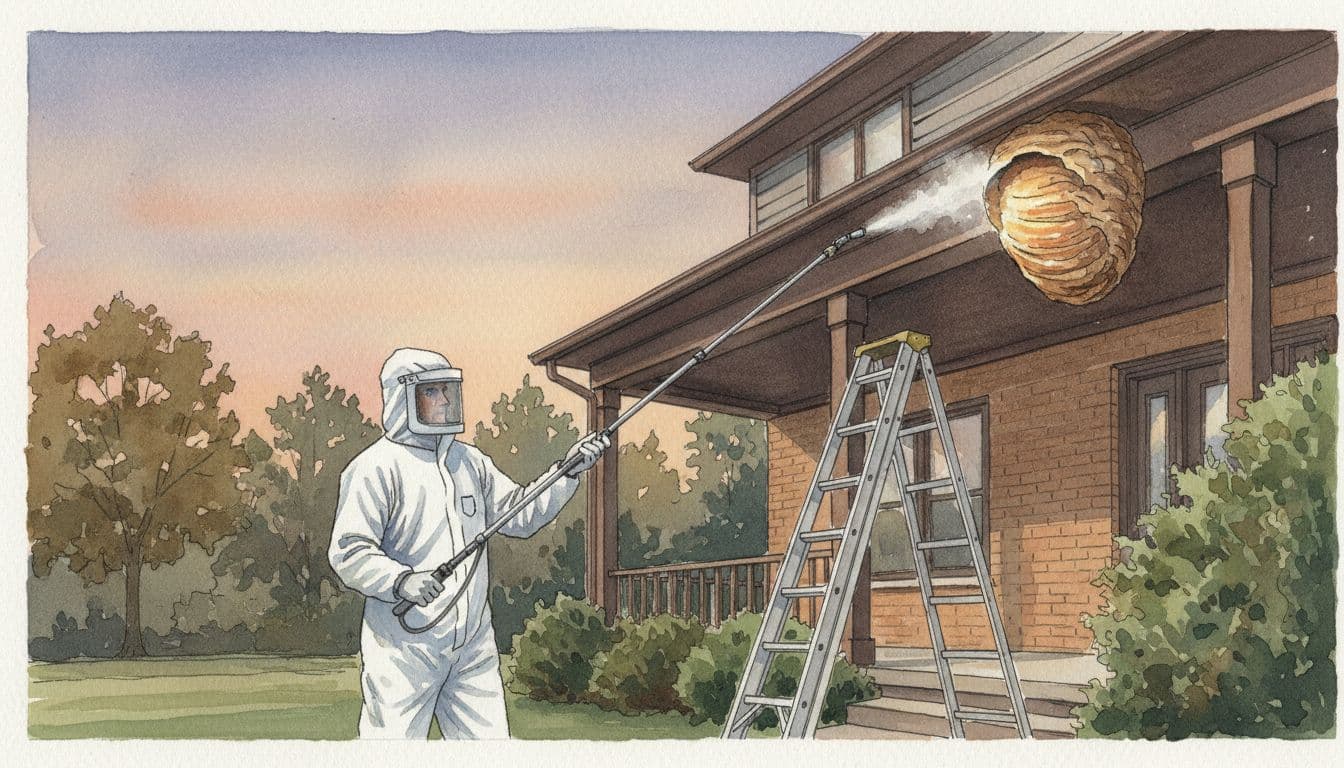
A good inspection finds the nest and the reason pests chose that spot
That step matters because hidden nests often need more than a quick spray. A trained tech checks nest size, species, entry points, and nearby food or shelter. Protective gear, proper products, and the right timing lower the chance of a dangerous swarm.
Removal should include prevention so new queens do not reuse the area
Good service also covers prevention. That may include sealing gaps, screening vents, fixing damaged soffits, reducing outdoor food sources, and checking sheds and eaves each spring. Shared walls and hidden voids matter in pest control across many property types, especially duplexes and apartments.
How to choose local nest removal near Hannibal and what affects cost
Price depends on the insect, nest size, height, number of nests, and how hard the area is to reach. Same-day or urgent service usually costs more, just as other pest treatments can vary based on labor and access difficulty.
Ask about species, nest location, follow-up, and service guarantees
Before booking, ask if the company can identify the insect, whether treatment includes nest removal when needed, what safety steps they use, and what happens if activity returns soon after service. Also confirm the business is licensed and insured, and ask for clear inspection notes.
The best local choice is the one that explains the plan in plain language and treats the risk seriously, especially when the nest is close to daily activity.
A baseball-sized spring nest may look minor, but it won't stay that way for long. Early action cuts sting risk, lowers treatment difficulty, and helps keep your home and yard usable.
If you see repeated wasp traffic, a hanging paper nest, or insects entering the ground or siding, leave it alone and get a local inspection scheduled.
Recommended Reads:
Emergency Bed Bug Removal Service — Immediate Relief from Infestations
Bed Bugs: The Complete Guide to Identifying, Understanding, and Getting Rid of Them