
Termites quietly cause around $6.8 billion in property damage across the US every year, and Illinois homeowners are far from immune. Most people assume pest control means spraying chemicals and calling it a day. But the most effective protection actually starts before a single termite sets foot in your home. Termite barriers, both physical and chemical, form a critical line of defense that many homeowners overlook entirely. This guide breaks down exactly how each type works, what fits your home best, and how to combine strategies for lasting protection.
Table of Contents
- Understanding termite barriers: Physical vs. chemical
- Physical termite barriers: Features and effectiveness
- Chemical termite barriers: Options and lifespan
- Integrated solutions and practical termite prevention tips
- Why most homeowners underestimate termite barriers
- Professional termite barrier services for Illinois homes
- Frequently asked questions
Key Takeaways
| Point | Details |
|---|---|
| Termite barriers defined | Barriers block or repel termites using physical materials or chemical zones around the home. |
| Physical vs. chemical | Physical barriers are eco-friendly and long-lasting, while chemical barriers offer immediate, short-term protection. |
| Effectiveness and longevity | Properly installed physical barriers can last decades; chemical barriers require reapplication every 5-10 years. |
| Integrated strategies work best | Combining barrier types and smart home practices gives Illinois homes optimal defense. |
| Professional help is crucial | Expert assessment and installation can prevent costly termite damage and ensure full protection. |
Understanding termite barriers: Physical vs. chemical
A termite barrier is a material or system designed to prevent subterranean termites from accessing structures. Think of it as a perimeter defense. The goal is simple: stop termites before they ever reach your walls, floors, or foundation.
There are two main categories every Illinois homeowner should know.
Physical barriers use materials like sheet metal, stainless steel mesh, or crushed stone particles to block termite entry points. They work by creating a physical obstacle that termites cannot chew through or squeeze past. These are most effective when installed during new construction, before the slab is poured or walls go up.
Chemical barriers work differently. In practice, termite barriers often refer to chemical soil treatments using termiticides like fipronil, imidacloprid, or permethrin. These chemicals are applied to the soil around and under a foundation, creating a toxic zone that kills or repels termites on contact.
Here is a quick comparison:
| Feature | Physical barrier | Chemical barrier |
|---|---|---|
| Best timing | New construction | Any time |
| Lifespan | Permanent (if installed correctly) | 5 to 10 years |
| Eco impact | Low | Moderate |
| Speed of protection | Immediate | Immediate |
| Retrofit options | Limited | Yes |
Key differences at a glance:
- Physical barriers block entry without toxins
- Chemical barriers create a kill zone in the soil
- Physical options work best at build time
- Chemical options can be added to existing homes
“An integrated pest management approach that combines both barrier types with moisture control delivers the most reliable long-term protection for residential structures.”
For a deeper look at termite prevention options specific to Illinois, it helps to understand how each barrier type performs in real-world conditions.
Physical termite barriers: Features and effectiveness
Physical barriers are the unsung heroes of termite protection. They do not degrade, they do not require reapplication, and when installed correctly, they can last the entire life of your home.
Physical termite barriers include termite shields made from sheet metal, elastomeric membranes, stainless steel screens, and particle barriers made from crushed granite or basalt. Each has a specific role depending on your foundation type and construction stage.
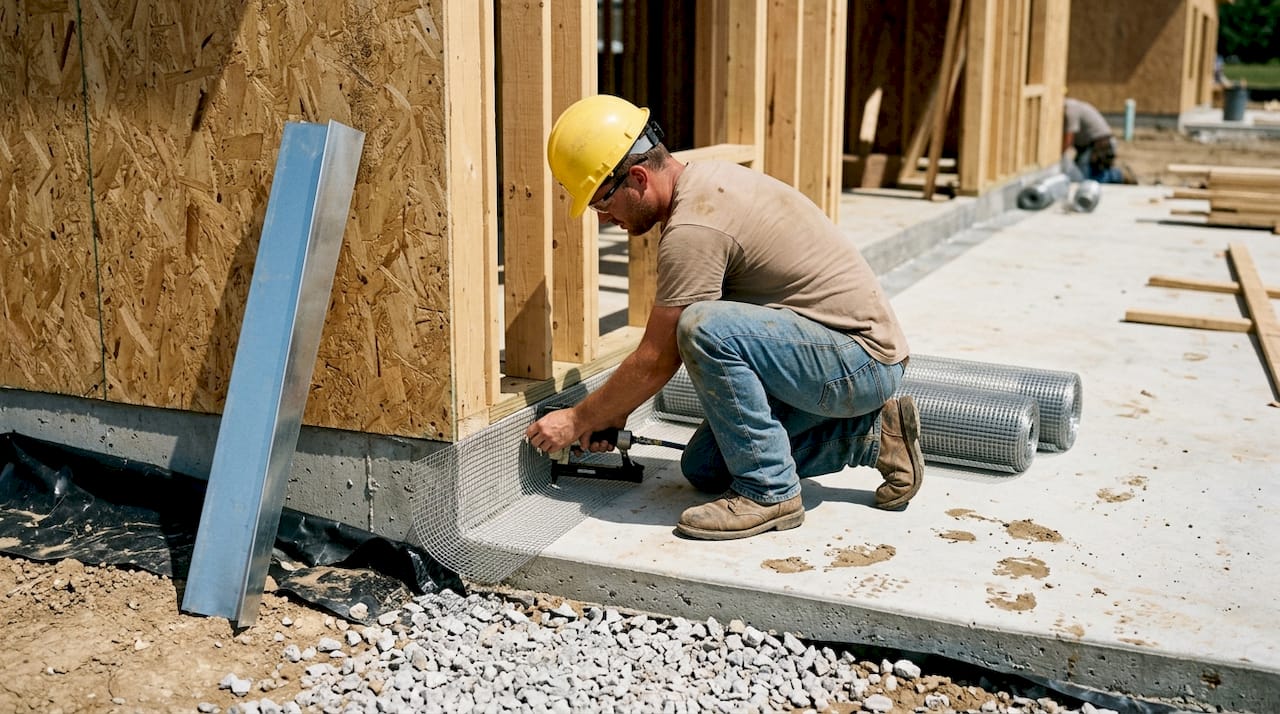
Here is how the most common options compare:
| Material | Placement | Installation complexity | Longevity |
|---|---|---|---|
| Sheet metal shield | Foundation wall cap | Moderate | 20 to 50 years |
| Stainless steel mesh | Under slab or around pipes | High | Permanent |
| Elastomeric membrane | Foundation wrap | Moderate | 20 to 30 years |
| Particle barrier (granite) | Under slab fill | Low to moderate | Permanent |
For Illinois homes with slab foundations or moisture-prone crawlspaces, stainless steel mesh and particle barriers are particularly effective. Stainless steel mesh excludes termites when properly installed with no gaps, and borate-treated wood has outperformed older CCA-treated wood over a 10-year period in field tests.
Benefits of physical barriers for Illinois homeowners:
- No chemical exposure inside or around your home
- No reapplication costs over time
- Effective in high-moisture zones common in Illinois
- Compatible with green building certifications
Pro Tip: If you are building new or doing a major renovation, pair a stainless steel mesh barrier under the slab with a chemical pre-treatment in the surrounding soil. This layered approach covers both entry points and any termites already active in the area.
For local pest insights on which physical barriers work best in Illinois soil conditions, regional expertise matters more than general product specs.
Chemical termite barriers: Options and lifespan
While physical barriers offer staying power, chemicals provide potent, fast-acting defense. Here is how chemical barriers work and what Illinois homeowners should expect.
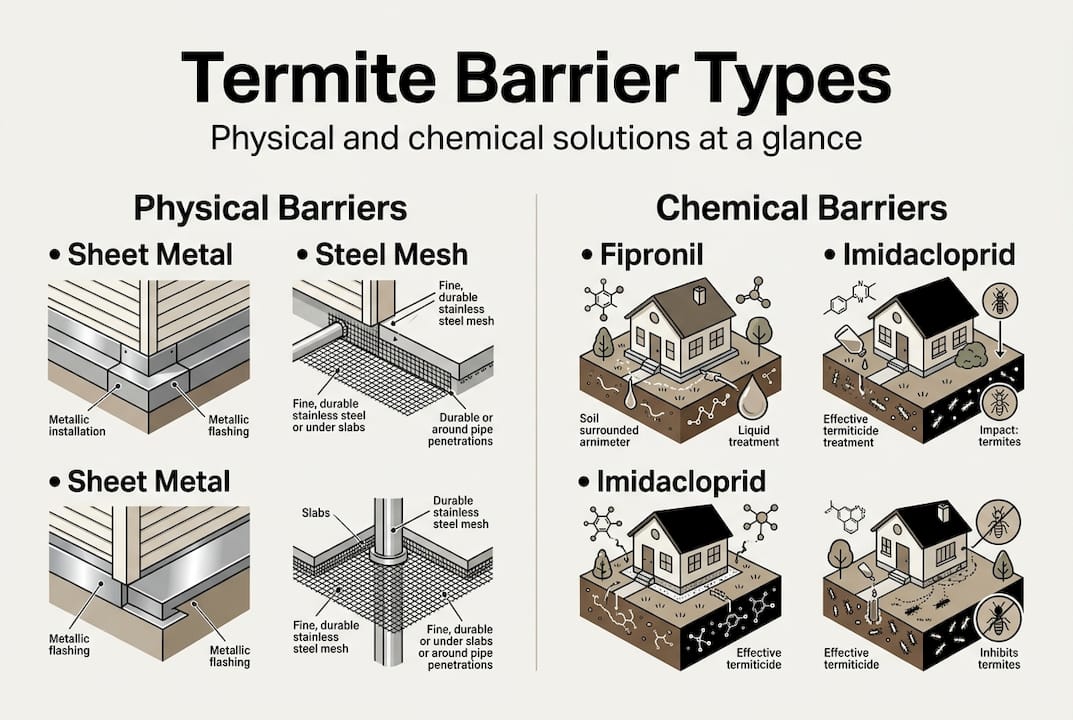
The three most common termiticides used today are fipronil, imidacloprid, and permethrin. Fipronil works by disrupting the termite’s central nervous system. Imidacloprid is a slow-acting poison that termites carry back to the colony, spreading the effect. Permethrin acts as a fast repellent and contact killer. Each has its place depending on the severity of risk and soil type.
Chemical soil treatments using these termiticides create a protective zone around foundations that typically lasts 5 to 10 years before needing reapplication.
Here is how a professional chemical barrier application works:
- A licensed technician inspects the foundation perimeter and identifies entry risk zones.
- Trenches are dug along the foundation, typically 6 inches wide and 6 inches deep.
- Termiticide is mixed and applied at the correct concentration per label instructions.
- Soil is replaced and compacted to seal the treatment zone.
- Interior drilling may be done through concrete slabs to treat soil beneath.
- A follow-up inspection is scheduled to confirm barrier integrity.
Bait systems offer an area-wide alternative. Rather than treating the soil directly, bait stations are placed around the property. Termites feed on the bait and carry it back to the colony. Baiting eliminated termite activity across an entire area within 16 months in controlled studies.
Chemical barrier pros and cons:
- Pros: Fast setup, works on existing homes, covers large areas
- Cons: Requires reapplication every 5 to 10 years, some environmental impact, professional application required for best results
For general pest control needs beyond termites, chemical treatments are often part of a broader seasonal protection plan.
Integrated solutions and practical termite prevention tips
The most effective defense is a layered approach. Let’s see how Illinois homeowners can combine strategies and take practical steps to keep termites out for good.
IPM, or Integrated Pest Management, is a framework that combines multiple control methods to reduce pest pressure while minimizing environmental impact. For termites, IPM integrates both barriers with moisture control and eliminating wood-to-soil contact. It is not just about killing termites. It is about making your home an unattractive target in the first place.
Here is why this matters for Illinois specifically. The state’s clay-heavy soils retain moisture, and subterranean termites thrive in damp conditions. A chemical barrier alone will not fix a drainage problem. A physical barrier alone will not stop termites from finding a gap around a poorly sealed pipe.
Practical steps every Illinois homeowner should take:
- Remove all wood debris, stumps, and mulch from direct contact with your foundation
- Fix leaky gutters, downspouts, and plumbing that create soil moisture near the home
- Seal cracks in your foundation and around utility entry points
- Keep crawlspaces ventilated and dry
- Schedule a professional termite inspection every one to two years
- Store firewood at least 20 feet from the house and off the ground
Pro Tip: Check your moisture control and pest insights around your foundation every spring after snowmelt. Illinois winters push a lot of moisture into the soil, and that is exactly when termite colonies start becoming active again.
Physical barriers are the most eco-friendly long-term solution. Chemical barriers are the fastest option for existing homes. But combining both with smart maintenance habits gives you the strongest possible protection.
Why most homeowners underestimate termite barriers
Here is something we see regularly: homeowners spend money on chemical treatments every few years but never address the underlying vulnerabilities in their home’s structure. They treat the symptom, not the cause.
Physical barriers get overlooked because they require planning ahead. They are most effective during construction, which means most existing homeowners feel like the window has passed. But that thinking is wrong. Retrofitting mesh around crawlspace piers or installing particle barriers during a renovation is entirely possible.
The bigger issue is that people equate “permanent” with “maintenance-free.” Physical barriers are durable, but installation quality is everything. A stainless steel mesh with even one gap is an open door. Physical barriers are ideal for new Illinois builds, eco-friendly, and permanent when installed correctly, and they work best when combined with a chemical pre-treatment for redundancy.
Our honest take: sustainability beats speed for long-term home value. A chemical barrier that needs replacing every decade is a recurring cost. A properly installed physical barrier is a one-time investment. Pair it with annual moisture checks and a biennial professional inspection, and your termite risk drops to near zero. That is the kind of protection that actually shows up in your home’s resale value.
Professional termite barrier services for Illinois homes
Knowing your options is the first step. Getting them installed correctly is what actually protects your home.

At BugEvicta Pest Control, we work with Illinois homeowners to assess termite risk, recommend the right barrier combination, and handle installation with precision. Whether you need a full termite protection plan for a new build or a chemical treatment for your existing home, we bring local knowledge and proven methods to every job. Our general pest services also cover the broader pest picture so your home stays protected season after season. Reach out today for an inspection and get a clear plan tailored to your property.
Frequently asked questions
What materials are used for physical termite barriers?
Common materials include sheet metal shields, stainless steel mesh, elastomeric membranes, and particle barriers made from crushed granite or basalt. Each is selected based on foundation type and construction stage.
How long does a chemical termite barrier last?
Most chemical soil treatments last between 5 and 10 years before the termiticide breaks down and reapplication is needed. Bait systems may require more frequent monitoring.
Is it possible to install physical barriers in existing homes?
Yes, though it is more involved. Physical barriers are most effective during new construction, but retrofitting around crawlspaces, piers, and utility penetrations is a realistic option for existing homes.
Can I combine physical and chemical termite barriers?
Absolutely, and experts recommend it. IPM integrating both barriers with moisture control and no wood-to-soil contact delivers the strongest long-term protection, especially in high-risk Illinois zones.
How much termite damage occurs each year in the US?
US termite damage totals approximately $6.8 billion annually, making termites one of the most costly structural pests homeowners face nationwide.