
Safe pest control: eco-friendly solutions for Illinois homes

TL;DR:
- Integrated Pest Management (IPM) focuses on prevention, monitoring, and targeted, low-toxicity methods.
- Preparing homes by sealing gaps and removing attractants is essential for effective pest control.
- Regular seasonal checks and professional help ensure sustainable, family-safe pest management.
You notice a line of ants marching across your kitchen counter the morning after the first cold snap, or you hear something scratching inside the walls when the temperature drops. For Illinois homeowners, seasonal pest invasions are a real and recurring frustration. The instinct to grab the strongest spray available is understandable, but many chemical pesticides raise genuine concerns for families with young kids and pets. The good news is that effective pest control does not have to mean toxic chemicals. This guide walks you through safe, eco-friendly methods that actually work, from understanding the right approach to taking targeted action against the most common Illinois pests.
Table of Contents
- Understanding safe and eco-friendly pest control
- Preparing your home: Prevention and safe materials
- Step-by-step: Safe methods for common Illinois pests
- Long-term monitoring and safe follow-up
- Our perspective: What most safe pest control guides miss
- Get expert, family-safe pest control help
- Frequently asked questions
Key Takeaways
| Point | Details |
|---|---|
| Layered approach works best | Combining prevention, monitoring, and low-toxicity treatments offers safer, more effective pest control. |
| Prevention is key | Sealing entries and reducing clutter stops most pests before they invade your home. |
| Rotate and monitor treatments | Switching control strategies seasonally helps prevent resistance and recurring infestations. |
| Choose humane safe methods | Snap traps and targeted baits are safer options than poisons or sticky traps for both pets and people. |
Understanding safe and eco-friendly pest control
The foundation of truly safe pest control is a strategy called Integrated Pest Management, or IPM. Rather than reaching for a spray bottle at the first sign of a bug, IPM works by layering several methods together, starting with the least invasive and escalating only when necessary. Think of it as a decision tree, not a single solution.
IPM is built on four core principles:
- Prevention: Remove conditions that attract pests in the first place, like food sources, moisture, and entry points.
- Monitoring: Regularly check for signs of pest activity before a small problem becomes a big one.
- Identification: Know exactly what pest you are dealing with before choosing a method.
- Targeted action: Use the most precise, lowest-toxicity method available for that specific pest.
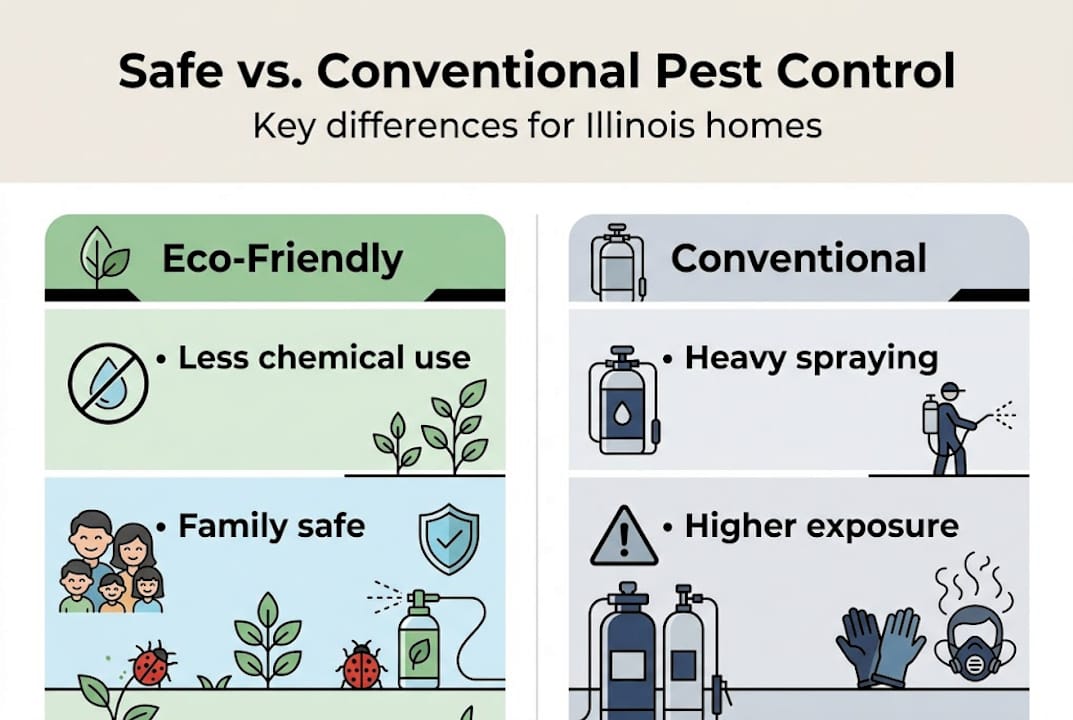
The methods within IPM stack in layers. Cultural controls include habits like proper food storage and regular cleaning. Mechanical controls include traps and physical barriers. Biological controls use natural predators or beneficial insects. Chemical controls, including pesticides, are only used as a last resort and in targeted ways. This layered approach is what sets IPM apart from conventional general pest control, which often relies on broad-spectrum sprays applied on a fixed schedule regardless of actual pest activity.
| Approach | Chemical use | Safety for families | Effectiveness over time |
|---|---|---|---|
| Conventional spraying | High, routine | Lower | Decreases as resistance builds |
| IPM | Minimal, targeted | Higher | Improves with consistent monitoring |
The difference in outcomes is significant. IPM reduces chemical exposure by 50 to 90% for homeowners compared to conventional methods. That is not a small margin. For a household with toddlers crawling on the floor or a dog that spends time in the yard, that reduction matters. The Illinois extension pest management program also emphasizes that understanding local pest patterns is key to making IPM work year-round.
Pro Tip: Simple daily habits like wiping down counters, fixing leaky pipes, and storing food in sealed containers can prevent the majority of common household infestations before they start.
Now that you understand what makes pest control safe, let’s move to preparing your home.
Preparing your home: Prevention and safe materials
Preparation is where most homeowners skip ahead too quickly. They want to deal with the pest they can see right now, but the real work is cutting off the reasons pests want to come inside in the first place. IPM combines simple strategies like cleaning and sealing with more targeted interventions, and the sealing step alone eliminates a huge percentage of entry opportunities.
Here is a numbered checklist to get your home ready:
- Seal gaps around doors and windows. Use weatherstripping and door sweeps. Even a gap the width of a pencil is enough for a mouse to squeeze through.
- Fill cracks in your foundation and walls. Use caulk for small gaps and steel wool packed into larger holes before caulking over it. Steel wool is especially useful for Illinois rodent control because rodents cannot chew through it.
- Declutter storage areas. Cardboard boxes, stacked newspapers, and cluttered basements give pests ideal nesting spots. Switch to plastic bins with tight lids.
- Manage garbage properly. Use bins with secure lids, take trash out regularly, and keep outdoor bins away from the house.
- Store food in sealed containers. This removes the primary food source for ants, roaches, and rodents.
- Fix moisture issues. Repair leaky pipes and improve ventilation in crawl spaces. Moisture attracts termites, roaches, and other pests. Reviewing termite prevention in Illinois is especially worthwhile before spring.
When it comes to materials, you have real choices. Here is a quick comparison:
| Material | Best use | Safety level | Cost |
|---|---|---|---|
| Snap traps | Rodents | High (no toxins) | Low |
| Caulk and steel wool | Entry sealing | Very high | Low |
| Diatomaceous earth | Crawling insects | High (food grade) | Low |
| Nontoxic bait stations | Ants, roaches | High | Medium |
| Store-bought sprays | General insects | Variable (read label) | Medium |
Natural and mechanical options handle the majority of common pest issues without putting your family at risk. Store-bought chemical sprays are not always necessary and should be treated as a last resort, not a first move.
Pro Tip: Walk the perimeter of your home every season, specifically in fall before Illinois winters set in and again in early spring, to catch new gaps or damage before pests find them first.
With preparations in place, you are ready to tackle pests safely and step by step.
Step-by-step: Safe methods for common Illinois pests
Knowing the right steps for each pest type makes the difference between a quick fix and a recurring problem. Here is how to approach the three most common household pests in Illinois.
Step 1: Identify the pest and problem areas. Before doing anything else, figure out exactly what you are dealing with. Ants leave visible trails. Roaches hide in warm, dark, moist areas like under sinks and behind appliances. Rodents leave droppings, gnaw marks, and grease trails along walls.
Step 2: Prevent entry. For rodents especially, exclusion is the most effective first move. Exclusion and snap traps are the most humane and effective approach for Illinois winters. Seal any gap larger than half an inch, since that is all a mouse needs to get inside.
Step 3: Use mechanical and least-toxic methods.
- Ants: Apply food-grade diatomaceous earth along entry points. Use nontoxic bait stations with borax-based gel near trails. Do not spray, since spraying scatters the colony.
- Roaches: Place bait stations in dark corners and under appliances. Boric acid powder applied thinly along baseboards is effective and low-toxicity. Check out roach control advice for targeted guidance.
- Rodents: Snap traps placed along walls where grease trails appear are the most effective and humane option. Use humane rodent solutions and check traps every 24 hours.
Step 4: Monitor and rotate methods. Rotating pest control methods and monitoring traps regularly prevents resistance from developing and helps you catch whether a method is actually working.
Avoid rodent poisons entirely. They pose serious risks to children, pets, and wildlife, including owls and hawks that may eat a poisoned rodent. Snap traps are faster, safer, and more humane.
After implementing these methods, it is important to keep monitoring for continued protection.
Long-term monitoring and safe follow-up
Setting traps and sealing gaps is a great start, but pest control only stays effective if you keep checking in. Monitoring is the part most homeowners skip once the immediate problem seems solved, and that is exactly when pests come back.
Here is what to watch for during regular checks:
- New droppings, gnaw marks, or insect activity near previously treated areas
- Traps that are triggered but empty, which may signal a larger population
- Bait stations that are being used heavily, meaning the infestation is active
- Seasonal changes in pest activity, since Illinois winters push rodents indoors and spring brings ant and termite activity
- Any new gaps, cracks, or moisture issues that appeared since your last check
Effectiveness signals matter too. If traps are consistently empty and you see no new pest signs after two to three weeks, your methods are working. If activity continues or increases, it is time to rotate your approach or escalate. Regular monitoring and rotating treatments reduce pesticide resistance and improve control over time.

When to call a professional: Some situations go beyond what DIY methods can handle. A large or recurring infestation, signs of termite damage, or pests that keep returning despite your best efforts are all signals that professional support is the right move. The good news is that eco-friendly professional services exist and use the same IPM principles at a higher level of precision.
When IPM is maintained consistently, it can reduce chemical use by as much as 90%. That is a meaningful number for any family trying to keep their home safe. Staying current with pest control tips and watching Illinois pest trends helps you stay one step ahead season by season.
For an even deeper understanding, here is our perspective on what Illinois homeowners often miss.
Our perspective: What most safe pest control guides miss
Most articles about eco-friendly pest control treat it like a one-time project. Seal the gaps, set some traps, done. But in our experience working with Illinois homeowners, the biggest mistake is treating pest control as a single event rather than an ongoing practice.
Illinois has four distinct seasons, and each one brings different pest pressures. What works in August for ants will not address the mice looking for warmth in November. Relying on a single “green” product or method year-round is not eco-friendly pest control. It is just a different kind of complacency.
The homeowners who see the best results are the ones who adapt. They do a quick seasonal audit, adjust their traps, check their seals, and rotate their bait types. A professional pest strategy can help you build that seasonal rhythm if you are not sure where to start.
Pro Tip: Schedule a 15-minute home walk-through at the start of each season. It takes almost no time and catches problems before they become expensive.
The real measure of eco-friendly success is not which product you use. It is whether your approach is flexible enough to match what Illinois pests are actually doing right now.
Get expert, family-safe pest control help
Sometimes the best next step is getting a professional set of eyes on your home. Whether you are dealing with a stubborn ant trail, recurring rodents, or just want a seasonal inspection to stay ahead of problems, BugEvicta is here to help.
Our team of eco-friendly pest professionals uses IPM-based methods designed to protect your family, pets, and the environment without sacrificing results. If rodents are the concern, our fast rodent removal help gets to the root of the problem quickly and humanely. For homeowners worried about wood damage, our termite prevention expertise covers everything from inspection to long-term protection. Reach out today to book a consultation and get a plan built around your home and your season.
Frequently asked questions
What is Integrated Pest Management and why is it safer?
Integrated Pest Management uses prevention, monitoring, and targeted low-toxicity methods to manage pests. It reduces chemical exposure by 50 to 90% compared to conventional spraying, making homes significantly safer for families and pets.
Are there humane ways to control mice and rats in Illinois homes?
Yes. Exclusion and snap traps are the recommended approach for humane, safe rodent control in Illinois. Snap traps are quick and humane, while poisons risk harming non-target animals, children, and pets.
What are the biggest mistakes with natural pest control?
Sticking to a single method without rotating or monitoring is the most common failure. Rotating treatments and monitoring regularly prevents resistance and keeps your approach effective through Illinois’ changing seasons.
How do I know if it is time to call a professional?
If home prevention steps fail, pests keep returning, or you are facing a large infestation, a professional can provide targeted, safe pest control that goes beyond what DIY methods can handle.