
Residential pest control: Protect your Illinois home in 2026
TL;DR:
- Integrated Pest Management focuses on addressing root causes with minimal pesticide use.
- Preventative exclusion and sanitation are more effective long-term than spraying.
- Hiring licensed professionals ensures targeted, safe, and cost-efficient pest control in Illinois.
Most Illinois homeowners think pest control means grabbing a can of spray and blasting every corner of the house. That approach feels satisfying, but it rarely solves the problem. Pests come back, sometimes in greater numbers, because the root causes were never addressed. A smarter method called Integrated Pest Management, or IPM, has been proven to outperform traditional chemical spraying in both safety and long-term results. Illinois homes face a unique mix of seasonal pest pressure, from subzero winters that push rodents indoors to humid summers that invite mosquitoes and termites. This article walks you through what actually works, pest by pest, season by season.
Table of Contents
- What is residential pest control?
- Common residential pests in Illinois
- Effective removal and prevention methods
- Professional vs. DIY pest control: What works best?
- Why most Illinois homeowners get pest control wrong
- Get expert pest control help in Illinois
- Frequently asked questions
Key Takeaways
| Point | Details |
|---|---|
| IPM over spraying | Integrated Pest Management is safer and more effective than traditional chemical spraying for homes. |
| Know Illinois pests | Ants, rodents, termites, and cockroaches are the top threats in Illinois and need tailored strategies. |
| DIY vs. professional | Professional services outperform DIY especially for tough infestations like cockroaches and termites. |
| Prevention is key | Routine exclusion and sanitation prevent most pest problems before they start. |
| Legal and safety matters | Only licensed applicators can use restricted pesticides in Illinois to ensure homeowner safety. |
What is residential pest control?
A lot of people picture pest control as a technician walking through a house with a spray tank. That image is outdated. Residential pest control is a systematic approach using Integrated Pest Management to identify, manage, and eliminate pests while prioritizing prevention, monitoring, and minimal pesticide use. The goal is not just to kill what you can see today. It is to understand why pests are entering and cut off that access permanently.
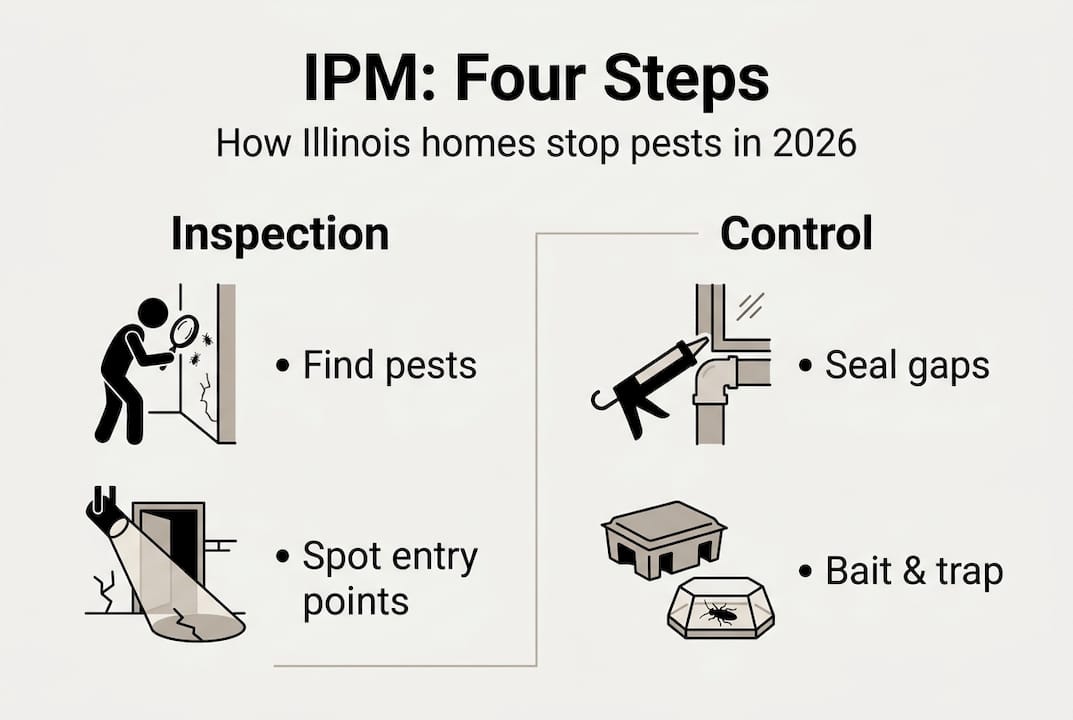
IPM works in four connected steps. First, a thorough inspection identifies where pests are active, what conditions are attracting them, and how they are getting in. Second, prevention measures are applied. These include sanitation improvements, habitat changes, and exclusion work like sealing gaps under 1/4 inch with steel wool or caulk. Third, physical controls like traps and baits are placed strategically. Fourth, and only when necessary, targeted low-toxicity pesticides are applied in specific locations.
Here is how IPM stacks up against traditional spraying:
| Feature | Traditional spraying | IPM approach |
|---|---|---|
| Focus | Kills visible pests | Addresses root causes |
| Pesticide use | High and broad | Targeted and minimal |
| Long-term results | Often recurring | Sustained reduction |
| Safety for family/pets | Higher exposure risk | Lower exposure risk |
| Cost over time | Repeated treatments | Fewer retreatments needed |
The benefits of IPM for Illinois homeowners are significant:
- Reduces chemical exposure for children and pets
- Addresses entry points that cause repeat infestations
- Works with Illinois seasonal patterns, not against them
- Lowers long-term treatment costs
- Aligns with EPA safety guidelines
For local Illinois pest insights specific to your region, seasonal timing matters just as much as the method. Illinois winters drive rodents into walls and attics. Spring brings ants and wasps. Summer means mosquitoes and termites become active. IPM accounts for all of it. You can also browse pest control articles to stay current on what is active in your area throughout the year.
Common residential pests in Illinois
Illinois is home to a wide range of pests that create real problems for homeowners. Common pests in Illinois include ants, mice, rats, cockroaches, bed bugs, wasps, spiders, termites, mosquitoes, and centipedes. Each one behaves differently and requires its own control strategy.
| Pest | Peak season | Main risk |
|---|---|---|
| Ants | Spring to fall | Food contamination, structural damage |
| Mice and rats | Fall and winter | Disease, chewed wiring, structural damage |
| Cockroaches | Year-round | Allergens, disease spread |
| Bed bugs | Year-round | Bites, psychological stress, rapid spread |
| Termites | Spring to summer | Severe structural damage |
| Mosquitoes | Summer | Disease transmission, bites |
| Wasps | Late summer | Stings, nesting in walls |
| Spiders | Fall | Bites, nuisance |
Not all pest problems are equally urgent. Termites silently destroy wood framing for months before homeowners notice. If you have older wood in your home, reading a termite prevention guide for Illinois is a smart first step. Bed bugs are another high-priority pest because they spread quickly and are notoriously hard to eliminate without professional help. Check out these bed bug control tips if you suspect an issue.
Key facts about Illinois pest behavior:
- Mice can squeeze through a gap the size of a dime
- A single cockroach egg case can hatch up to 50 nymphs
- Termites cause an estimated $5 billion in property damage across the U.S. annually
- Bed bugs can survive over a year without feeding
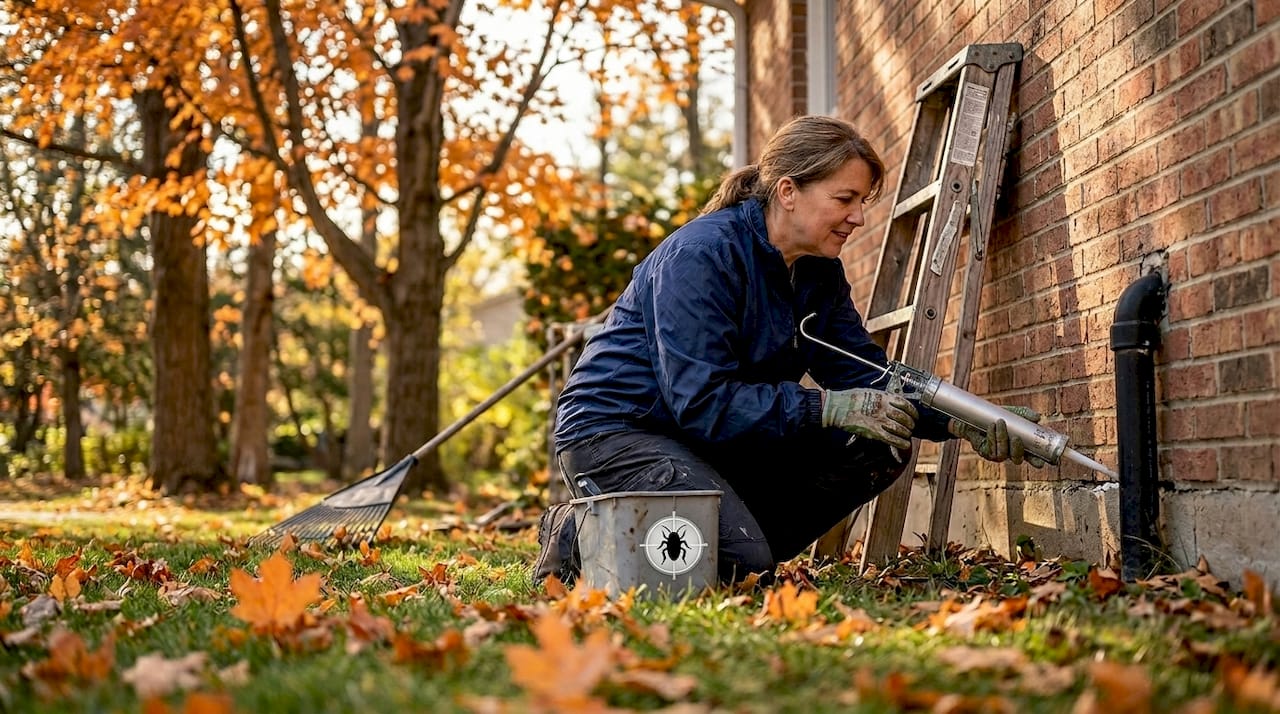
Pro Tip: As temperatures drop in October and November, seal every visible gap around your foundation, utility lines, and window frames. Rodents begin actively searching for warm shelter at that time, and a single unsealed gap is all they need.
Effective removal and prevention methods
Knowing which pests to expect is only useful if you act on it. The IPM process gives you a clear framework for both removal and prevention. IPM methods move through inspection, prevention, physical controls, and targeted pesticides in that exact order, not the reverse.
Here is a step-by-step approach for Illinois homeowners:
- Inspect your home thoroughly. Check baseboards, behind appliances, around pipes, in the attic, and along the foundation. Look for droppings, gnaw marks, shed skins, or mud tubes.
- Eliminate food and water sources. Store food in sealed containers. Fix leaky pipes. Empty pet water bowls overnight. Clean grease buildup behind the stove.
- Seal entry points. Use steel wool and caulk to close gaps under 1/4 inch. Install door sweeps. Replace damaged window screens.
- Set targeted traps or baits. For removing mice in Illinois, snap traps placed along walls outperform poison bait stations in most home settings. For ants, gel baits placed near trails work better than surface sprays.
- Apply pesticides only as a last resort. Use species-specific, low-toxicity products in precise locations. Avoid broadcast spraying indoors.
Species-specific tips make a real difference. For cockroaches, sanitation and gel baits applied inside cabinets are far more effective than aerosol sprays. For bed bugs, heat treatment or a professional chemical protocol is required since DIY methods rarely reach all harborage sites. For ants, check out ant prevention strategies specific to Illinois pavement ants. For termites, soil barriers and bait stations are the standard professional approach.
You can find more detail on each pest type in pest-specific guides that cover removal and prevention by species.
Most infestations can be prevented by consistent exclusion and sanitation. Chemicals are a tool, not a solution.
Pro Tip: Walk the perimeter of your home every spring and fall. Look for new cracks, gaps around utility lines, and damaged weatherstripping. Catching entry points early costs nothing. Fixing an infestation costs a lot.
Professional vs. DIY pest control: What works best?
DIY pest control has its place, but it has clear limits. A study on IPM effectiveness found that IPM reduced cockroach infestations from 52% to 21% and eliminated resident spray use from 38% to 0%. Professional baits achieved over 80% mortality in lab settings, while consumer-grade baits consistently underperformed in real home environments.
| Factor | DIY | Professional IPM |
|---|---|---|
| Upfront cost | Lower | Higher |
| Long-term cost | Often higher (retreatments) | Lower (sustained results) |
| Effectiveness | Moderate for minor pests | High for all pest types |
| Safety | Varies by product | Controlled, targeted application |
| Legal compliance | Limited to consumer products | Licensed under Illinois law |
| Bed bugs and termites | Rarely effective | Recommended or required |
In Illinois, pest control professionals operate under the Illinois Pesticide Act administered by the Illinois Department of Agriculture. Restricted-use pesticides require certification, and IPM is actively encouraged by state regulators. This matters because some of the most effective treatments for termites and bed bugs are only available to licensed applicators.
Benefits of hiring a professional IPM provider:
- Access to restricted pesticides and equipment
- Species-level identification and targeted treatment plans
- Warranty or follow-up visits included in many service agreements
- Compliance with Illinois pesticide laws
- Faster resolution for large or complex infestations
Research on consumer vs. professional cockroach baits confirms that the gap between store-bought products and professional-grade treatments is significant in real home conditions. For general pest control services that cover multiple pest types, professional treatment is usually the more cost-effective path when you factor in time, retreatments, and the risk of a worsening infestation.
DIY works reasonably well for minor ant trails or occasional spiders. For rodents, cockroaches, bed bugs, or termites, calling a licensed professional is the smarter move.
Why most Illinois homeowners get pest control wrong
Here is something most pest control articles will not tell you: the biggest mistake Illinois homeowners make is not skipping treatment. It is treating the wrong problem. They spray because they see a bug. The bug disappears. Two weeks later, more bugs appear. The cycle repeats for years.
Over-spraying creates pesticide-resistant pest populations. It also gives homeowners a false sense of security that delays real solutions. Exclusion and sanitation, the boring parts of pest control, are consistently the most effective long-term strategies. But they require effort, not just a purchase.
Quarterly prevention visits from a licensed IPM provider are far more effective than reactive emergency treatments. They catch new entry points, monitor bait stations, and adjust the treatment plan as seasons change. That is how pest control actually works in practice.
Pro Tip: Use species-specific baits and monitor them monthly. A bait station that is not being consumed tells you the pest is not present. One that empties quickly tells you exactly where to focus.
The pattern we see repeatedly with Illinois homeowners is that the ones who invest in local pest insights and seasonal monitoring spend far less over time than those who react to each infestation as it appears. Smart prevention is not just safer. It is cheaper.
Get expert pest control help in Illinois
If pests keep coming back despite your best efforts, the issue is almost certainly an unaddressed entry point or an infestation that has grown beyond what DIY methods can handle.
BugEvicta Pest Control serves Illinois homeowners with licensed, IPM-based solutions for every major pest type. Whether you need Illinois rodent control before winter, termite treatment services to protect your home’s structure, or general pest control for year-round protection, our team brings local knowledge and proven methods to every job. We inspect, treat, and help you prevent future problems so you are not stuck in the spray-and-repeat cycle.
Frequently asked questions
What methods do professionals use for pest control in Illinois?
Professionals in Illinois primarily use IPM, which combines inspection, exclusion, sanitation, physical controls, and targeted low-toxicity pesticides applied only when necessary and in precise locations.
Are rodent and termite treatments different from general pest control?
Yes. Rodents need gap sealing and snap traps, termites require soil barriers or bait stations, while general pest control focuses more on routine sanitation and exclusion across multiple pest types.
Do I need a license to use pest control chemicals at home?
Illinois law restricts certain pesticides to licensed applicators only, but most products sold in hardware stores are legal for homeowner use without any certification.
Is IPM better than traditional spraying?
IPM is preferred by the EPA because it reduces infestations more effectively and lowers pesticide exposure. Consumer baits underperform compared to professional-grade treatments in real home conditions.
How often should pest control be performed for prevention?
Quarterly pest control is the standard recommendation for Illinois homes. Seasonal IPM visits allow professionals to catch new entry points and adjust treatment plans before infestations develop.