
What Is Commercial Pest Control? Illinois Homeowner’s Guide
TL;DR:
- Commercial pest control focuses on prevention, documentation, and ongoing management to protect public health and property.
- Illinois regulations require licensed professionals and strict recordkeeping, ensuring high standards for pest management.
- Homeowners can adopt commercial strategies like inspection, sanitation, targeted treatments, and recordkeeping for better pest control results.
Most Illinois homeowners assume pest problems start and end at their front door. The truth is messier. Restaurants, warehouses, office buildings, and grocery stores near your neighborhood are active breeding grounds for ants, cockroaches, and rodents. When those facilities fail to manage pests properly, the overflow lands in surrounding homes. Understanding how commercial pest control works gives you a serious advantage, whether you own a business or just want to protect your family. This guide covers what commercial pest control is, how it works, which pests it targets in Illinois, what regulations apply, and what you can borrow from the commercial playbook for your own home.
Table of Contents
- What is commercial pest control?
- Core commercial pest control methods: The IPM approach
- Common pests in Illinois businesses and how they’re managed
- Illinois laws and standards for commercial pest control
- Our take: What homeowners can steal from commercial pest control
- Protect your property with trusted pest control
- Frequently asked questions
Key Takeaways
| Point | Details |
|---|---|
| IPM is essential | Integrated Pest Management reduces chemical use and delivers long-term control for businesses and homes. |
| Prevention is priority | Sanitation and sealing entry points matter as much at home as in a commercial facility. |
| Licensed professionals only | Illinois law requires commercial pest control to be performed by licensed and regulated experts for safety and effectiveness. |
| Pests travel between buildings | Keeping commercial sites pest-free helps reduce infestations in surrounding neighborhoods. |
What is commercial pest control?
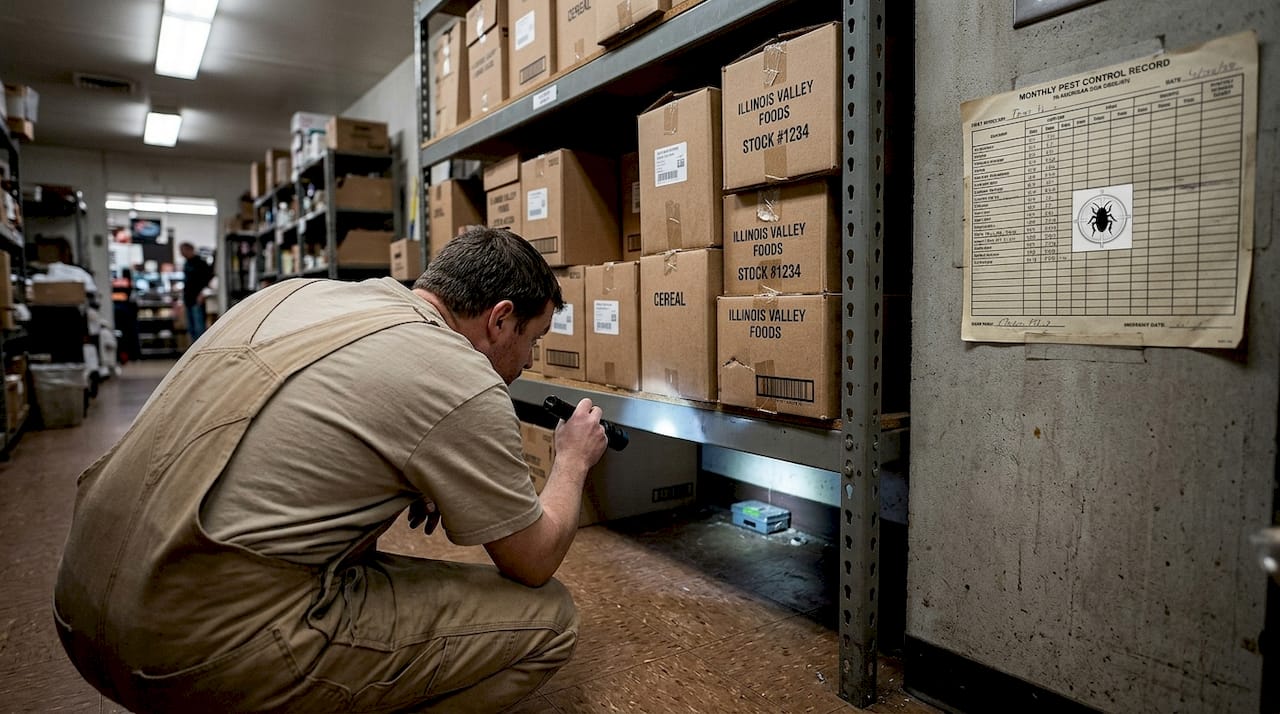
Commercial pest control is not simply a bigger version of what a technician does in your house. It is a specialized field. Commercial pest management targets non-residential facilities like businesses, offices, and warehouses, with a sharp focus on preventing risks to health, safety, and legal compliance using Integrated Pest Management (IPM). The goals are different from residential work because the stakes are higher. A cockroach in a restaurant kitchen can trigger a health department shutdown. A rodent in a hospital can compromise patient safety. A termite colony in a warehouse can destroy inventory worth hundreds of thousands of dollars.
For Illinois homeowners, this matters because commercial sites are often the origin point for neighborhood infestations. Pests do not recognize property lines. A rodent colony displaced by a commercial extermination job will look for the next available shelter, which could be your garage or crawl space.
Here is how commercial pest control compares to residential pest control at a glance:
| Feature | Commercial pest control | Residential pest control |
|---|---|---|
| Scale | Large, multi-zone facilities | Single-family homes |
| Regulatory pressure | High (health codes, OSHA, EPA) | Lower |
| Frequency | Ongoing, scheduled visits | Seasonal or as-needed |
| Documentation | Mandatory service logs | Optional |
| Primary method | IPM with strict protocols | Varies by provider |
| Pest variety | Broader (birds, stored product pests) | Common household pests |
Key goals of commercial pest control include:
- Preventing health code violations that could shut down a business
- Protecting inventory and structural integrity from damage
- Maintaining public trust through visible cleanliness standards
- Minimizing pesticide exposure for employees and customers
- Meeting insurance and legal requirements tied to pest-free certification
Commercial pest control is not reactive. It is a continuous system built around prevention, documentation, and accountability. That discipline is what keeps pests out of businesses, and it is exactly what most homeowners are missing.
When a commercial facility near your home operates under a rigorous pest management program, it creates a buffer zone. When it does not, your home absorbs the consequences.
Core commercial pest control methods: The IPM approach
Now that you know what commercial pest control is, let’s look at the methods professionals use and why they’re so effective.
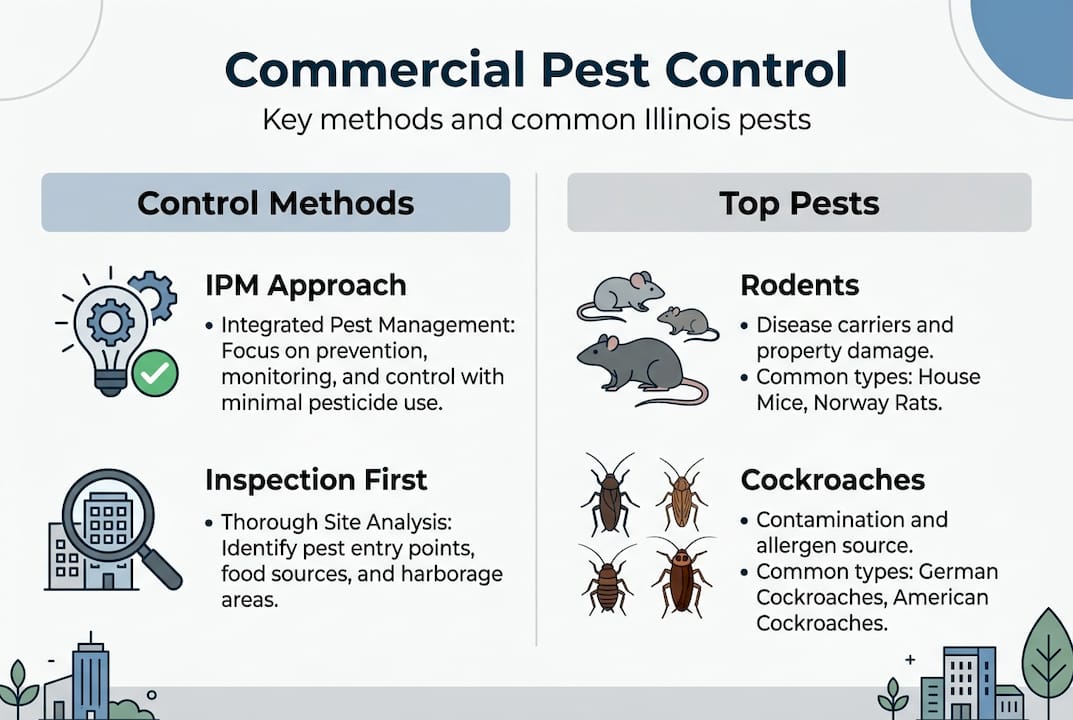
Integrated Pest Management, or IPM, is the backbone of every serious commercial pest control program. It is not a single treatment. It is a four-step system designed to solve the root cause of infestations rather than just spraying over symptoms.
Here are the four core IPM steps used in commercial settings:
- Inspection and monitoring — Technicians identify pest activity, entry points, and conditions that attract pests before any treatment begins.
- Prevention — Sanitation improvements, structural exclusion like sealing gaps, and environmental changes remove the conditions pests need to survive. This is the prevention and maintenance phase most homeowners skip entirely.
- Targeted treatments — Mechanical traps, baits, and minimal pesticide applications are used only where needed, based on the pest inspection process findings.
- Evaluation — Results are tracked, methods are adjusted, and the cycle continues. This is what separates IPM from a one-time spray job.
The precision of IPM is not just good practice. It is backed by data. Research shows that IPM cuts insecticide use by 44% without reducing effectiveness, prioritizing non-chemical solutions first. That means fewer chemicals in the environment, less risk of pesticide resistance, and better long-term results.
Pro Tip: Pesticide resistance is a real problem. When the same chemical is used repeatedly without rotation or non-chemical alternatives, pests adapt. IPM breaks that cycle by making chemical treatment the last resort, not the first response.
For food processing plants and medical facilities in Illinois, IPM protocols are even stricter. These sites often prohibit certain pesticide classes entirely and require detailed application logs for every visit. The discipline required at that level is what makes commercial pest control so effective.
Homeowners can apply the same mindset. Start with an inspection. Fix the conditions attracting pests. Use targeted treatments only where activity is confirmed. Then evaluate and adjust. That sequence outperforms any single product you find at a hardware store.
Common pests in Illinois businesses and how they’re managed
Understanding the core approach sets the stage to look at real pests and real solutions.
Illinois businesses deal with a predictable set of problem pests. Ants, cockroaches, and rodents top the list, and the strategies used to control them in commercial settings translate directly to what works at home.
| Pest | Commercial strategy | Home application |
|---|---|---|
| Ants | Baiting systems, sanitation, colony tracking | Bait stations, seal food sources |
| Cockroaches | Gel baits, crack-and-crevice exclusion, IPM rotation | Gel baits, seal gaps, reduce moisture |
| Rodents | Exclusion of gaps 1/4 to 1/2 inch, bait stations, traps | Seal entry points, remove clutter |
Here is how professionals handle each pest in Illinois commercial environments:
- Ants: Baiting is prioritized because it targets the colony, not just foragers. Sanitation removes the food sources that draw them in the first place.
- Cockroaches: Gel baits placed inside cracks and crevices are highly effective. IPM rotation prevents resistance from developing, which is a real risk when the same product is used repeatedly.
- Rodents: Exclusion is the first line of defense. Gaps as small as 1/4 inch are sealed. Bait stations and traps are placed along active travel routes, and sanitation removes nesting material and food access.
You can explore cockroach control solutions and rodent control options that apply these same commercial-grade principles to your home.
Pro Tip: Sanitation and exclusion do more work than any pesticide. In commercial settings, a facility that eliminates food debris and seals entry points sees dramatically fewer pest callbacks than one that relies on chemicals alone. The same is true for your home.
One thing that surprises many homeowners is how much overlap exists between commercial and residential pest problems. The pests are the same. The difference is the consistency and structure of the response.
Illinois laws and standards for commercial pest control
Legal and regulatory standards ensure effective solutions and safety. Here’s what you need to know as an Illinois resident.
Illinois takes commercial pest control seriously at the regulatory level, and that structure benefits everyone, including homeowners who never set foot in a commercial facility.
Key regulations governing commercial pest control in Illinois include:
- IDOA licensing: The Illinois Department of Agriculture requires all commercial pesticide applicators to hold a valid license under the Illinois Pesticide Act. Unlicensed application is illegal.
- Recordkeeping: Service records must be maintained for a minimum of two years. This creates accountability and allows regulators to audit treatment histories.
- FIFRA compliance: Federal Insecticide, Fungicide, and Rodenticide Act rules apply to restricted-use pesticides. Only licensed applicators can purchase and apply them.
- EPA standards: Pesticide applications must follow label instructions exactly. The label is the law in Illinois and federally.
- Integrated reporting: Many commercial clients require written pest activity reports after every visit, creating a paper trail that drives continuous improvement.
These rules exist for good reason. When businesses are required to use licensed professionals, the quality of pest management in the surrounding area improves. Fewer infestations escape commercial sites. Fewer resistant pest populations develop from improper chemical use.
Regulation is not red tape. It is the reason your neighborhood does not have a cockroach problem every time a nearby restaurant cuts corners. Licensed professionals are held to standards that protect public health, and that protection extends to your home.
For homeowners selecting a pest control company, these regulations are a practical filter. Ask any provider whether they are IDOA-licensed. Ask to see their service documentation. A company that cannot answer those questions clearly is not operating at commercial-grade standards. Routine pest inspections from a licensed provider give you the same accountability that businesses rely on. That kind of future-proof pest protection is available to every Illinois homeowner who asks for it.
Our take: What homeowners can steal from commercial pest control
Here is an uncomfortable truth most pest control articles skip: homeowners are not losing the battle against pests because they lack the right spray. They are losing because they treat pest control as an event instead of a system.
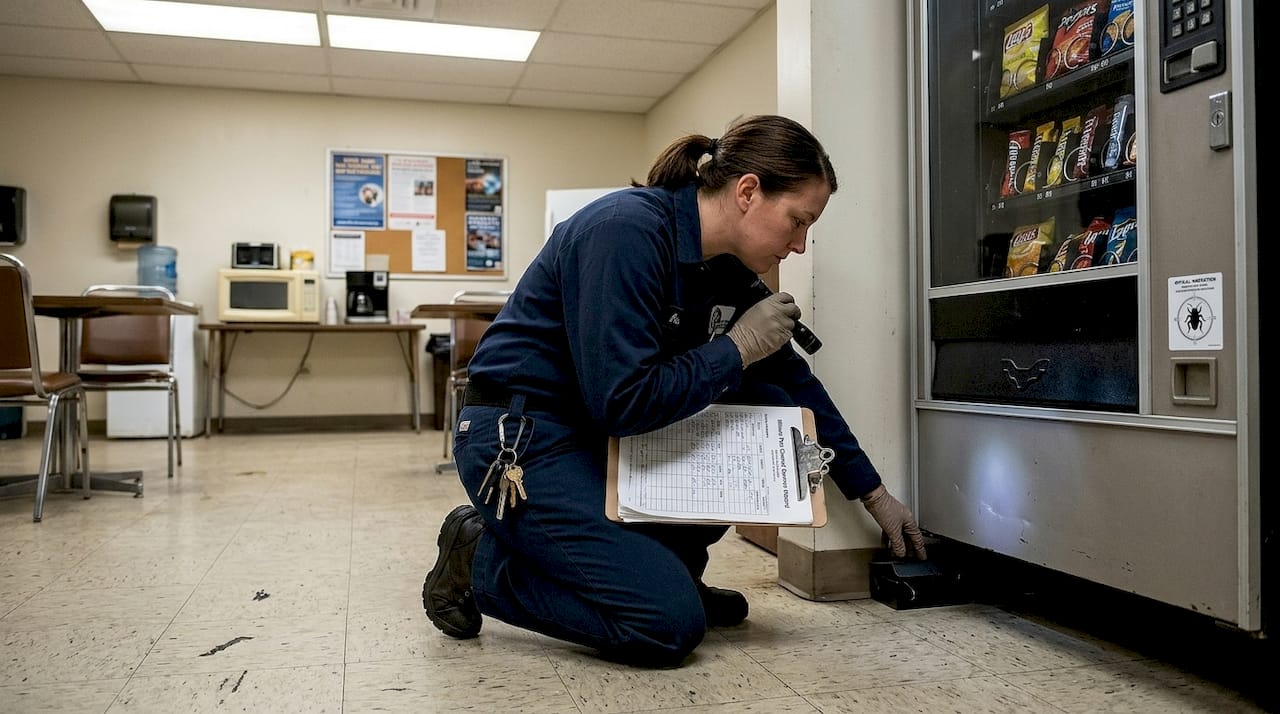
Commercial pest control works because it is structured, documented, and continuous. Businesses do not call an exterminator when they see a cockroach. They have scheduled inspections, written records, and prevention protocols running year-round. That discipline is not complicated. It is just consistent.
The biggest thing homeowners can steal from the commercial approach is the inspection-first mindset. Before any treatment, know what you are dealing with and why it is happening. Then fix the conditions, not just the symptom. Regular pest maintenance built around that sequence will outperform any reactive spray schedule.
Documentation matters too. Keep a simple log of pest sightings, treatment dates, and what changed. That record helps your pest control provider spot patterns and adjust the approach. It is the same tool commercial facilities use, and it works just as well in a single-family home.
Protect your property with trusted pest control
If you want the same peace of mind businesses enjoy, here’s your next step.
At BugEvicta Pest Control, we bring the same IPM-based discipline that commercial facilities rely on directly to Illinois homeowners. Whether you are dealing with ants in the kitchen, cockroaches in the basement, or rodents in the walls, we start with a thorough inspection before recommending any treatment.
Our general pest control services are built around prevention, targeted treatment, and ongoing monitoring, not one-time spray jobs. If you want to understand exactly how we approach your specific situation, our targeted pest treatment guide walks through the full process. Schedule an inspection today and take the first step toward a pest-free home that stays that way.
Frequently asked questions
How is commercial pest control different from residential pest control?
Commercial pest control uses more complex strategies, strict legal standards, and focuses on prevention to protect large spaces and public health, while residential services typically address smaller-scale, household-specific infestations.
What pests are most common in Illinois businesses?
Ants, cockroaches, and rodents are the top pest problems in Illinois commercial environments, each requiring targeted control strategies like baiting, exclusion, and sanitation.
Are commercial pest control companies in Illinois regulated?
Yes. Illinois requires IDOA-licensed applicators and mandates that service records be kept for at least two years, with full compliance under federal FIFRA rules for restricted-use pesticides.
Can homeowners benefit from the IPM methods used in businesses?
Absolutely. Adopting the IPM methodology of inspection, sanitation, targeted treatment, and ongoing evaluation delivers fewer pests and a safer home environment than reactive spraying alone.