

Waking up with itchy bumps or red welts can send your mind in two directions fast. Was it mosquito bites, or could it be bed bug bites?
The tricky part is that bite marks can look alike. Skin reactions vary from person to person, so the better clue is often the full picture, your bite pattern, where you were, and what you find around your bed or home.
Key Takeaways
- Bed bug bites often form lines, zigzags, or clusters on exposed skin like arms, neck, or shoulders after sleep, while mosquito bites are typically random singles or scattered on any exposed skin.
- Check the room for clues: mattress seams may reveal bed bug fecal spots, shed skins, or bugs, but mosquito bites point to standing water, open windows, or recent outdoor time.
- Bed bugs are indoor pests active year-round; mosquitoes tie to warm weather and dawn/dusk exposure.
- Bite marks alone aren't proof—confirm with evidence and act early on bed bugs by inspecting and calling pros if needed.
Start with the bite pattern, not the itch
When people compare bed bug bites vs mosquito bites, they usually focus on size and redness first. That helps a little, but pattern matters more.
Bed bug bites often show up in a straight line, a zigzag pattern, or a tight cluster, sometimes called breakfast, lunch, and dinner. These bed bug bites tend to appear on exposed skin left bare during sleep, such as the arms, neck, shoulders, or hands, where bed bugs take a blood meal. The bite location is typically limited to these areas. In some people, the bed bug bite marks do not show up right away. That delay can make the source harder to pin down.
Mosquito bites are usually more random. You may get one mosquito bite on your calf, one on your elbow, and another on your ankle. Mosquito bites also tend to form a puffier welt with red welts and often itch soon after the bite happens, especially after time outdoors or after a mosquito gets indoors through a window or door.
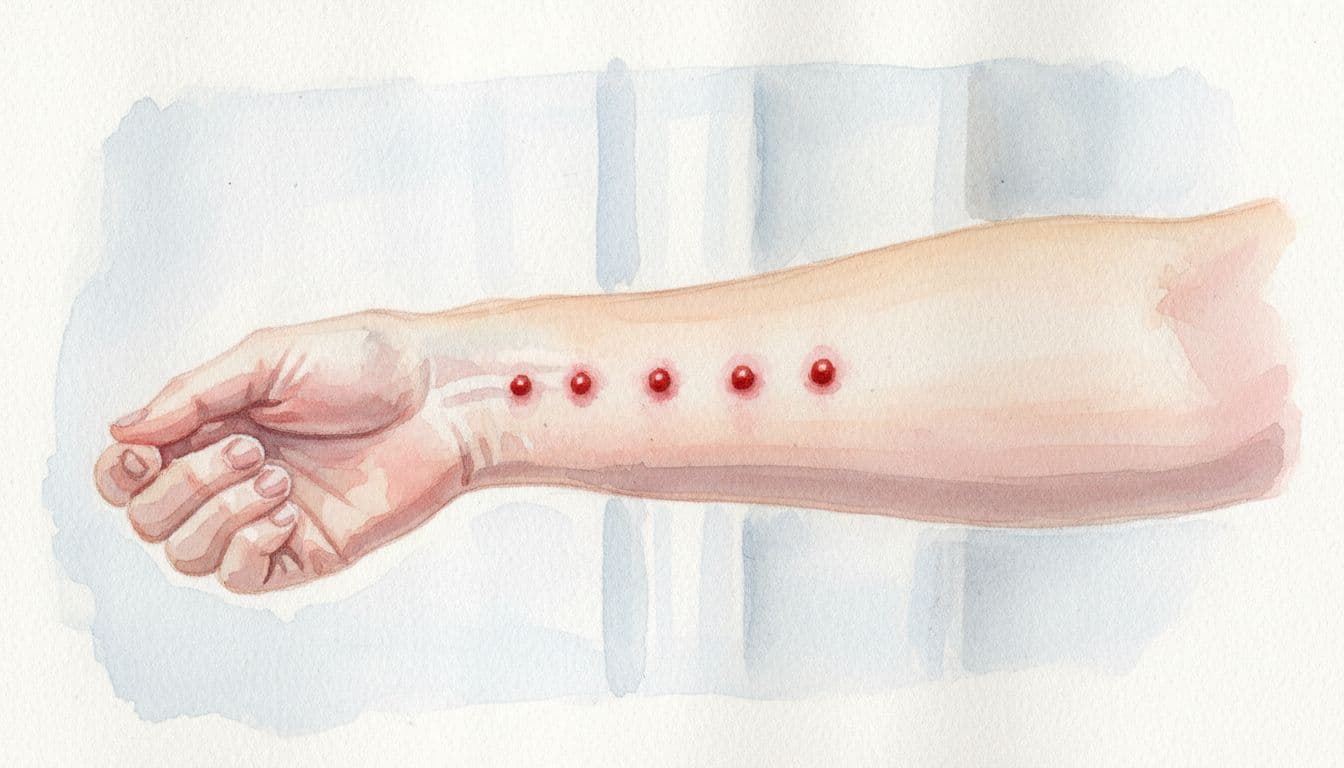
This quick table helps put the main clues side by side:
| Clue | Bed bug bites | Mosquito bites | | | | | | Pattern | Often in lines or clusters | Usually single or scattered | | Timing | Common after sleep, may appear later | Often noticed soon after the bite | | Shape | Small red spots, flat or slightly raised | Puffier welt, often with a center point | | Location | Exposed skin in bed | Any exposed skin, often after outdoor time | | Extra signs | Mattress spots, shed skins, live bugs | Buzzing, open windows, standing water |
The main takeaway is simple: the bite marks alone rarely give a sure answer. Even Healthline's bite comparison notes that these bite marks can overlap in appearance.
Bite marks can point you in a direction, but they don't confirm the source on their own.
The room often tells the real story
This is where bed bug bites separate themselves from mosquito bites. With mosquito bites, the clue is usually your environment before the bite, not what you find in the bedroom. Maybe you were outside at dawn and dusk. Maybe a screen has a gap. Maybe water is sitting in a planter, birdbath, or clogged gutter.
Bed bugs, as nocturnal pests, are different because they leave signs where they hide, indicating a bed bug infestation. If you suspect bed bug bites, check mattress seams, box springs, headboards, bed frames, nearby baseboards, and even the couch if you nap there. Look for tiny dark specks, bloodstains on sheets, pale shed skins, or a live bug tucked into a seam. These bite marks from bed bug bites often reveal the infestation's extent.
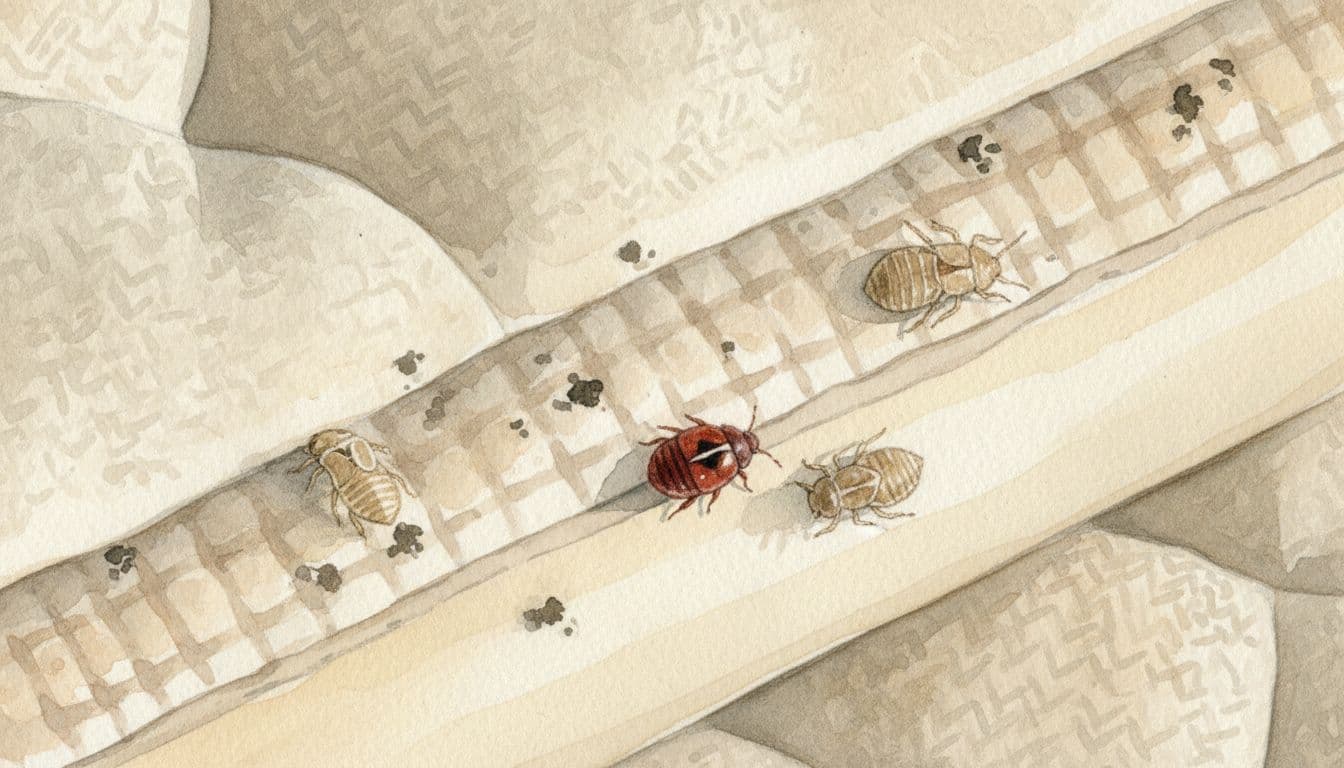
If you live in shared housing, context matters even more. These tips on bed bugs in Quincy apartments explain why nearby units, shared walls, and laundry areas can make a bed bug infestation spread.
Another helpful point, bed bugs are indoor pests and can show up any time of year, leading to bed bug bites indoors. Mosquito bites are more tied to warm weather and outdoor exposure, especially during dawn and dusk. A pattern guide like this Miller Pest comparison makes the same basic point on bite marks: skin clues help, but the setting matters just as much for distinguishing bed bug bites from mosquito bites.
Key differences that matter most
If you want the short version, focus on these differences:
- Bed bug bites are more likely to appear in rows or tight groups on exposed skin, particularly in linear bite locations after a night in bed.
- Mosquito bites are more likely to be isolated, showing random bite locations on exposed skin and linked to recent outdoor time.
- Evidence from bed bug bites often shows up on the bed or nearby furniture, not only on your skin.
- Problems with mosquito bites point back to open entry points or standing water, not mattress seams.
- Some people barely react to bed bug bites but swell up from mosquito bites due to an allergic reaction, so skin alone can mislead.
That last point matters a lot. One person may get large itchy mosquito welts with inflammation. Another may have a mild bed bug bites reaction or no visible bite marks at all. Because of that, bites are best treated like clues, not proof.
If bed bugs seem possible, early action usually makes the problem easier and cheaper to solve. This local guide to bed bug treatment costs in Quincy can help you understand what professional treatment may involve.
What to do next if bed bugs or mosquitoes seem more likely
If bed bug bites seem more likely, don't panic and don't move from room to room. For immediate relief from bed bug bites, wash the affected areas with soap and water, then apply a cold compress to reduce swelling and skin irritation. You can also try an antihistamine or corticosteroid cream for itching and inflammation. Start by checking the bed, bedding, and nearby furniture. Wash and dry bedding on high heat if the fabric allows it. Keep photos of any stains, shed skins, or bugs you find, along with images of the bed bug bites showing blisters or swelling. If you see physical signs or bed bug bites keep showing up after sleep, getting a trained inspection is the smart next step. For urgent cases with spreading bed bug bites, a local emergency bed bug removal service can help confirm the source and stop it from spreading.
If mosquito bites seem more likely, think prevention first. Empty standing water, repair torn screens, and use insect repellent when needed. For mosquito bites causing blisters or mild swelling, wash with soap and water and manage itching with basic skin care and over-the-counter products like an antihistamine, but that doesn't replace medical advice if symptoms are strong or keep getting worse.
Most bed bug bites and mosquito bites stay mild. Still, get medical help if you have trouble breathing, swelling in the face or lips, widespread hives, fever, pus, growing redness, blisters, pain that keeps building, or signs of an allergic reaction such as severe inflammation or rare anaphylaxis. Scratching can also lead to secondary infection, so worsening sores deserve a clinician's attention.
Frequently Asked Questions
How can I tell bed bug bites from mosquito bites just by looking?
Bite patterns matter most: bed bug bites show in straight lines, zigzags, or clusters, often on skin exposed in bed, while mosquito bites are random and puffier welts. Timing helps too—bed bug bites may appear later, mosquito bites itch soon after. But skin reactions vary, so check your bed and environment for the real confirmation.
Where do bed bug bites usually appear?
They target exposed skin during sleep, like arms, neck, shoulders, hands, or legs not covered by sheets. Unlike mosquito bites anywhere on the body, bed bug bites stay limited to these bedtime areas. Location alone is a strong clue toward bed bugs over mosquitoes.
What should I do if I suspect bed bug bites?
Inspect mattress seams, box springs, and nearby furniture for dark specks, bloodstains, shed skins, or bugs—don't move bedding around. Wash bites with soap and water, use cold compresses or antihistamines for relief, and call a pest pro for inspection if signs appear. Early action prevents spread, unlike mosquito bites which need prevention like screens and no standing water.
Do bed bug bites always show up right away?
No, some people don't see bed bug bite marks until days later, making the source harder to spot. Mosquito bites usually itch and swell soon after. This delay is why patterns and room evidence are key for bed bugs.
Can mosquitoes cause bites that look like bed bug lines?
Rarely—mosquito bites are almost always scattered or single, not in neat lines or clusters like the classic 'breakfast, lunch, dinner' bed bug pattern. Overlaps happen due to skin differences, but room signs and timing distinguish them best.
The best next step is confirming the source
The biggest difference in bed bug bites vs mosquito bites isn't only how the bite marks look or the skin irritation they cause, like itchy bumps. It's the story around them, when they showed up, where they showed up, and what you find in the room or outside the home.
If the clues point toward bed bug bites, act early and look for physical evidence. Bed bug bites often signal an infestation, so contact a pest control professional if suspected. If they point toward mosquito bites, focus on entry points and outdoor breeding spots. Mosquito bites typically come from outside sources. Either way, the goal is the same: stop guessing and confirm what's causing your bed bug bites or mosquito bites.