

You don't need to turn check-in into a detective show. A calm two-minute scan can cut your odds of bringing hotel room bed bugs home and spot bed bugs early.
Most rooms are fine. Still, bed bugs travel well, and one missed hitchhiker can mean you bring bed bugs home with weeks of laundry and stress later. The good news is that you can look for clear visual signs, not guess from bites alone. That matters even more during busy travel months for your hotel stay, and recent 2026 travel reports have pointed to more hotel-related complaints in parts of the South.
Key Takeaways
- Keep luggage in the bathroom or tub during a quick two-minute room inspection to avoid bed bugs hitchhiking into your clothes.
- Focus on mattress seams, piping, tags, box spring corners, headboard edges, nightstand drawers, and luggage rack for physical signs like apple-seed-sized reddish-brown bugs, tiny white eggs, shed skins, and rust-colored fecal stains.
- Bites alone don't confirm bed bugs—trust clusters of visual evidence near hiding spots, not random specks or skin marks.
- If you spot suspicious signs, snap photos, alert the front desk for a new room, seal items in plastic, and inspect luggage before bringing it home.
Do this before your suitcase touches the bed
The first rule for any hotel guest is simple: keep your travel luggage away from soft surfaces upon entering the room. The EPA's travel tips recommend inspecting a room for bed bugs before settling in, and that starts with where you place your things.
Use this quick pre-unpacking checklist:
- Put luggage in the bathroom, on tile, or in the tub while you inspect.
- Keep coats, purses, and backpacks off the bed and upholstered furniture.
- Use your phone light or a flashlight.
- Check the luggage rack, especially fabric straps and joints.
- Pull back the sheet at the head of the bed before you sit down.
That may sound fussy, but it takes less time than ordering takeout. Also, it stops bed bugs from getting into your clothes right away.
Bed bugs aren't a sign that a hotel is dirty. As the CDC explains, they hitchhike and can show up almost anywhere people sleep. So the goal isn't fear. It's a short, steady check.
How to inspect the bed and nearby furniture
Start by checking the mattress where bed bugs like to stay, close to where people rest for hours at a time.
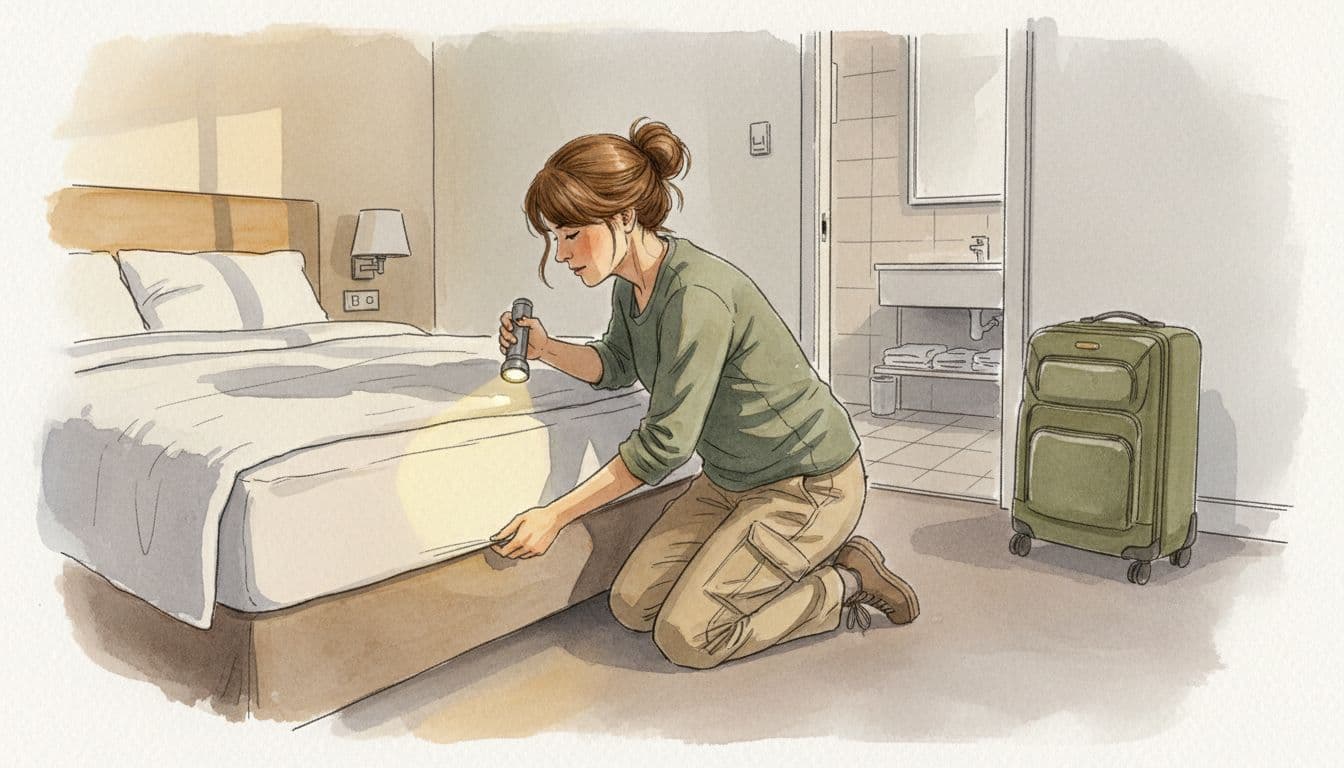
- Pull back the top sheet and blankets near the pillows. Then inspect the mattress piping, mattress seams, and tags. Move slowly along the edges, not just the center.
- Lift one mattress corner a few inches. Check the box spring corners and the bed frame joints. Bed bugs like tight cracks.
- Shine your light behind the headboard if you can do it safely. If it's fixed, inspect the wall line and top edge you can see.
- Open the nightstand and look into drawer corners. Then inspect the luggage rack, because screw holes and fabric straps can hide bugs.
- Give the upholstered furniture like the chair or bench a quick look at seams and tufts, especially if you planned to place clothes there.
The signs that matter most
To identify bed bugs, you're looking for physical bed bug signs, not a perfect bug sighting. The strongest clues are:
- small reddish-brown bed bugs, about the size of a small apple seed when grown
- tiny pale shed skins
- tiny white eggs tucked into seams
- black spots
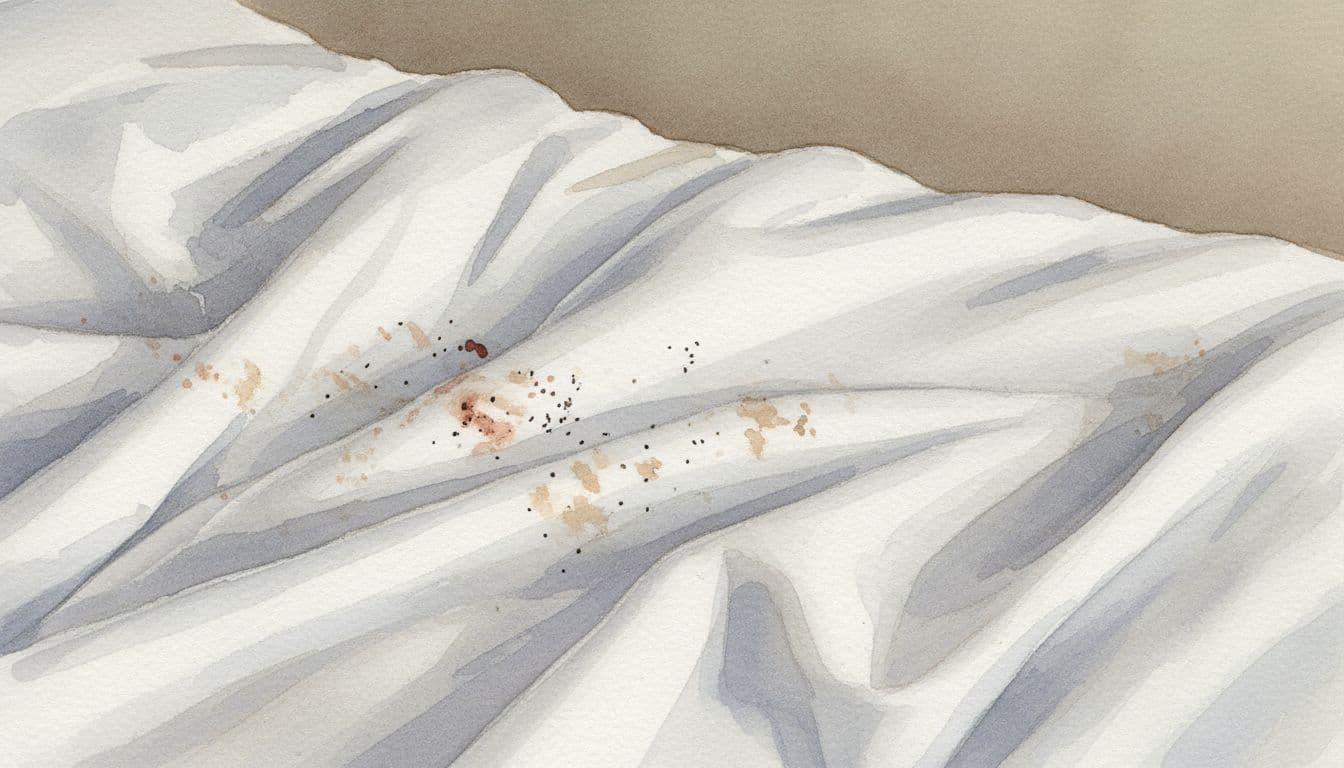
- fecal stains (rust-colored smears) on sheets or mattress edges
Bites alone don't confirm bed bugs. Visual evidence matters more.
What bed bugs and their traces look like
Bed bugs are flat, oval, and wingless. Adult bed bugs are usually rusty brown. Young bed bugs, called nymphs, are smaller and lighter. Eggs are tiny, white, and easy to miss unless you're already close to a seam. They don't jump or fly, so signs usually stay near hiding spots like cracks and crevices.
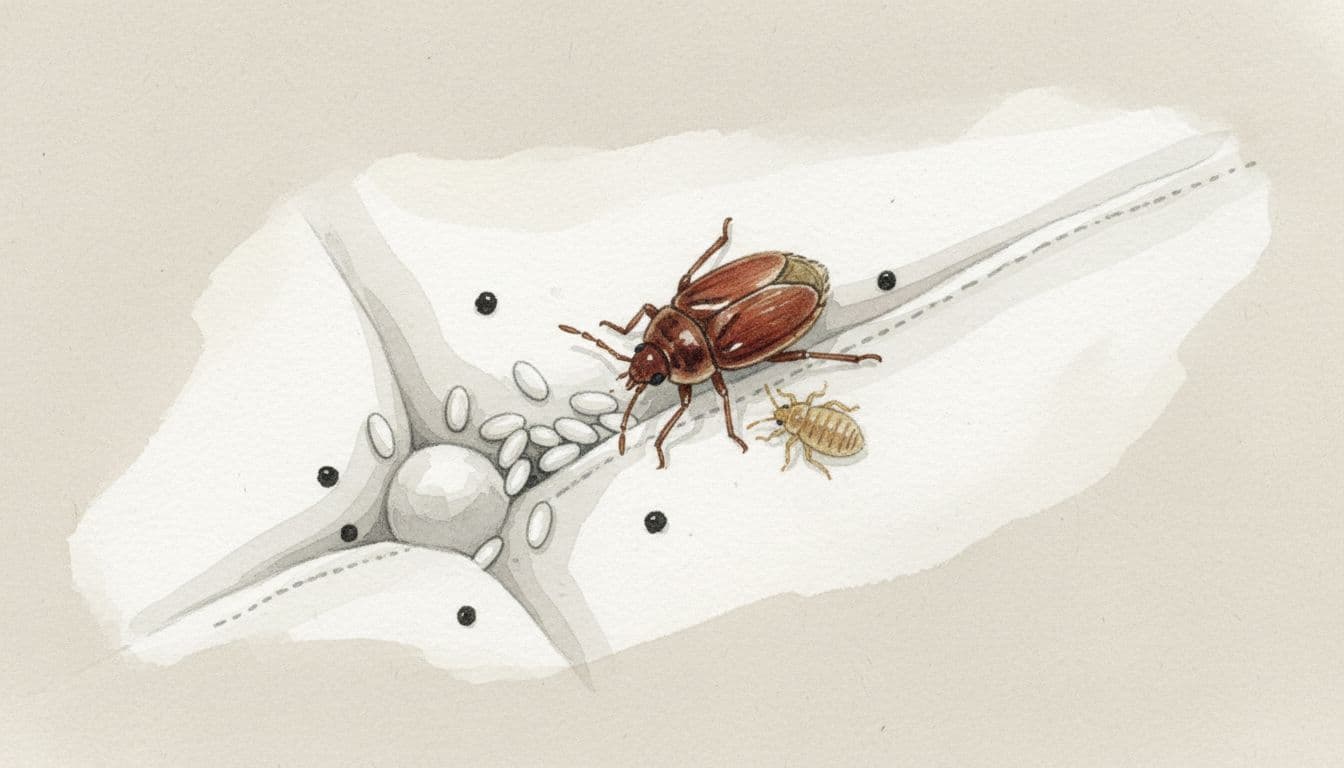
What fools people most? Lint, dirt, and old stains. A random speck in the middle of a sheet isn't as telling as a cluster of dark fecal stains tucked along a mattress edge, which could signal a bed bug infestation. Use a lint roller to pick up suspected debris for a closer look. In the same way, one itchy bump after travel could mean many things. A row of signs near the bed tells you more than skin marks do.
That is why inspection works best when you slow down and check edges, corners, and folds. The EPA's traveler handout shows the same pattern, bed bugs and traces collect where fabric meets a crack or seam.
Frequently Asked Questions
Where should I put my luggage when I first enter a hotel room?
Place your suitcase in the bathroom, on tile, or in the tub right away. This keeps bed bugs from getting into your clothes while you inspect the bed and furniture. It takes seconds and follows EPA travel tips.
What are the key signs of bed bugs to look for?
Check for small reddish-brown adults the size of an apple seed, tiny pale shed skins, white eggs in seams, black spots, and rust-colored fecal stains along mattress edges. These cluster in cracks and folds, unlike random lint or dirt. Slow inspection with a phone light reveals them best.
Do itchy bites mean I have bed bugs in the room?
No, bites alone aren't reliable—many things cause skin irritation after travel. Visual signs on the bed matter more than post-trip bumps. That's why a pre-unpack check focuses on bugs and traces, not your skin.
What should I do if I find bed bugs or signs?
Don't unpack: take clear photos, keep luggage sealed in the bathroom, and call the front desk for a different room away from the infested one. Seal loose clothes in plastic bags for hot laundry later. Repeat the inspection in the new room before settling in.
How long does a bed bug inspection really take?
Just two minutes for a calm scan—no detective drama needed. Pull back sheets, lift mattress corners, check seams and furniture quickly with a light. It's faster than unpacking and prevents weeks of home hassle.
If you find bed bugs or suspicious signs
Don't unpack. Take a few clear photos, keep your luggage in the bathroom, and call the front desk right away. Ask for a different room that isn't next door or directly above or below if possible. Then repeat the same inspection before you move.
If you've already opened your suitcase, immediately seal loose items in plastic bags. Keep everything sealed in plastic bags until you can do the laundry on a hot cycle. High dryer heat helps once you're home. Also, inspect your travel luggage before bringing it into a bedroom.
If a hitchhiker follows you back to West Central Illinois, quick action makes a big difference. For fast pest control, BugEvicta offers same-day bed bug removal experts if you need help, and you can also review what to expect from bed bug treatment costs Quincy. For travelers in shared housing, these Quincy apartment bed bug tips are worth reading, because bed bugs can spread between units.
A hotel stay shouldn't leave you on edge. Still, a two-minute check can save a lot of trouble later.
Keep the routine simple, trust your eyes, and focus on signs, not worst-case thinking. That's usually the difference between a normal trip and bringing home bed bugs you never invited. These prevention tips help avoid a bed bug infestation.