

Bed bug detection: Effective methods for Illinois homes

TL;DR:
- Early detection is crucial to prevent widespread bed bug infestations.
- Combining visual inspections, monitors, and canine detection offers the best accuracy.
- Illinois residents must follow legal guidelines and employ integrated strategies for effective control.
Most bed bugs are hiding in plain sight, yet over 70% of infestations go undetected until they’ve already spread well beyond the mattress. Illinois homeowners face a real challenge here because these insects are small, fast, and experts at tucking themselves into the tightest spots imaginable. A single missed inspection can turn a minor problem into a full-blown infestation within weeks. This guide walks you through how bed bug detection actually works, which methods are most reliable, what Illinois law requires, and how to put the right tools to work in your home before things get out of hand.
Table of Contents
- What is bed bug detection?
- Core detection methods: Visual, monitor, and canine
- Illinois-specific best practices and regulations
- Practical application: Using detection tools effectively
- Our take: Why detection is only half the battle
- Looking for reliable bed bug support in Illinois?
- Frequently asked questions
Key Takeaways
| Point | Details |
|---|---|
| Multi-method detection wins | Combining visual inspections, monitors, and canine detection provides the best chance to catch bed bugs early. |
| Local laws matter | Chicago landlords must respond quickly to bed bug reports, and Illinois homeowners should routinely inspect after travel. |
| Monitors are for detection, not removal | Traps and detectors help spot infestations but are not reliable for bed bug elimination. |
| Early action prevents infestation | Spotting bed bugs early with the right tools is key to avoiding costly, widespread problems. |
| Expert help is often essential | Professional pest control is usually required to fully resolve bed bug infestations in Illinois homes. |
What is bed bug detection?
Bed bug detection is the process of confirming whether bed bugs are present in a space, how many there are, and where they’re hiding. It’s not just about spotting a bug on your mattress. It covers a range of techniques, from careful visual inspection to electronic monitoring devices to trained detection dogs. The goal is to catch an infestation early, when treatment is simpler and less expensive.
Why does early detection matter so much? Because bed bugs reproduce fast. A small cluster of bugs hiding in a box spring can grow into a serious problem before you ever notice a bite. Most people don’t realize they have an infestation until it’s already moved beyond the bed frame and into furniture, baseboards, and electrical outlets.
Bed bug detection uses visual checks, monitoring devices, and canine scent methods to identify signs like live bugs, fecal spots, shed skins, eggs, and bite marks. Knowing what to look for is half the battle. Here are the key signs to check for during any home inspection:
- Live bugs: Small, flat, reddish-brown insects about the size of an apple seed
- Fecal spots: Tiny dark dots on mattress seams, sheets, or walls that smear when wiped
- Shed skins: Pale, hollow casings left behind as nymphs grow
- Eggs: Tiny white specks, often found in clusters in hidden spots
- Bites: Red, itchy welts in lines or clusters, though bites alone are not a reliable indicator
Using a bed bug identification guide helps you distinguish bed bugs from other common insects like carpet beetles or bat bugs, which look similar but require completely different responses. Accurate identification is what separates an effective response from wasted time and money.
For a broader overview of what to look for, the bed bug detection guide from UC ANR is a solid starting point for Illinois homeowners building their inspection routine.
Core detection methods: Visual, monitor, and canine
Not all detection methods are created equal. Each has its strengths, and knowing when to use which one can make a big difference in your results.
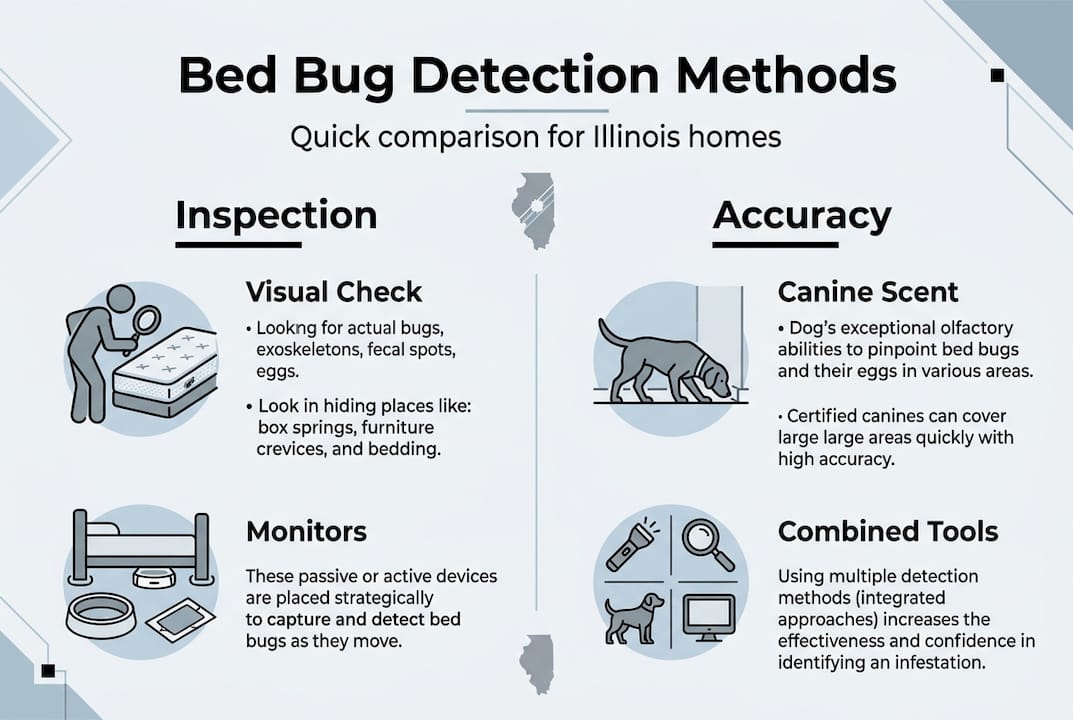
Visual inspection is the most common starting point. You’ll need a flashlight, a magnifying glass, and something thin like a credit card to probe mattress seams and furniture joints. Work methodically, starting at the bed and moving outward. Check the box spring, headboard, nightstand, and nearby baseboards. This method is free and immediate, but it requires patience and a trained eye.
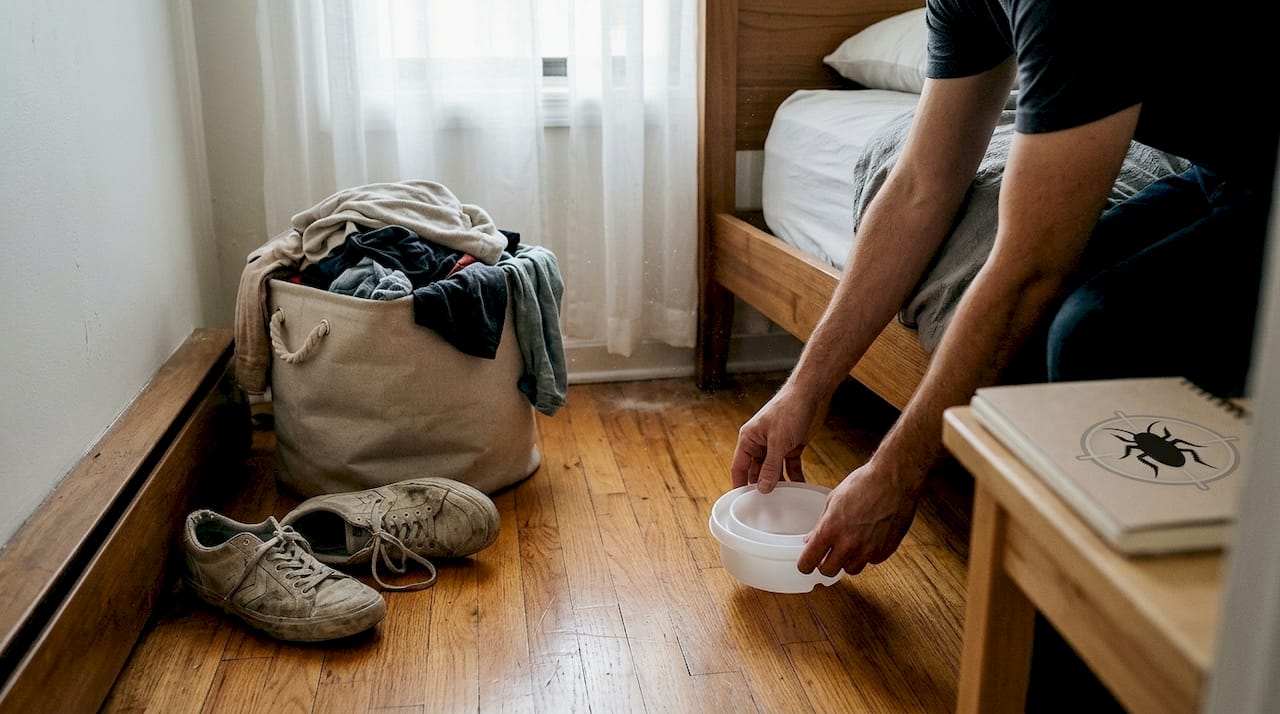
Passive monitors are placed under bed legs and work by trapping bugs as they travel to and from the bed. They don’t attract bugs, they just intercept them. Active monitors use heat, CO2, or chemical lures to draw bugs in. These are more effective for detecting low-level infestations where visual inspection might come up empty.
Canine scent detection is the gold standard for accuracy. Trained dogs can detect bed bugs with up to 98% accuracy in labs and over 90% in field conditions, far outpacing what a human inspector can achieve visually. Dogs can screen an entire hotel room in minutes. The downside is cost and availability.
| Method | Accuracy | Cost | Best use case |
|---|---|---|---|
| Visual inspection | Moderate | Low | Initial checks, DIY |
| Passive monitors | Moderate | Low | Ongoing monitoring |
| Active monitors | Moderate to high | Medium | Low-level infestations |
| Canine detection | Very high | High | Confirming or ruling out |
Here’s how to run a basic visual inspection at home:
- Strip the bed completely and inspect every seam of the mattress and box spring
- Check behind the headboard and along the bed frame joints
- Look inside nightstand drawers and along the back panel
- Inspect baseboards and electrical outlet covers near the bed
- Check upholstered furniture, especially cushion seams and underneath
Pro Tip: Use a white sheet under the mattress while inspecting. Any bugs or debris that fall will be much easier to spot against a bright background.
For a deeper look at how these methods compare, the detection method details resource breaks down accuracy rates and practical use cases. You can also browse our bed bug pest guides for more targeted advice, or learn about professional bed bug extermination when DIY methods aren’t enough.
Illinois-specific best practices and regulations
Illinois homeowners, especially those in Chicago, operate under specific legal frameworks that shape how bed bug situations must be handled. Understanding these rules protects you whether you’re a renter or a property owner.
The Chicago ordinance requires landlords to inspect and treat bed bug issues within 10 days of receiving written notification from a tenant. That’s a tight window, and it means tenants need to act quickly and document everything the moment they suspect an infestation.
Know your rights: Chicago tenants should notify landlords in writing as soon as they spot signs of bed bugs. Keep a copy of all communications. If the landlord fails to act within the required timeframe, you may have legal recourse under city housing codes.
Here’s a quick breakdown of responsibilities under Illinois and Chicago rules:
| Party | Responsibility |
|---|---|
| Landlord | Inspect within 10 days, arrange treatment, document actions |
| Tenant | Report promptly in writing, cooperate with inspections, avoid spreading bugs |
| Homeowner | Self-directed inspection, treatment, and prevention |
For prevention, Illinois homeowners should build these habits into their routine:
- Use mattress encasements: Zippered covers trap any existing bugs and make future inspections much easier
- Install interceptors: Place cup-style traps under each bed leg to catch bugs moving at night
- Declutter regularly: Bed bugs thrive in clutter, which gives them more places to hide and makes detection harder
- Inspect after travel: Hotels are a common source of bed bugs. Check luggage before bringing it inside and wash clothes immediately on high heat
- Be cautious with secondhand furniture: Inspect every piece thoroughly before it enters your home
For more localized guidance, our Chicago bed bug tips page covers apartment-specific scenarios that are common across Illinois urban areas. Additional detection strategies from university extension programs are also worth reviewing for a science-backed perspective.
Practical application: Using detection tools effectively
Knowing which tools exist is one thing. Using them correctly and consistently is where most homeowners fall short. The biggest mistake is relying on a single method and assuming it tells the whole story.
A single female bed bug can lay up to 500 eggs in her lifetime, which is why early detection and combining multiple methods is so critical. One missed bug can restart an infestation you thought was gone.
Here’s a practical sequence for using detection tools together:
- Start with a visual inspection every time you change your bedding. Make it a habit, not a reaction.
- Install passive interceptors under all four bed legs and check them weekly. These are inexpensive and give you continuous data.
- Add an active monitor if interceptors come up empty but you still suspect activity. CO2-based lures are the most effective for drawing out hidden bugs.
- Call for canine detection if you want a definitive answer before investing in treatment, or if you’ve had a previous infestation and want to confirm it’s gone.
- Follow up after any treatment with monitoring devices for at least 60 days to catch any survivors.
Research on trap effectiveness confirms that combining passive and active monitoring significantly improves detection rates compared to either method alone.
Pro Tip: After returning from travel, place your luggage in the bathtub before unpacking. It’s a smooth, hard surface bed bugs can’t easily escape from, giving you time to inspect everything carefully.
Common mistakes to avoid:
- Assuming bites alone confirm bed bugs. Many insects bite, and some people don’t react at all.
- Skipping follow-up monitoring after treatment. Eggs can survive some treatments and hatch weeks later.
- Only checking the mattress. Bed bugs spread to furniture, walls, and even electronics over time.
If you discover an active infestation, emergency bed bug removal services can respond quickly to prevent further spread. Before committing to treatment, reviewing bed bug treatment cost information helps you plan realistically.
Our take: Why detection is only half the battle
After years of working with Illinois homeowners, we’ve seen a pattern. People invest in detection, confirm the infestation, and then assume the hard part is over. It isn’t. Detection tells you where the problem is. It doesn’t fix it.
Detectors are most effective for monitoring, not eradication, and canine detection, while highly accurate, is not foolproof on its own. We’ve seen canine teams miss bugs in heavily cluttered rooms and monitors fail to catch low-density populations. No single method is a complete solution.
The homeowners who handle bed bug situations best are the ones who treat detection as the beginning of a process, not the end. They combine methods, follow up consistently, and bring in professional help when the situation calls for it. Integrated pest management, meaning using multiple targeted strategies together, is what actually works over the long term.
If you want to go deeper on what makes bed bug situations so persistent and how to stay ahead of them, our learn more about bed bugs resource library is a good place to start. And for a candid look at how canine detection fits into the bigger picture, canine detection insights is worth reading.
Looking for reliable bed bug support in Illinois?
Detection is the first step, but knowing what to do next is where most homeowners get stuck. Whether you’ve spotted signs of bed bugs or just want peace of mind after travel, getting professional eyes on the situation makes a real difference.

At BugEvicta Pest Control, we use a structured inspection and treatment approach built around Illinois pest patterns and seasonal activity. We don’t guess. We confirm, treat, and follow up. If you’re ready to stop wondering and start acting, fast pest control near you is available now. For targeted solutions, our bed bug extermination service covers everything from initial inspection to full remediation.
Frequently asked questions
What are the first signs of bed bugs in Illinois homes?
Look for live bugs, fecal spots, shed skins, and eggs, especially around mattress seams, bed frames, and nearby furniture. Unexplained bites can be a clue, but they shouldn’t be your only indicator.
Are canine detection methods accurate for bed bug detection?
Yes, trained canine teams can reach accuracy rates up to 97 to 98% in lab settings and over 90% in real-world field conditions, making them the most reliable single detection method available.
What should Chicago tenants do if they suspect bed bugs?
Notify your landlord in writing immediately. The Chicago ordinance requires landlords to inspect and begin treatment within 10 days of receiving that notification, so documenting your report is essential.
Can traps and detectors eliminate bed bugs?
No. Detectors are effective for monitoring but cannot eliminate an infestation. Professional treatment is required to actually eradicate bed bugs from your home.
How often should Illinois homeowners inspect for bed bugs?
Inspect your bed and nearby furniture every time you change your sheets, and always after traveling or having overnight guests. Follow up with passive monitors for ongoing early detection between full inspections.
Recommended
- Bed Bugs – BugEvicta Pest Control | Fast, Reliable Extermination Near You
- Articles – BugEvicta Pest Control | Fast, Reliable Extermination Near You
- Quincy IL Pest Control for My Downtown Apartment Bed Bugs
- Termite prevention guide for Illinois homeowners 2026
- How to Detect Mold in Your Home | Signs, Prevention & Removal
