

Yes, bed bugs can live in couches and recliners. They are not limited to beds, because they live off blood and hide anywhere that keeps them close to people.
That makes upholstered furniture a common target, especially in living rooms, apartments, guest spaces, and shared homes. If you spend long evenings on the couch or fall asleep in a recliner, those spots can become a feeding area and a hiding place at the same time.
If you're in Quincy, IL and worried about bites or stains on furniture, the next step is simple, check for signs, inspect the right spots, and act fast before the problem spreads.
Why bed bugs choose couches and recliners
Bed bugs want two things, a tight place to hide and easy access to a blood meal. Couches and recliners give them both. The fabric is full of seams, folds, and tucked edges. The frame adds cracks, joints, staples, and covered spaces underneath. To a bed bug, that furniture works like a small apartment building.
They don't eat crumbs, fabric, or wood. They live off blood, usually human blood, so they stay close to where you rest. That is why you can find them in a couch even when the bedroom seems clear.
They stay close to where you sit, nap, and rest
If you nap on the sofa, watch TV late, or sleep in a recliner after work, bed bugs may shift their hiding spots to match your routine. In apartments and family rooms, this happens more often than people think. A bug doesn't care whether you call it a bed or a couch. If you stay there long enough, it can feed there.
Current web searches in April 2026 don't show a public Quincy furniture outbreak tied to couches. Still, bed bugs remain a year-round indoor pest, and furniture near people stays high risk.
Small cracks and fabric seams help them stay hidden
Start with the spots most people miss. On a couch or recliner, look at:
- cushion seams and zipper edges
- under loose cushions
- deep tufts and piping
- behind the thin fabric dust cover underneath
- around staples and tack strips
- along armrest folds
- inside reclining mechanisms
- under the frame, especially near joints and corners
If you want a visual idea of where couch infestations collect, this couch inspection guide shows the kinds of seams and corners that deserve extra attention.
How to tell if bed bugs are hiding in your furniture
You don't have to guess. Bed bugs leave physical signs, and those signs are often easier to spot than the bugs themselves. The trick is knowing what you're seeing.
The most common signs you can spot with a flashlight
A live bed bug is usually flat, reddish-brown, and about the size of an apple seed when grown. Young bugs are smaller and lighter. Eggs are tiny, white, and hard to see unless you're close. Shed skins look pale, dry, and paper-thin. Fecal spots look like dark ink dots pressed into fabric.
Those signs often gather in seams, corners, and folds because the bugs squeeze into tight spots after feeding.
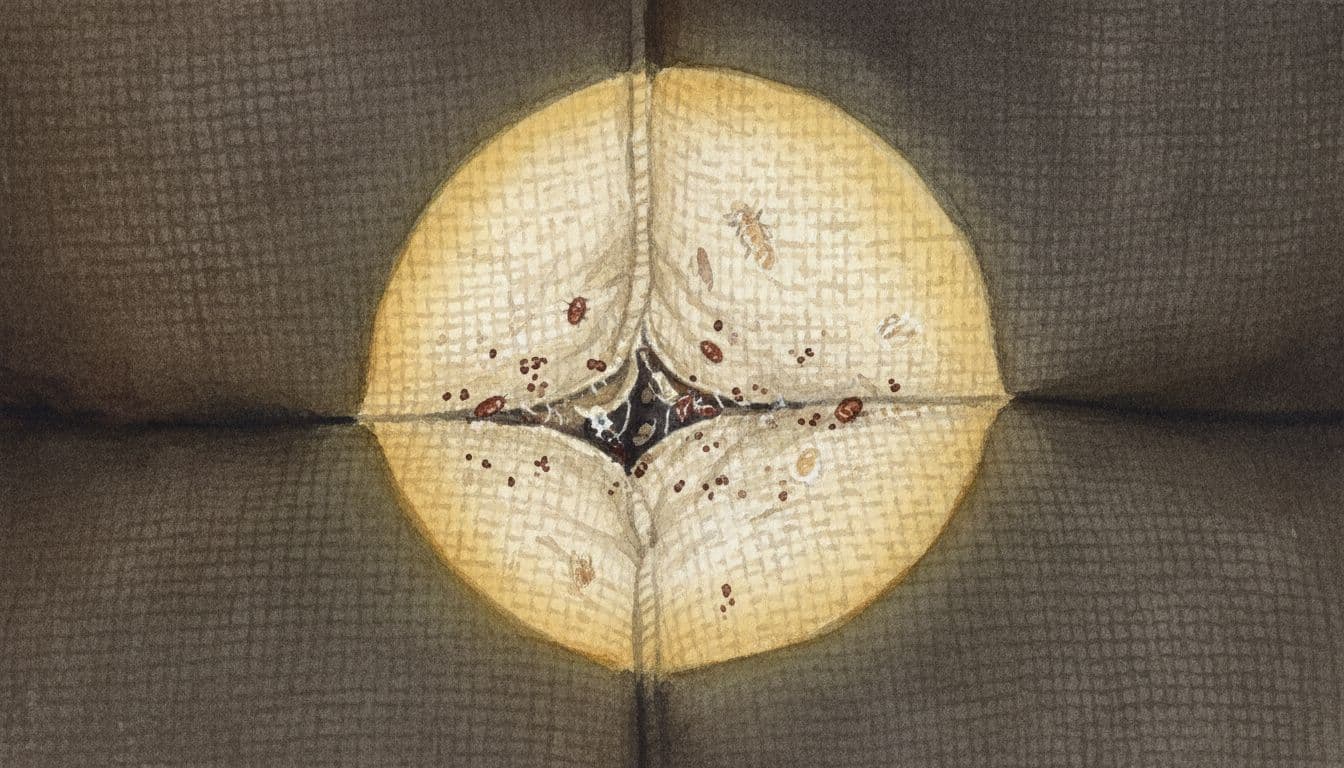
A quick way to sort the clues is this: dark dots suggest waste, pale shells suggest growth, and clusters near seams suggest an active hiding area.
Bites can point you in the right direction, but physical evidence confirms the problem.
Why bites on their own are not enough to confirm bed bugs
Bites can be misleading. Your skin may react to mosquitoes, fleas, mites, or even irritation from fabric or soap. Some people react strongly to bed bug bites, while others show little or nothing.
If you notice bites after using the couch or recliner, treat that as a warning sign, not a final answer. Pair that clue with a hands-on inspection. For another example of how bugs and stains show up in seating, this recliner hiding spot guide can help you picture what to look for.
How to inspect a couch or recliner step by step
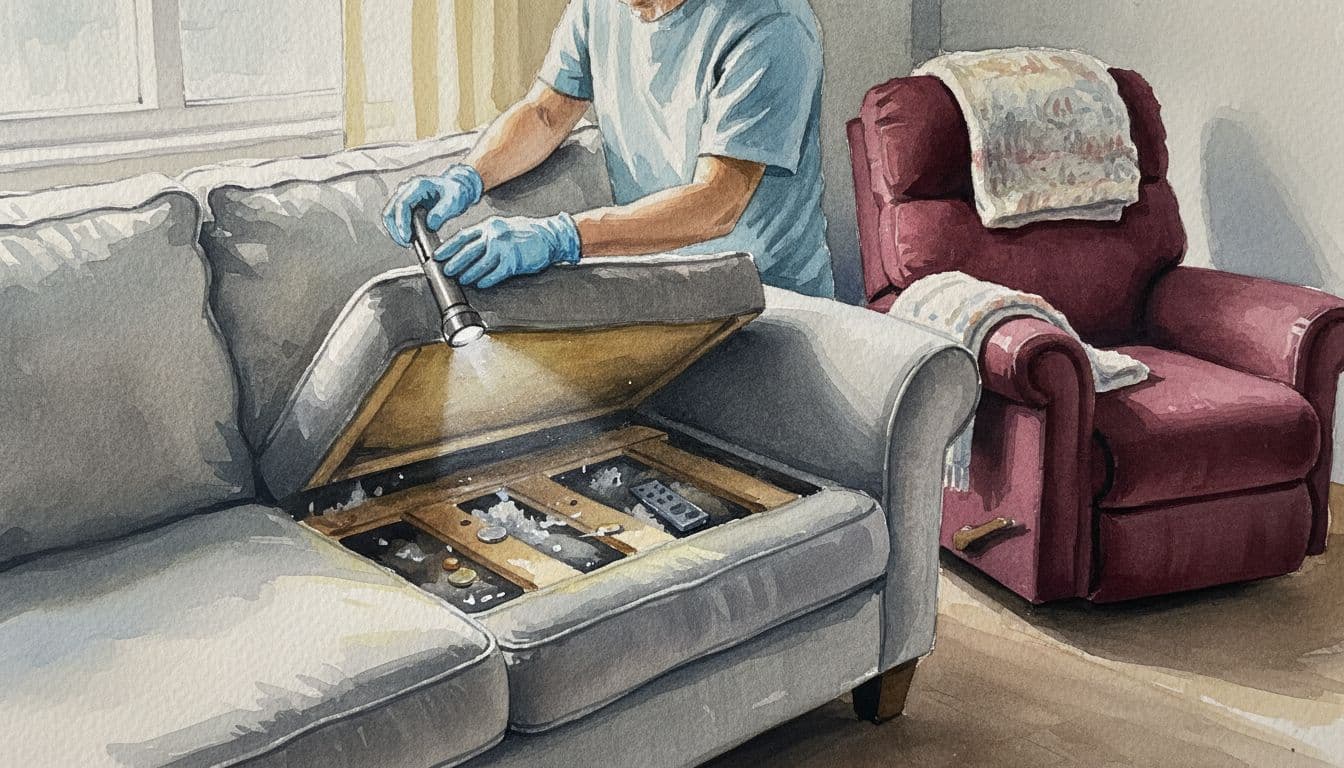
A careful inspection works better than a rushed one. Grab a flashlight, gloves, and a thin card or old gift card to run through seams. A vacuum can wait until after you finish looking.
Where to check first so you don't miss the main hiding spots
Begin with the highest-risk areas. Remove all cushions and inspect the top and bottom of each one. Then check the seat seams, the corners where the seat meets the arms, and the back edge where fabric meets the frame. Use the card to open tight seams without tearing them.
Next, look under the couch. If you can safely tip it back, inspect the dust cover, staple lines, wood frame, and any cracked joints. On many sofas, the underside tells the story faster than the visible fabric.
What makes recliners harder to inspect than regular couches
Recliners add moving parts, inner frames, and hidden cavities. That gives bed bugs more protected spaces. Check slowly around hinges, support bars, and fabric folds where the chair opens and closes.
Don't put your hand into tight mechanical areas blindly. Use your light first, then move fabric gently. If you want extra detail on cleanup and follow-up steps after inspection, this couch treatment guide offers a practical overview of what homeowners often try next.
What to do if you find bed bugs in a couch or recliner
First, don't panic and don't drag the furniture through your home. That can drop bugs into hallways, bedrooms, or common areas.
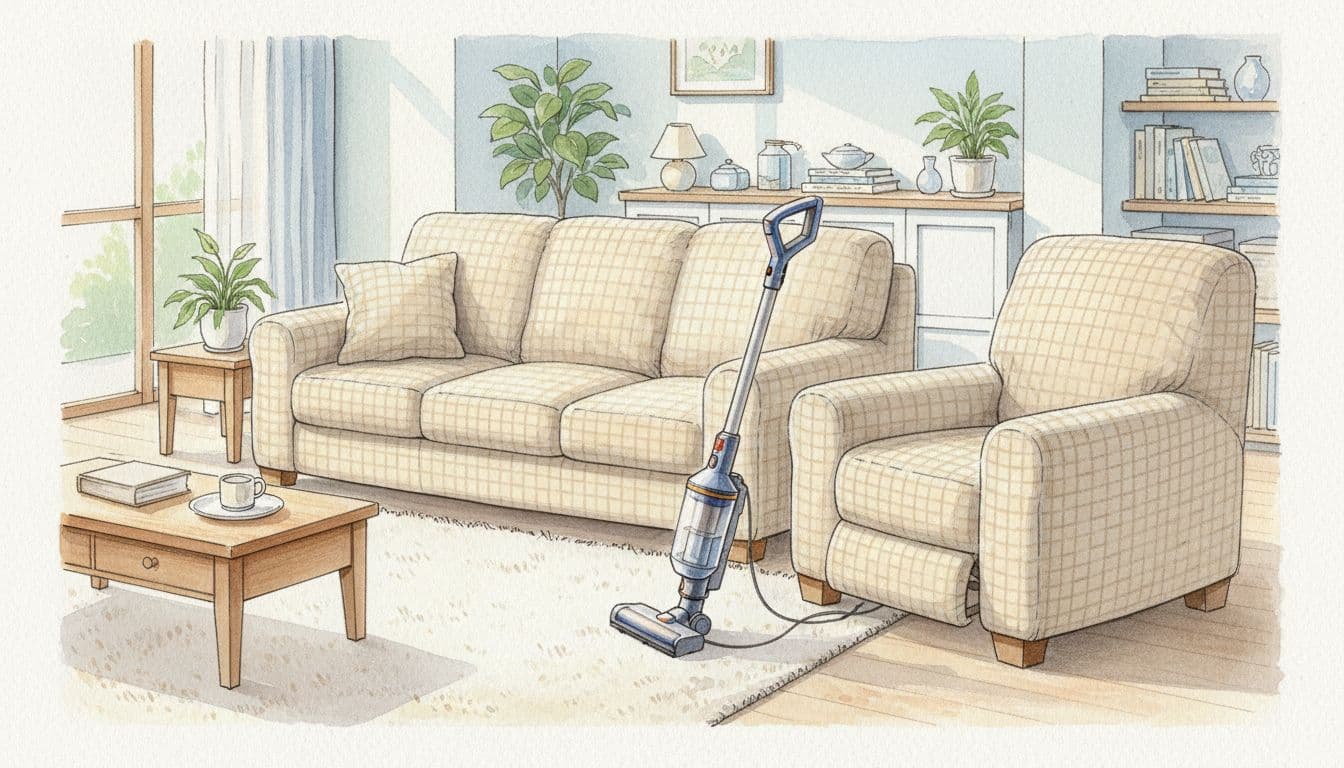
Vacuum visible bugs and debris carefully, then seal and discard the vacuum contents outside right away. Steam can also help if it reaches a hot enough temperature to kill bed bugs and eggs. Move slowly so the heat has time to work along seams and folds. Reduce clutter around the furniture, because nearby piles of blankets, baskets, and clothing give bugs more shelter.
If you're weighing professional help, it helps to know the bed bug treatment cost in Quincy before the infestation spreads. If you have active bites, visible bugs, or a fast-moving problem in a busy home, emergency bed bug removal service may make more sense than waiting.
Methods that can help, and mistakes that make the problem worse
Vacuuming, steam, laundering removable covers, and isolating the furniture can all help. Some furniture can also use bed bug covers or encasements, depending on the shape and design.
What usually makes things worse is careless disposal. If you throw furniture out too soon, or move it uncovered through an apartment building, you can spread bugs farther. Bug bombs are also a poor choice. They rarely reach the hidden spaces where bed bugs stay, and they can drive bugs deeper into walls or other furniture.
When it makes sense to save the furniture, and when to replace it
You can often save a couch or recliner if you catch the problem early and treat it well. Many pieces respond to professional heat, steam, or targeted treatment.
Replacement makes more sense when the furniture is heavily damaged, packed with inaccessible hiding spots, or so deeply infested that treatment is not practical. In most cases, though, replacement should be your last move, not your first.
How to keep bed bugs out of your living room going forward
Prevention is mostly about slowing hitchhikers before they settle in. Bed bugs don't appear from dirt. They arrive from travel, used items, visitors, and nearby units.
Second-hand furniture and travel are two of the biggest risks
Used couches, curb finds, and bargain recliners can carry bugs deep in the seams. Inspect them outside or in a garage before bringing them in. Check under cushions, beneath the frame, and around the underside fabric.
After travel, inspect luggage before it comes back into your living space. Wash and dry travel clothes on high heat when possible. If you live in multi-unit housing, it's also smart to read these Quincy apartment bed bug tips, because shared walls and common spaces can change how fast an infestation spreads.
Early action can stop a small furniture problem from spreading
A couch infestation rarely stays a couch infestation forever. If ignored, bed bugs can move to bedrooms, nearby chairs, baseboards, and other rooms. They follow people, and they keep looking for blood meals.
That is why speed matters. A flashlight check today can save you from treating half the house later. If you find signs, act while the problem is still small.
Bed bugs can live in couches and recliners because those spots keep them close to you, and they live off blood. The furniture gives them seams, folds, and hidden frame spaces that are easy to miss.
If you see dark spots, shed skins, eggs, or live bugs, inspect carefully and move fast. For Quincy homeowners and renters, the smartest next step is a local inspection and a treatment plan that fits the room, the furniture, and the size of the problem.